




Oak Cup and Cover Legs
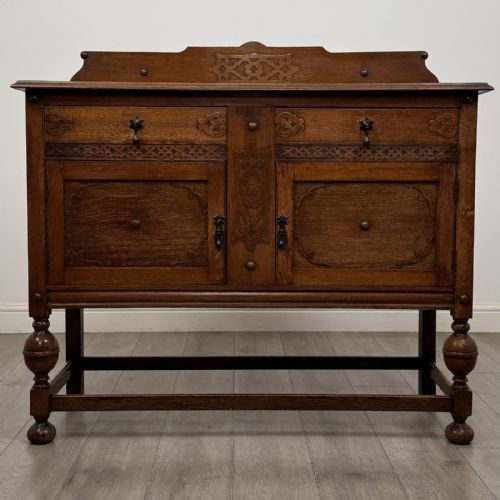
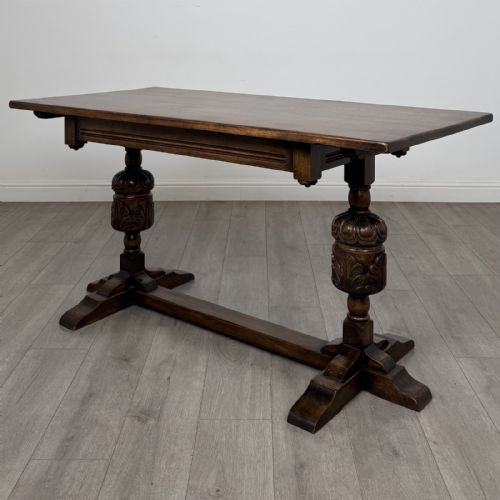
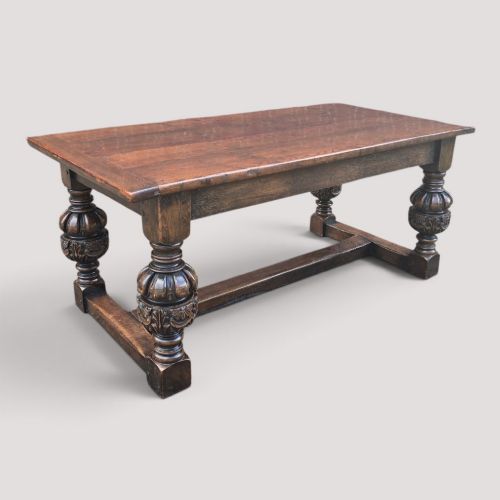
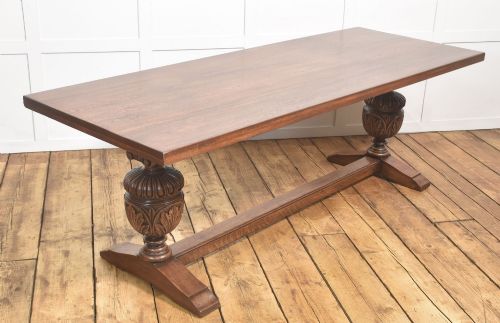
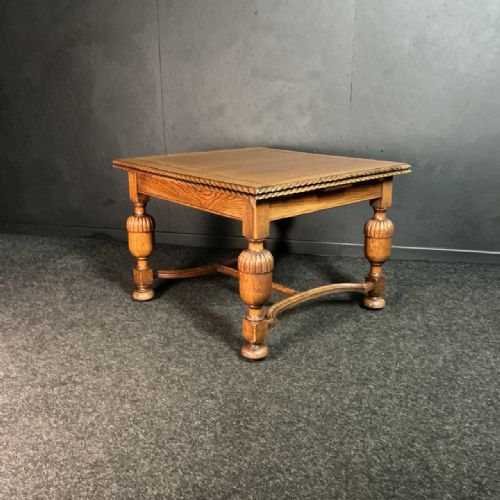
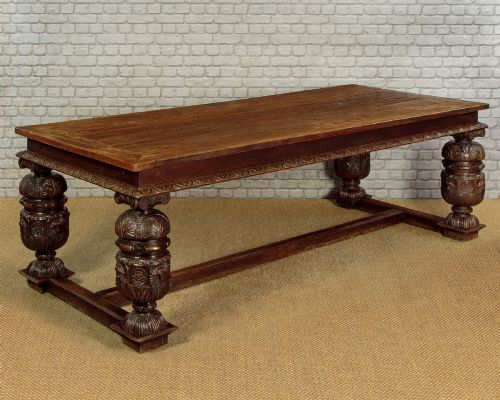
These oak cup and cover legs anchor heavy refectory tables and sideboards, bringing substantial architectural presence and rich historical character to a dining room.
Oak Cup and Cover Legs
When you search for oak cup and cover legs, you are looking at robust structural supports found primarily on large dining tables and sideboards. These pieces span periods from the eighteenth century through to early twentieth-century revivals like the Jacobean and Elizabethan styles.
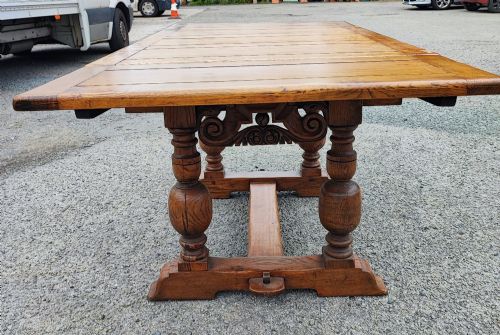
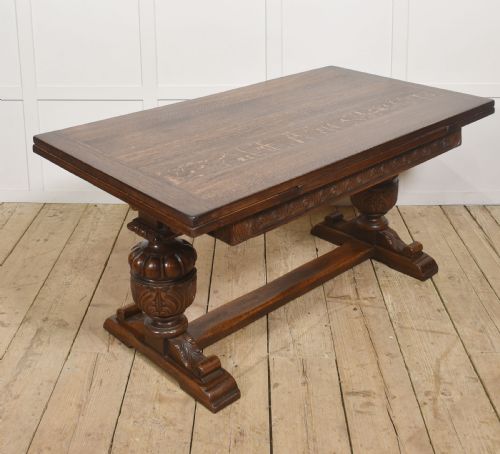
The versions you are most likely to meet on this page date from the late nineteenth and early twentieth centuries, constructed in heavy oak with traditional refectory or draw leaf formats. They provide sturdy support for large wooden surfaces intended for communal dining.
Originating in earlier centuries, these bold, swelling supports reflect a distinct historical aesthetic that prioritises domestic permanence and solid craftsmanship. Their imposing presence makes them the natural centrepiece of a traditional dining space.
What varies in quality
Quality rests upon the proportion and crispness of the turned woodwork, where deeper, more deliberate carving distinguishes superior examples from simpler production. The choice of oak timber itself dictates the visual depth, with tightly figured grain elevating the piece.
Construction integrity defines the upper tier of these items, particularly how firmly the massive legs integrate with the main frame and stretchers. Superior execution ensures that heavy dining tables and sideboards remain entirely stable through centuries of daily use.
Oak Cup and Cover Legs Retail Price Guide 2026
Typical asking prices for oak cup and cover legs among the pieces listed under this phrase on Sellingantiques today, from the lower quarter to the upper quarter. They describe what is for sale here now, not the wider market.
These sturdy tables were built to withstand centuries of heavy dining, occasionally hiding sneaky pull-out leaves for unexpected guests.
Maple & Co
The Oak Cup and Cover Legs Glossary
- Cup and cover
- A heavy, bulbous furniture leg shape resembling a goblet beneath an inverted bowl, popular in sixteenth and seventeenth-century English joinery. This distinctive turning reappears frequently in later revival pieces.
- Refectory table
- A long, narrow dining table originally built for monastic dining halls and later adapted for domestic use. These large tables typically feature substantial stretcher bases.
- Draw leaf table
- A dining table with pull-out extension leaves stored beneath the main top, allowing the surface area to expand easily. This practical mechanism appears across various late nineteenth and early twentieth-century examples.
- Jacobean Revival
- A nineteenth and twentieth-century design movement recreating the architectural furniture styles of the early seventeenth century. Pieces from this era lean heavily on dark oak, carved paneling, and robust turned supports.
Oak Cup and Cover Legs: Frequently Asked Questions
What is a cup and cover leg?
A cup and cover leg is a heavily turned wooden support featuring a bulbous, swelling shape that mimics a covered goblet. This bold decorative feature defines much of the grand seating and dining furniture produced during the Elizabethan and Jacobean eras.
In later revival pieces, this characteristic form provides a visual anchor for large tables and sideboards. Its substantial mass communicates architectural strength and historical weight within a room.
How do refectory tables work?
Refectory tables operate as long, fixed communal dining surfaces supported by robust legs connected near the floor by horizontal wooden stretchers. These stretchers provide essential stability for the heavy oak framework.
Some variants incorporate draw leaf mechanisms beneath the main top, allowing the surface to extend outward when needed. This combination of fixed mass and adaptable length made them practical for large gatherings.
Are these tables from the seventeenth century?
Most pieces featuring these bold turned supports date from later revival periods spanning the late nineteenth and early twentieth centuries. Makers during this time looked back to seventeenth-century forms to satisfy a demand for historicist domestic design.
While genuine seventeenth-century examples exist, nineteenth and twentieth-century interpretations utilise the same heavy oak materials and traditional turning methods. They carry the aesthetic weight of earlier eras while suiting modern domestic scales.
How do I care for oak furniture?
Solid oak furniture benefits from regular dusting with a soft, dry cloth to protect its natural grain and polished surface. Avoiding excessive moisture and placing pieces away from direct heat sources prevents the timber from splitting.
Application of traditional beeswax helps nourish the wood over time, maintaining a deep lustre. Gentle maintenance preserves the historic character of both the timber and its carved details.