
Oak Credenza Server
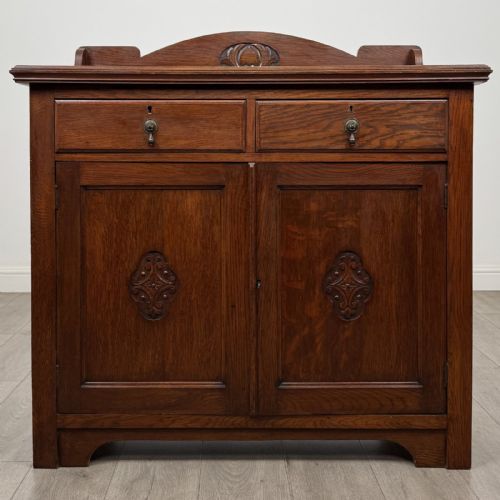
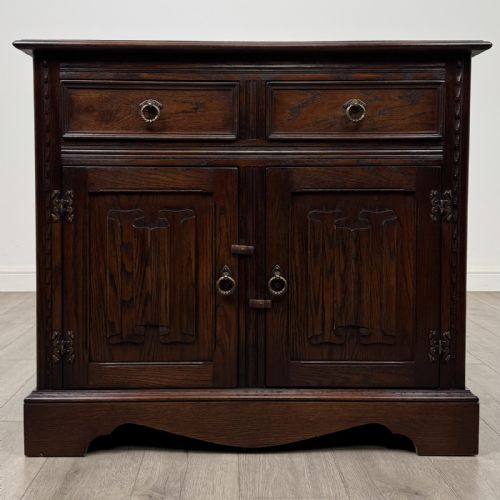
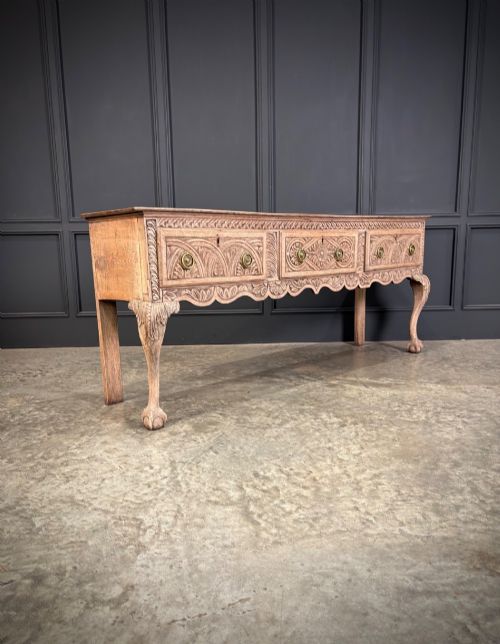
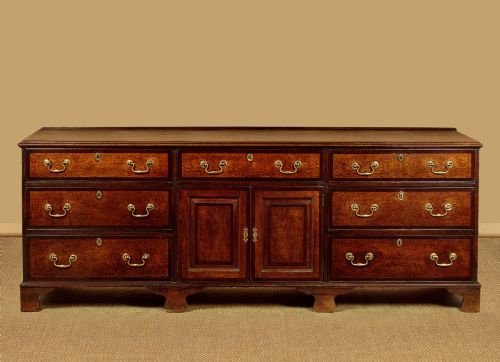
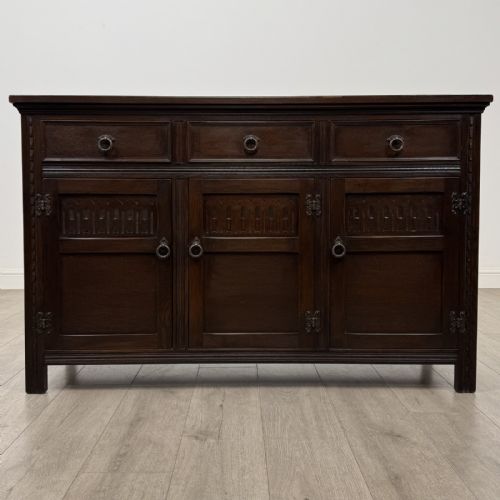
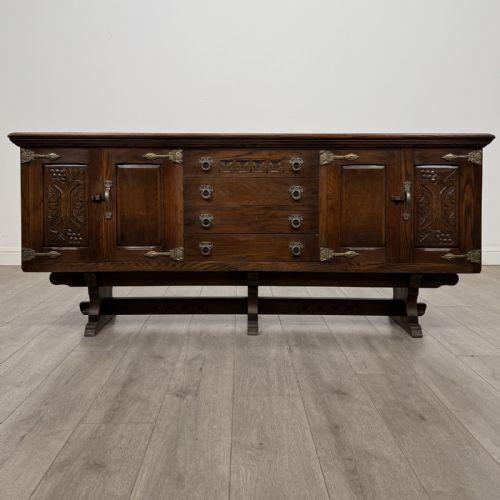
An oak credenza server encompasses substantial timber sideboards, dressers and buffets shaped by centuries of British and continental cabinet-making.
Oak Credenza Server
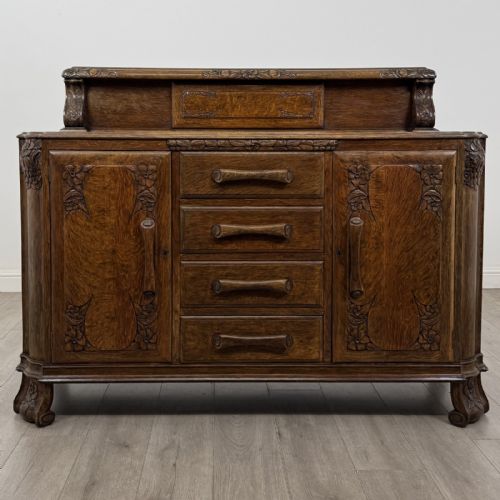
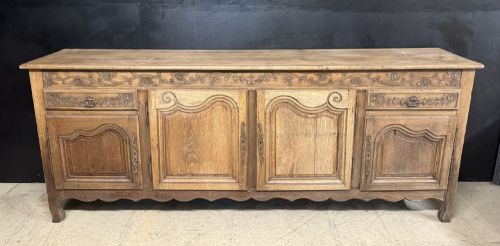
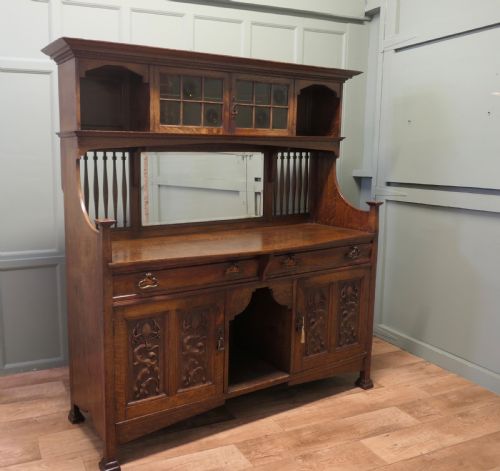
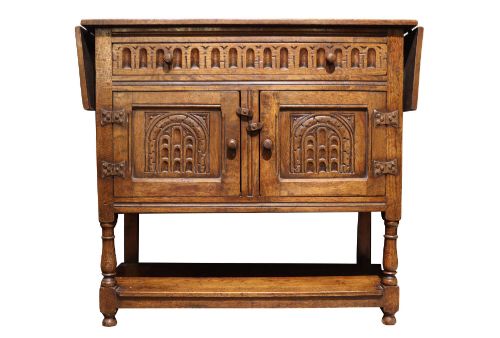
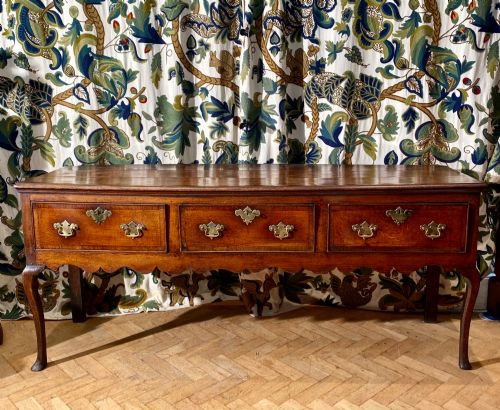
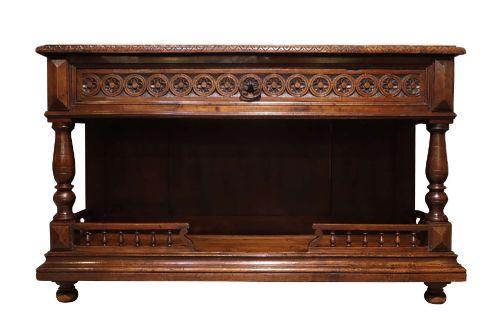
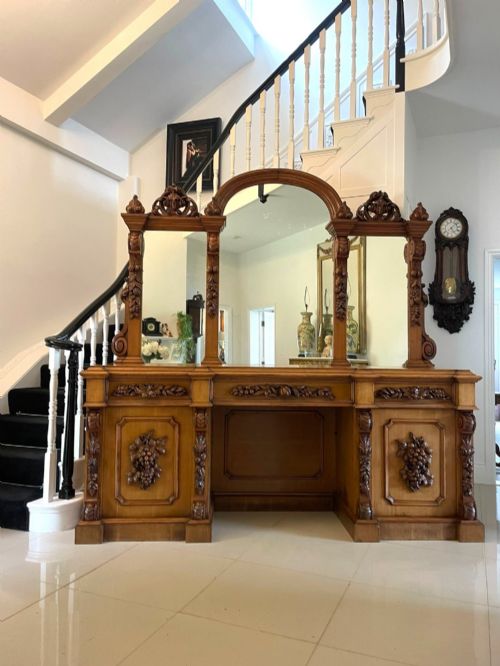
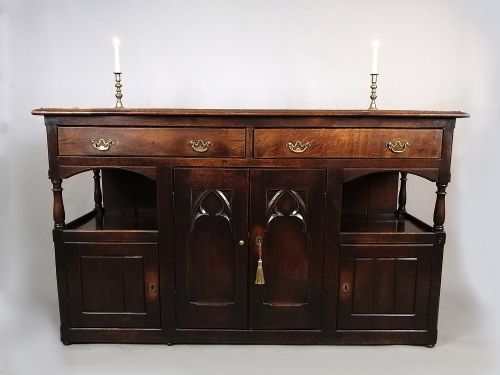
When searching for an oak credenza server, collectors encounter heavy timber storage forms spanning the eighteenth, nineteenth and twentieth centuries. These encompass Georgian potboard dresser bases, Victorian carved sideboards, Arts and Crafts cabinets and Edwardian cupboards.
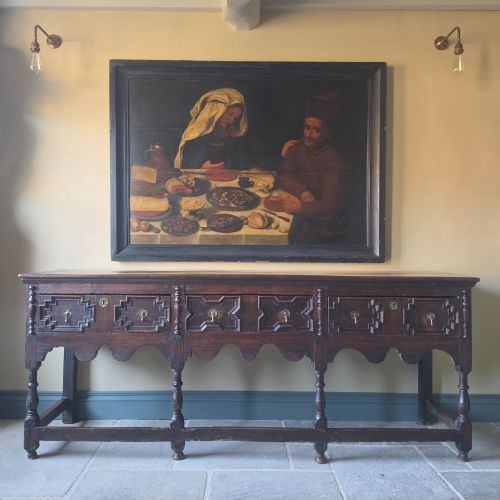
The pieces appearing most frequently range from early eighteenth-century country dresser bases to late nineteenth-century Gothic Revival and Victorian mirror-back sideboards. Regional examples, including Welsh and Lancashire dresser bases, sit alongside French buffets and pieces carrying specific stylistic revivals.
Makers and designers working within these traditions utilised oak as a primary framing and panelling timber, creating functional furniture designed for dining rooms and large domestic interiors.
How they were made
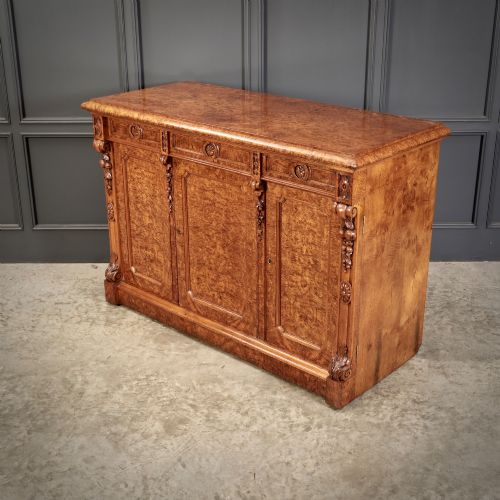
Makers built these pieces primarily in solid oak, occasionally selecting pollard oak for decorative veneer effects or fruitwood for contrasting details. Carving, linenfold panelling and barley twist turnings defined the decorative vocabulary across Jacobean, Gothic and Elizabethan revival styles.
Construction relied on traditional joinery methods, incorporating brass and iron hardware, copper fittings and glazed door panels where appropriate. Surfaces finished with polish or wax highlighted the natural grain and golden tones of the timber.
Listings span periods from the 17th century style up to 1930s Art Deco, with significant representation from the Georgian and Edwardian eras.
What varies in quality
Quality reveals itself in the selection of timber and the execution of carved ornament. Pieces utilising pollard oak veneers or deep, crisp hand-carving by documented workshops stand apart from standard commercial production.
Structural integrity depends on the retention of original timber boards, potboard lower shelves and period brass or iron hardware. Finer examples maintain proportions and patination that reflect their specific period, from George III country workshops to Arts and Crafts studios.
Ambrose Heal for Heal & Son·Gomme
The Oak Credenza Server Glossary
- Dresser base
- A low wooden storage unit featuring drawers and cupboards, often fitted with an open lower shelf known as a potboard.
- Potboard
- An open lower tier fitted beneath a dresser base, originally intended for storing heavy ceramic pots and dishes.
- Barley twist
- A decorative turning technique resembling a spiral rope, popular on the legs and supports of Edwardian and Jacobean revival furniture.
- Linenfold
- A style of wood carving that imitates folded fabric, frequently seen on panels of cupboards and sideboards.
- Pollard oak
- Timber taken from trees that have been pollarded, producing a distinctive clustered grain pattern used for decorative veneer.
Oak Credenza Server: Frequently Asked Questions
How do I identify an 18th century oak dresser base?
Eighteenth century examples display pegged mortise and tenon joints, hand-planed surfaces and deep patination acquired through age. Many incorporate open potboards and simpler mouldings compared to later Victorian iterations.
Hardware typically consists of brass drop handles on backplates matching the period of manufacture, while internal construction reveals hand-sawn drawer linings.
How should I care for antique oak furniture?
Maintain oak surfaces by applying traditional beeswax periodically to nourish the timber and preserve its natural sheen. Avoid placing pieces near direct heat sources or strong sunlight.
Keep indoor humidity stable to prevent the solid timber planks from splitting or warping over time.
What distinguishes Arts and Crafts oak furniture?
Arts and Crafts pieces emphasise visible construction methods, honest materials and minimal applied ornament. Golden oak finishes and simple hardware reflect the movement's rejection of mass-produced factory decoration.
Work by identifiable designers often displays refined proportions and specific studio branding.