

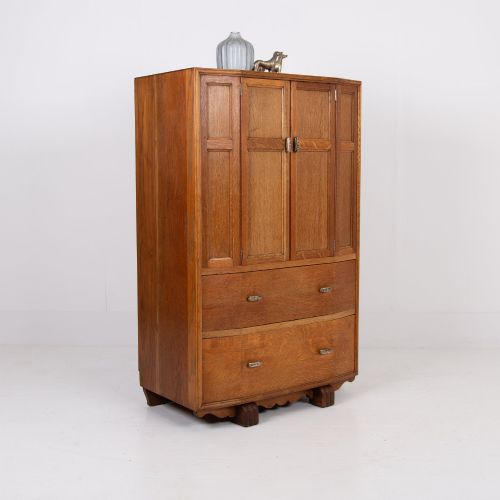

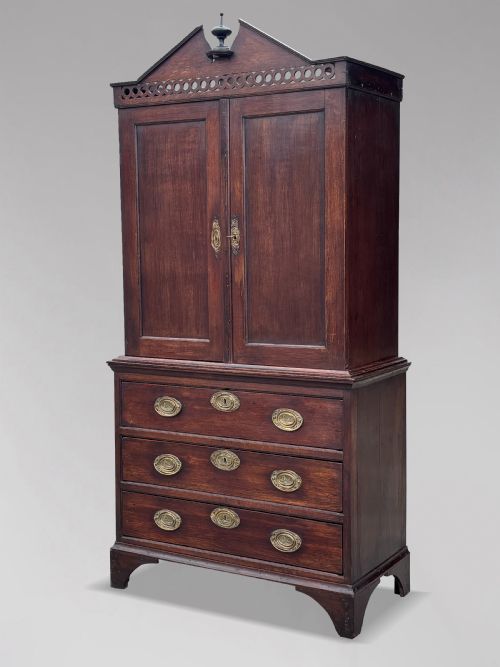


Oak Clothes Chest
An oak clothes chest provides substantial storage with the distinct grain and warm tone characteristic of period timber work.
Oak Clothes Chest
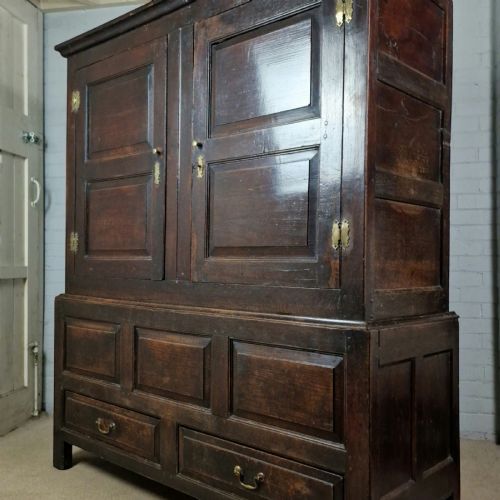
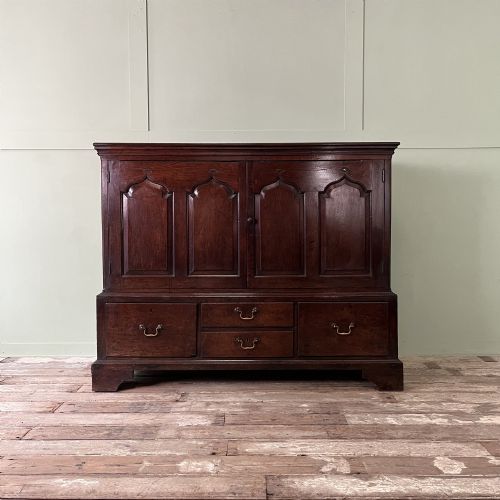
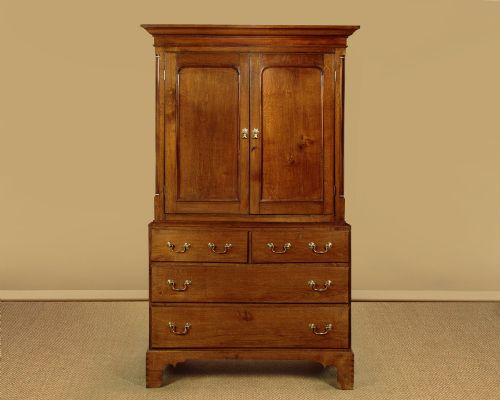
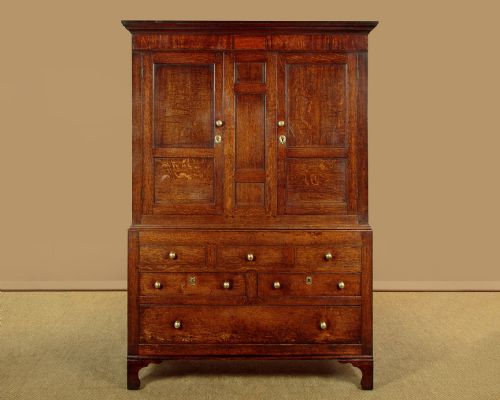
An oak clothes chest encompasses various forms of large storage furniture, most frequently encountered on this page as linen presses, press cupboards, livery cupboards, and tallboys spanning the Georgian and 19th Century periods. These pieces often combine upper cupboard sections with lower drawer banks, reflecting regional domestic traditions found in Welsh vernacular and English country workshops.
Buyers seeking an oak clothes chest will find examples ranging from mid 18th century George III designs to later Victorian and Edwardian interpretations, occasionally incorporating cross-banding or mahogany details. The inventory demonstrates a strong representation of two stage press cupboards and kitchen or tack cupboards built for practical household storage.
What varies in quality
The sophistication of the timber selection and the presence of secondary decorative details establish the distinction between standard utilitarian items and finer regional pieces. Well-figured grain patterns and balanced proportions across the two-stage elevations elevate the visual presence of a cupboard.
The integration of regional stylistic traits, such as distinctive Welsh vernacular detailing or precise cross-banding, marks the difference between simple country storage and more ambitious cabinet work from the Georgian era.
Some old tack cupboards still carry the faint aroma of harness oil and wood smoke from centuries spent in Welsh country farmhouses.
The Oak Clothes Chest Glossary
- Linen Press
- A tall piece of furniture featuring upper doors enclosing sliding trays or shelves above a chest of drawers. This form evolved specifically for storing folded textiles and garments.
- Livery Cupboard
- A traditional tall storage cabinet originally used for food or clothing ventilation in large households. These examples date predominantly to the 18th century.
- Cross-banding
- A decorative border technique where thin strips of veneer are laid so the grain runs perpendicular to the surrounding wood. This method often appears on Georgian furniture to frame drawer fronts and panel edges.
- Tallboy
- A tall chest of drawers stacked upon a larger base chest, creating an elevated vertical storage unit. The form maximises storage capacity while occupying a compact floor footprint.
- Vernacular
- Furniture built by local country craftsmen following regional traditions rather than metropolitan academic designs. Welsh vernacular pieces frequently display robust proportions and practical local construction methods.
Oak Clothes Chest: Frequently Asked Questions
How do I date an 18th century oak cupboard?
Dating relies on examining construction methods, timber preparation marks, panel thickness, and hardware fixings such as hinges and drawer pulls. Georgian pieces often exhibit hand-cut dovetails and pegged frame joints.
Regional country pieces may retain older traditional construction techniques long after urban workshops adopted new styles.
Where were these cupboards made?
These pieces originated in domestic workshops across England and Wales, with notable regional variants documented in Welsh country areas. Local joiners utilised native oak timber available in their immediate districts.
Rural workshops produced sturdy utility furniture tailored to the specific storage needs of country households.
Can I use a press cupboard for modern clothing?
The internal shelves and deep drawers accommodate folded garments, knitwear, and accessories efficiently. Many buyers repurpose the upper press compartments for modern bedroom storage.
The robust construction of 18th and 19th century oak ensures the furniture easily withstands daily domestic use.