



Oak Chest of Drawers Press
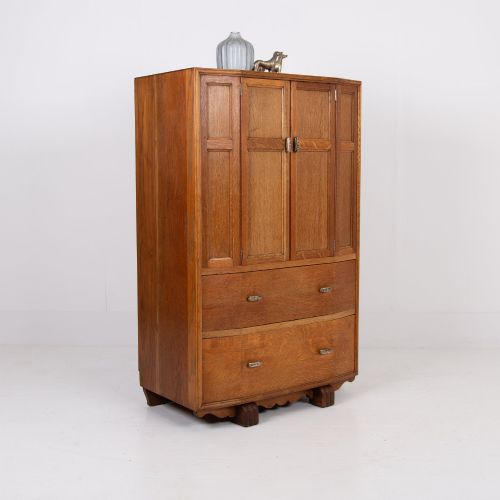
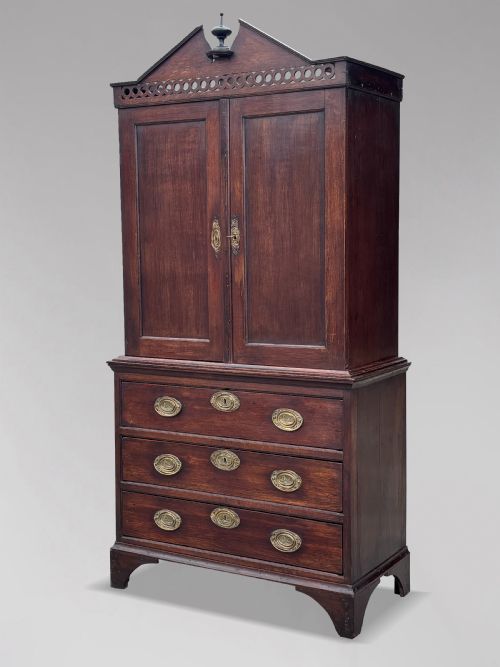
An oak chest of drawers press combines upper storage for linens with lower drawers, offering robust timber construction suited to traditional domestic interiors.
Oak Chest of Drawers Press
An oak chest of drawers press brings together the utility of a clothes press or cupboard and the drawer configuration of a standard chest, spanning periods from the seventeenth century through to the twentieth. Buyers exploring this category frequently encounter regional variations such as Welsh low press cupboards and Georgian housekeepers cupboards.
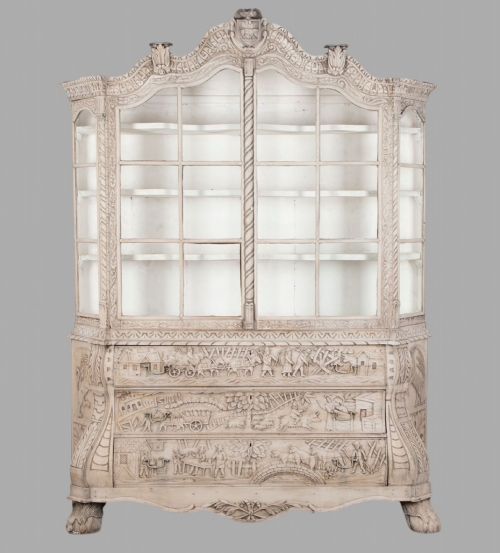
The form typically comprises a two-stage elevation, placing an enclosed cupboard section above a bank of graduating drawers. Examples range from compact provincial furniture to taller Dutch revival display cabinets and George III compactum desks.
Makers and provincial joiners utilised dense native timbers, adapting the proportions to suit domestic storage needs over successive centuries. The design accommodates diverse internal fittings, including sliding shelves, screw mechanisms, and book press configurations.
Construction and materials
Joiners built these pieces primarily using solid oak, frequently augmented by brass handles, iron hinges, and occasional bone inlay or porcelain elements. Regional workshops employed traditional frame and panel construction to accommodate the natural movement of timber over time.
Surfaces display distinct textural qualities ranging from carved Dutch rococo motifs to unadorned provincial grain. Structural elements such as screw mechanisms, drawers, and removable trays were hand-fitted to ensure durability across decades of domestic use.
Materials documented across the inventory include solid oak, burr walnut, brass hardware, bone inlay, and decorative ceramic tiles.
Assessing quality in construction
Quality rests in the selection of timber figures, the integrity of the joinery, and the preservation of original internal fittings. Superior examples display thoughtful proportions, seamless integration between the upper press and lower chest sections, and minimal alteration.
The refinement of surface carving, the quality of brass or iron hardware, and the stability of drawer linings further distinguish finer workshops from provincial utility pieces. Original mechanisms, such as internal screw presses, elevate the historical interest of an item.
Whytock and Reid of Edinburgh
The Oak Chest of Drawers Press Glossary
- Linen press
- A tall cupboard designed originally for storing folded sheets and tablecloths on internal sliding trays. These units sit above a chest of drawers base in many traditional configurations.
- Compactum
- A multi-functional wardrobe or storage unit combining presses, drawers, and sometimes a desk section. This form maximises storage capacity within a single footprint.
- Housekeepers cupboard
- A large storage piece traditionally used in country houses for domestic provisions and linens. They often feature panelled doors above graduating drawer arrangements.
- Tallboy
- A tall chest of drawers arranged in two stacked sections, sometimes incorporating a press element at the top. The vertical format provides extensive drawer space.
- Screw mechanism
- A wooden or metal threaded device fitted internally to press linens flat or bind books. This mechanical element appears in specialised Georgian and nineteenth-century presses.
Oak Chest of Drawers Press: Frequently Asked Questions
How do I date an oak press?
Dating relies on observing construction methods, timber patination, and stylistic markers such as brass hardware or carved mouldings. Seventeenth-century examples often show pegged joints and heavy mouldings, whilst Georgian pieces exhibit finer dovetailing.
Changes in regional vernacular styles across Wales and England also help narrow the period. Examining internal secondary woods and drawer construction provides further clues to the exact era of manufacture.
What is the difference between a press and a wardrobe?
A press contains internal sliding shelves or trays designed for flat-folded textiles rather than hanging garments. This arrangement reflects historical laundry practices before modern hangers became standard.
Lower drawer sections provide additional space for smaller items of clothing. Wardrobes, by contrast, focus primarily on vertical hanging space behind full-length doors.
How do I care for antique oak furniture?
Maintain stable indoor humidity levels and keep the timber away from direct heat sources to prevent splitting. Regular dusting with a soft, dry cloth preserves the natural finish without chemical buildup.
Occasional application of traditional beeswax nourishes the grain and protects the surface patination. Avoid excessive polishing, which can dull the historical character of the wood.
Will a two-stage press fit in a modern room?
These pieces arrive in two sections, separating the upper cupboard from the lower chest of drawers to simplify transport and placement. Measuring ceiling height and stair clearance ensures the upper section clears tight architectural spaces.
Floor space requirements mirror standard wardrobes, though the heavy oak construction demands solid placement. Checking wall clearance for opening doors prevents obstruction in smaller modern bedrooms.