


Oak Cane Holder Stand
These oak cane holder stand examples bring sturdy utility and honest grain into a hallway, offering a practical place for walking sticks and umbrellas.
Oak Cane Holder Stand
An oak cane holder stand serves as a hall furnishing designed to corral walking sticks, umbrellas, and parasols. These pieces range from barrel-shaped vessels to rectilinear racks configured for daily use in reception spaces.
The versions most commonly met on this page date from the Victorian and Edwardian eras, spanning the nineteenth and early twentieth centuries. Makers applied styles such as Arts and Crafts, Gothic Revival, and Aesthetic Movement to these hall essentials.
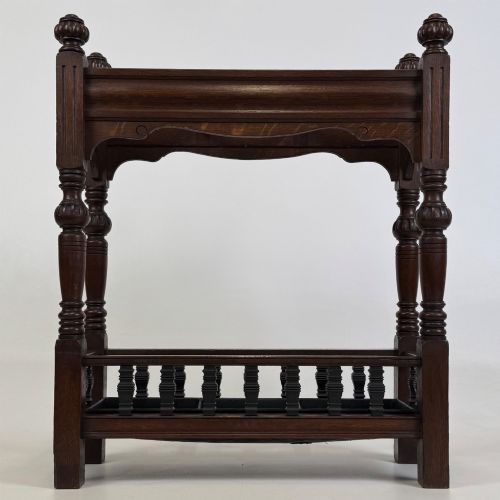
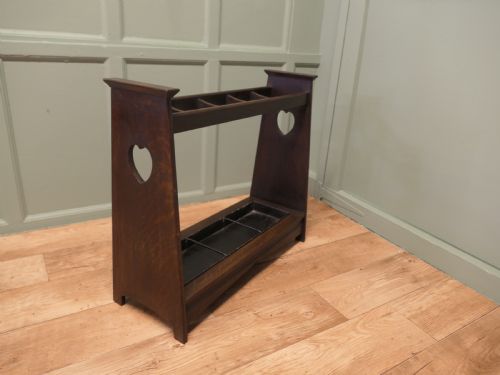
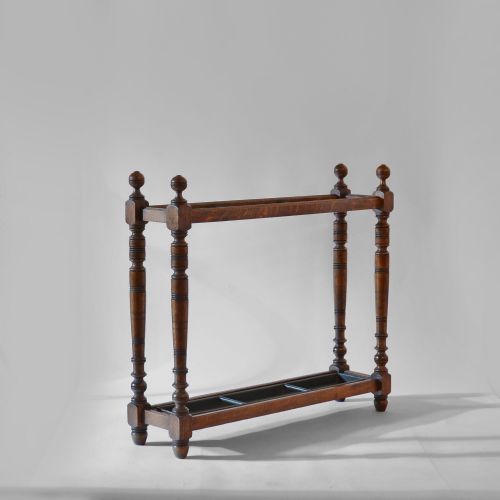
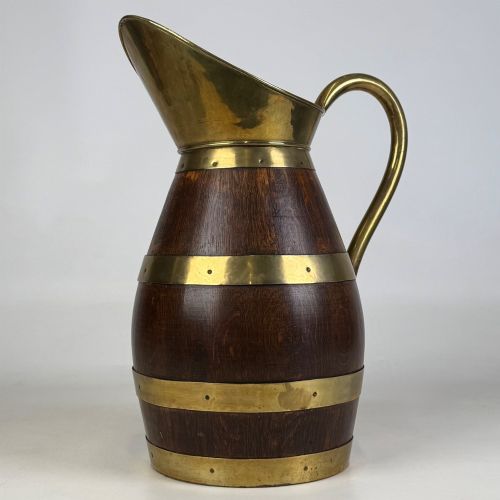
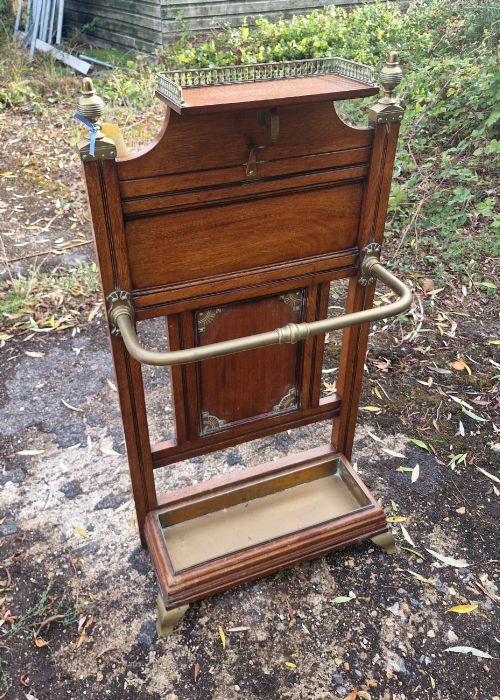
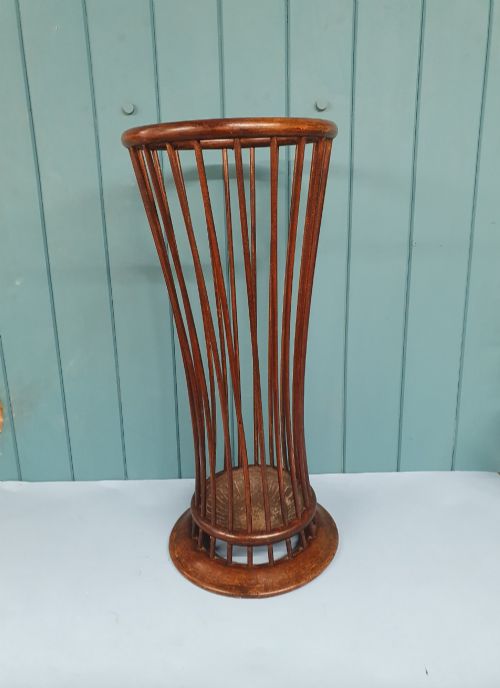
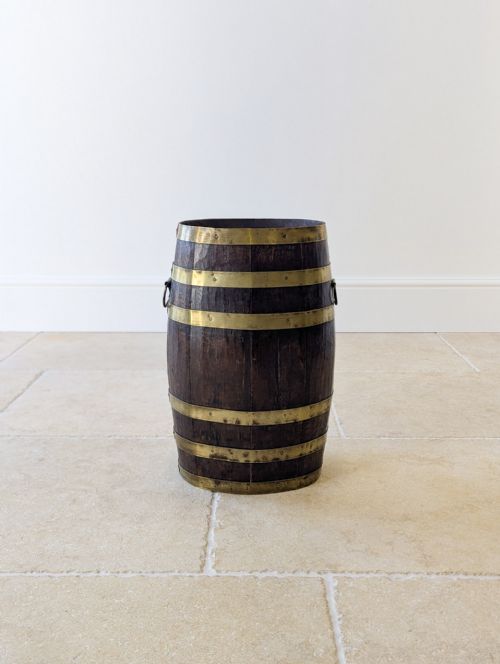
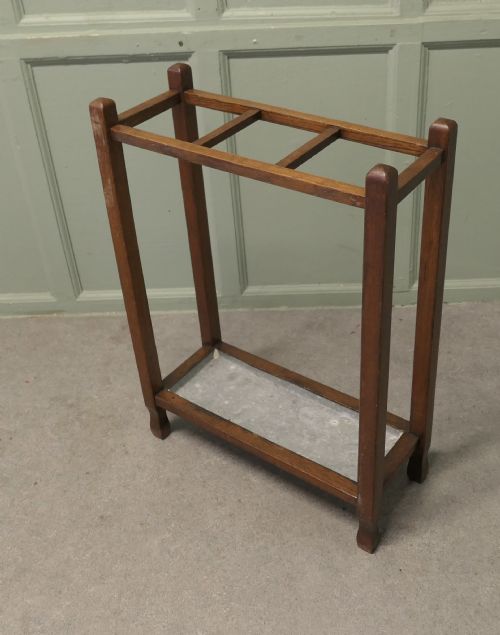
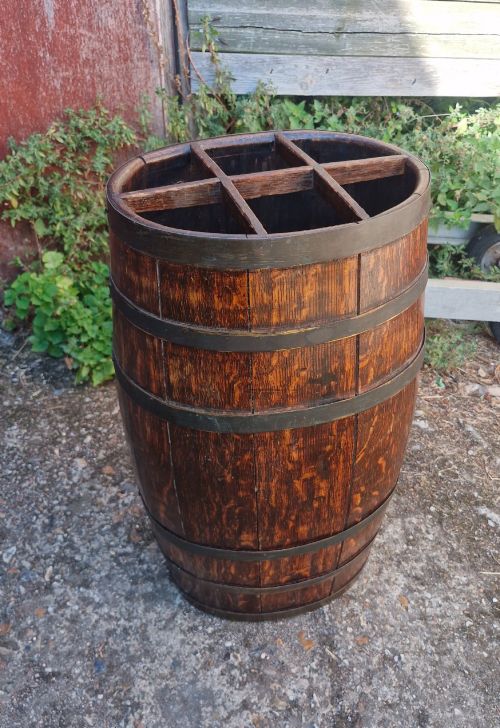
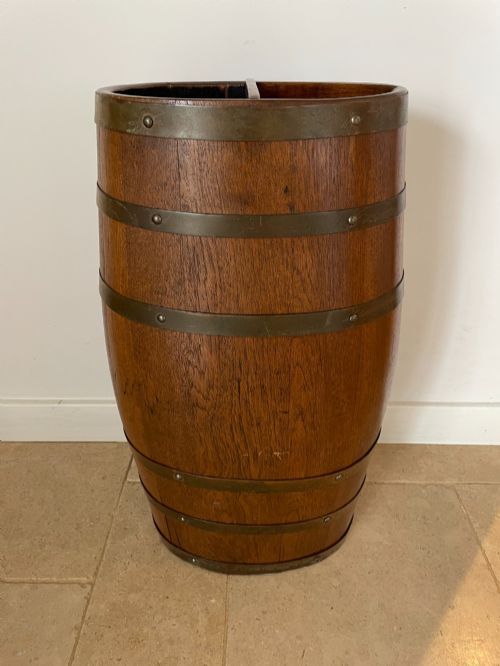
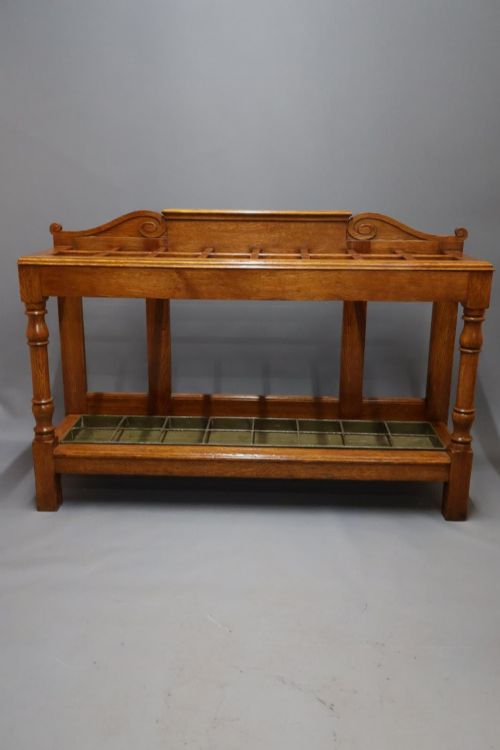
Forms include coopered barrels bound with metal, demilune hall racks, and display stands fitted with drip trays. Each type reflects the architectural tastes of English country houses and town residences from the period.
How they were made
Carpenters constructed these pieces using solid oak, shaped into stave-built barrels or joined frames with carved detailing. Metal components such as brass, iron, zinc, and copper appear frequently as binding bands, braces, and stick loops.
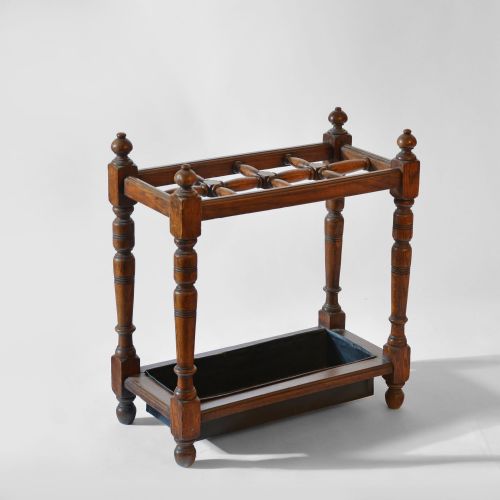
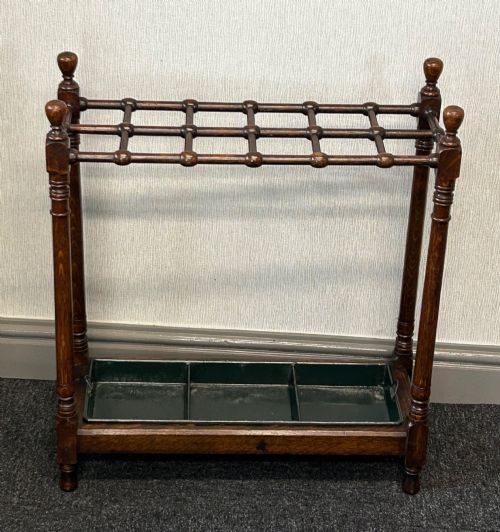
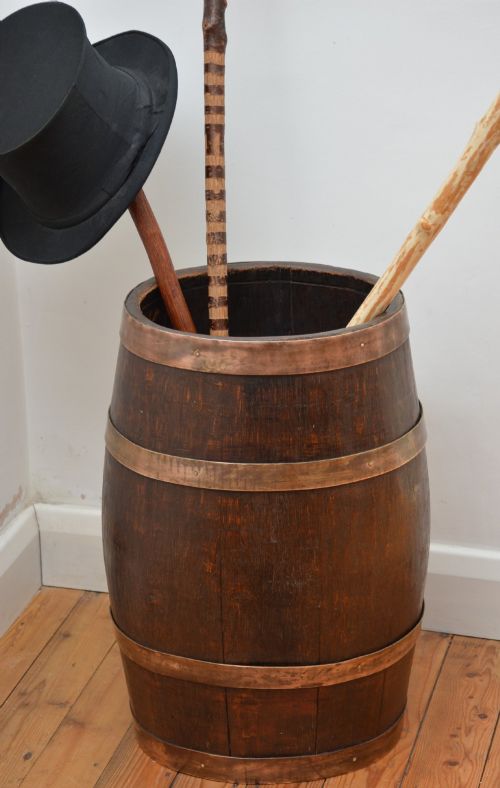
Coopered examples utilise traditional stave construction where wooden staves are held tightly by metal hoops, mirroring historical barrel-making techniques. Other variants employ turned elements, such as barley twist supports, alongside wooden framing and carved panels.
Some oak stands feature hidden coats of arms, transforming a humble umbrella drop into a display of heraldic pride.
What varies in quality
Quality rests in the integrity of the timber and the robustness of the metalwork, distinguishing heavy coopered barrels from lighter constructed racks. Superior examples retain original brass or copper bands and matching metal drip trays that catch moisture securely.
Design distinction elevates certain pieces, particularly those bearing the geometric simplicity of the Arts and Crafts movement or the precise joinery associated with known retail houses. The presence of carved detailing, heraldic brass braces, or integrated ceramic liners marks the upper tier of production.
Liberty Design·Heals of London
The Oak Cane Holder Stand Glossary
- Coopered
- Built from curved wooden staves bound together by metal hoops, much like a traditional barrel. This method provides immense structural strength for holding heavy walking sticks.
- Demilune
- Shaped like a half-moon or semicircle, allowing the piece to sit flat against a hallway wall without projecting too far into the floor space.
- Drip tray
- A metal or ceramic basin positioned at the base of the stand to catch water running off wet umbrellas. Original trays add authenticity and protect flooring.
- Stick loop
- A metal or wooden divider that separates individual umbrellas and walking sticks to keep them upright and organised. These loops prevent clutter in a busy reception hall.
- Barley twist
- A type of turning carved into wooden columns that resembles a twisted rope. This decorative motif appears frequently on Victorian and Edwardian hall furniture.
Oak Cane Holder Stand: Frequently Asked Questions
What is an oak cane holder stand used for?
These furnishings were placed in entrance halls and boot rooms to hold walking sticks, umbrellas, and parasols.
They kept wet gear contained and organised near the front door for daily household use.
How do I care for an oak cane holder stand?
Keep the wood nourished with a traditional wax to maintain the grain and protect against moisture from wet umbrellas.
Empty and dry the metal drip tray regularly to prevent rust from forming inside the base.
Are these stands waterproof?
Most pieces rely on metal or ceramic drip trays positioned at the bottom to catch water from wet items.
The wooden staves or frames themselves are sealed with traditional finishes rather than modern waterproof coatings.
How can I tell Victorian from Edwardian stands?
Victorian examples often feature heavier coopered barrel designs, Gothic revival motifs, and darker, dense oak.
Edwardian pieces tend to display lighter golden oak tones, simpler Arts and Crafts lines, and slender framing.