



Oak Cabriole Leg Chairs
Oak cabriole leg chairs combine robust hardwood frames with sweeping, curved supports, offering an enduring blend of rustic warmth and refined shape.
Oak Cabriole Leg Chairs
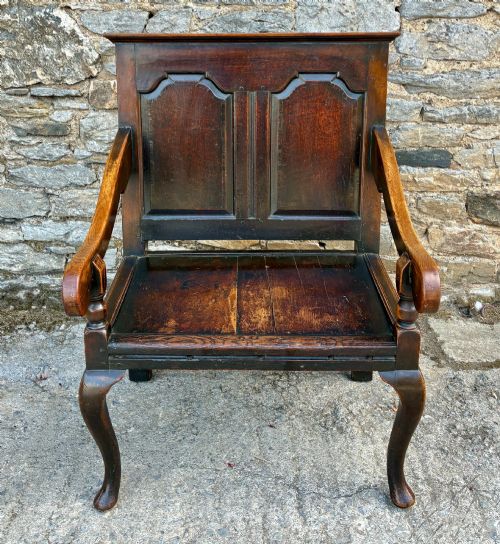
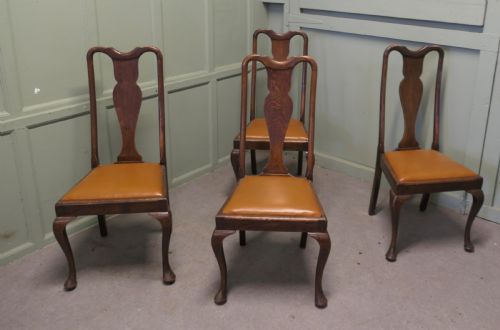
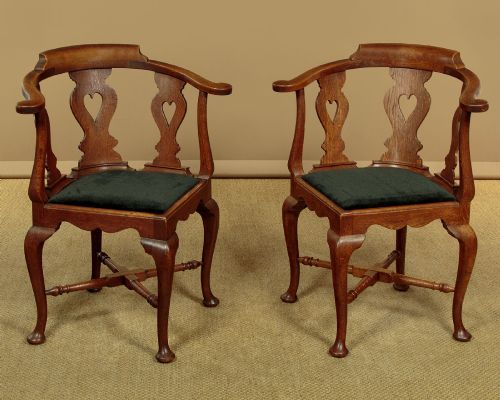
Oak cabriole leg chairs encompass a diverse group of seating furniture united by distinctive curved supports and sturdy timber frames. Buyers exploring oak cabriole leg chairs encounter forms ranging from formal dining sets to intimate corner armchairs and expansive settles.
The selection on this page draws heavily from eighteenth-century Georgian influences, Victorian craftsmanship, and later revival periods. Dining chairs, side chairs, and library armchairs frequently appear among the current listings, alongside French provincial ladder backs.
Makers across different eras adapted the iconic curved leg to suit various domestic settings, pairing the substantial timber with rush, leather, fabric, or crewel work seats. This variety ensures that buyers find both singular statement pieces and coordinated sets suitable for daily use.
How they were made
Cabinet makers and joiners utilised solid oak as the primary structural timber, frequently supplementing it with fruitwood, elm, or yew wood for specific components. Frames were assembled using traditional joinery techniques to ensure stability across the sweeping lines of the seat and back.
The defining curved supports were shaped directly from timber blanks, following natural grain patterns to maintain structural integrity. Craftsmen often enriched the solid wood surfaces with hand-carved scrollwork, panel detailing, or turned spindles depending on the prevailing style.
Form variations range from compact corner armchairs and hall chairs to extensive matching sets of dining chairs.
What varies in quality
The standard of execution in the carving and the proportional harmony of the curved supports define the upper tiers of these chairs. Finer examples display fluid transitions from the knee to the foot of the support, paired with crisply defined decorative carving on the splat or crest rail.
The choice of secondary timbers and the integrity of the original joints further separate standard production from superior craftsmanship. Uniformity across large sets of dining chairs indicates careful initial selection of materials by the workshop.
The Oak Cabriole Leg Chairs Glossary
- Cabriole leg
- A furniture support that curves out at the knee and tapers inward to an ankle or foot, inspired by animal limbs. This design became prominent during the early eighteenth century.
- Windsor chair
- A wooden seating form featuring a solid saddle-shaped seat into which the legs and back spindles are wedged directly. Regional variations often incorporate curved arms and distinctive back splats.
- Corner armchair
- A specialised seat designed to fit into room angles, featuring a continuous curved armrest supported by multiple uprights above a square or diagonal seat.
- Rush seat
- A seating surface woven from dried marsh grass or rushes around a wooden frame, commonly found on provincial ladder back chairs.
- Settle
- A wooden bench with a high solid back, solid arms, and a box or open base, designed to block draughts in older interiors.
Oak Cabriole Leg Chairs: Frequently Asked Questions
How do I care for antique oak chairs?
Maintain the timber by applying traditional beeswax periodically to nourish the dry grain and protect the surface from moisture.
Position the seating away from direct heat sources and strong sunlight to prevent the timber from splitting or warping over time.
Can I use these chairs every day?
Solid hardwood frames and sturdy joinery make these pieces well-suited for regular domestic seating at a dining table or desk.
Inspect the structural stability of the joints and the condition of rush or upholstered seats before putting older pieces into heavy daily service.
What defines Queen Anne style oak chairs?
Queen Anne style pieces typically feature vase-shaped back splats, smooth veneered or solid surfaces, and pronounced curved supports ending in pad feet.
Revival versions produced around nineteen hundred often incorporate similar graceful outlines while utilising heavier golden oak timbers.
How do I distinguish eighteenth century pieces from later revivals?
Early pieces display hand-tool marks, traditional peg construction, and natural wear patterns accumulated over generations of domestic use.
Revival furniture from the Victorian era or nineteen hundred often exhibits more uniform machine tooling and distinct surface finishes characteristic of later workshops.