





Oak Buffet Table Potboard
An oak buffet table potboard is a sturdy timber serving surface with a lower shelf, prized for its honest utility and rich grain.
Oak Buffet Table Potboard
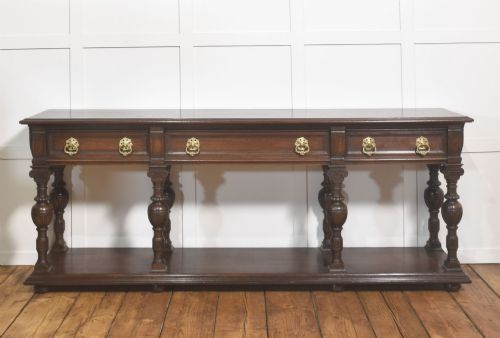
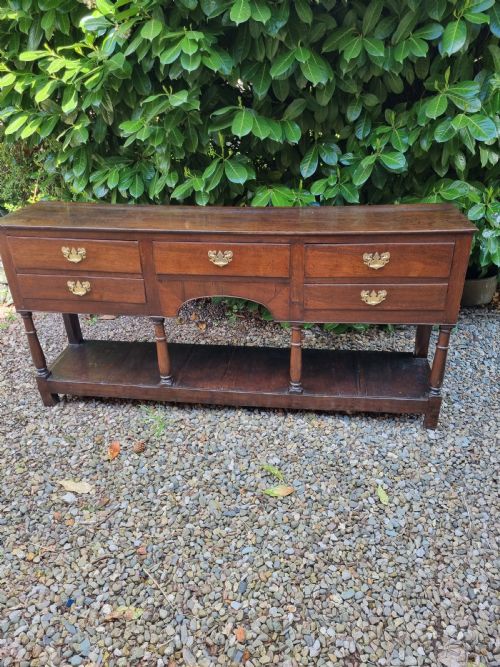
When you search for an oak buffet table potboard, you are looking at heavy timber serving pieces designed for daily domestic use. The examples on this page span the eighteenth century through to the early twentieth century, taking forms such as dresser bases, sideboards, and Welsh dressers. Most pieces you meet here belong either to the Georgian period or the later Jacobean Revival and English Country styles.
Many of these low-profile storage units feature multiple drawers above an open lower tier known as the potboard. You will find regional variations among the selection, including Welsh vernacular pieces and small proportions suited to compact rooms. They serve equally well as dining room servers or hallway furniture, offering both surface space and open lower storage.
Materials and construction methods
Solid oak provides the structural foundation for every piece recorded in the evidence, complemented by brass hardware. Carpenters utilised traditional joinery to build these heavy frames, ensuring lasting durability through centuries of domestic life.
Surface treatments vary from natural waxed finishes to bleached oak and detailed hand carvings. Geometric carvings and shaped drawer fronts appear across both eighteenth-century originals and later revival interpretations.
Oak Buffet Table Potboard Retail Price Guide 2026
Typical asking prices for oak buffet table potboard among the pieces listed under this phrase on Sellingantiques today, from the lower quarter to the upper quarter. They describe what is for sale here now, not the wider market.
Lower potboards were originally designed to keep heavy cast-iron pots away from damp flagstone floors.
Judging quality and character
The distinction between standard examples and finer pieces lies in the depth of timber grain, the crispness of hand-carved geometric details, and the integrity of the original joints. Superior items display harmonious proportions, particularly in smaller scale dresser bases where balance is harder to achieve.
Surface patination plays a major role in the visual appeal of older oak. Pieces retaining a warm, mellow tone accumulated through generations of use stand apart from heavily altered or stripped alternatives.
The Oak Buffet Table Potboard Glossary
- Potboard
- The open lower shelf fitted beneath a dresser base or sideboard. Originally designed to hold pots and heavy kitchen utensils off the damp floor.
- Dresser base
- A low wooden sideboard featuring drawers and sometimes cupboards, standing independently without upper shelving. These form the majority of the oak serving tables found here.
- Vernacular
- Regional furniture built by local country joiners using traditional methods rather than following metropolitan fashion. Welsh vernacular pieces often display distinctive drawer arrangements and timber choices.
- Jacobean Revival
- A nineteenth and early twentieth-century stylistic movement copying seventeenth-century motifs. Pieces from this era frequently incorporate heavy geometric carvings and dark oak finishes.
- Patina
- The surface sheen and colour developed by wood over long periods of handling and exposure to light. A rich patina indicates age and natural wear.
Oak Buffet Table Potboard: Frequently Asked Questions
What is an oak potboard dresser base?
An oak potboard dresser base is a heavy low wooden table featuring drawers along the top and a solid open shelf near the floor. These pieces were traditionally utilised in kitchens and dining rooms for food preparation and storage.
Over time, they transitioned into general living spaces as decorative sideboards. The lower shelf allowed household staff to store heavy pots and dishes within easy reach.
How do I date an oak sideboard?
Dating requires looking closely at construction marks, timber movement, hardware, and decorative styles. Eighteenth-century pieces typically show hand-tool marks and traditional joinery methods distinct from later revival periods.
Revival pieces from the early twentieth century often mimic earlier Jacobean styles through machine assistance or stylised geometric carvings. Comparing the drawer linings and backboards helps confirm the period of construction.
How do I care for antique oak furniture?
Antique oak requires stable humidity levels and protection from direct sunlight to prevent timber splitting. Regular gentle dusting and occasional waxing help preserve the surface sheen.
Avoid placing these heavy tables near direct heat sources such as radiators. Proper care ensures the historic finish and natural wood grain remain protected.