

Oak Box Seat
When you look for an oak box seat, you are choosing a piece of furniture that combines practical storage with a traditional wooden bench.
Oak Box Seat
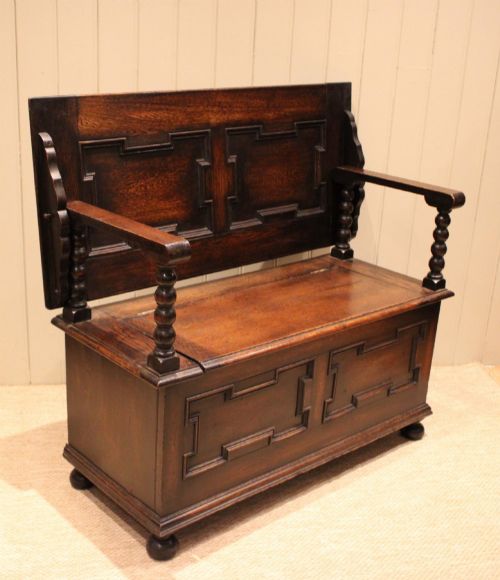
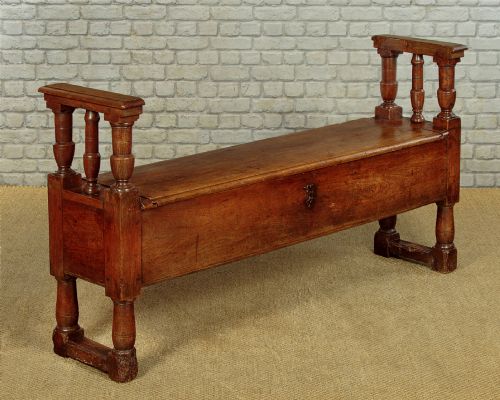
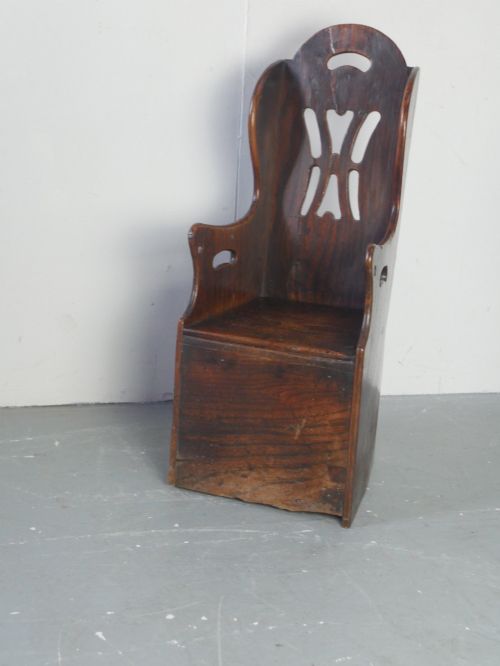
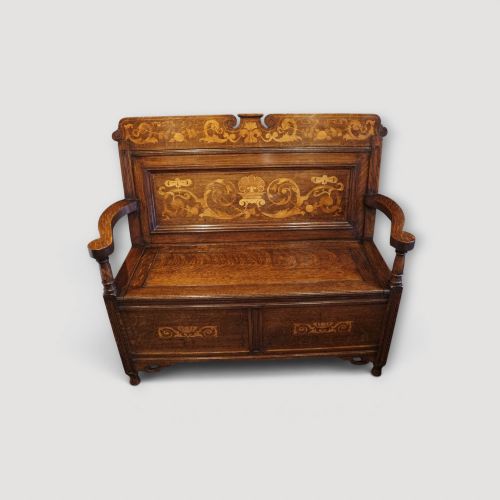
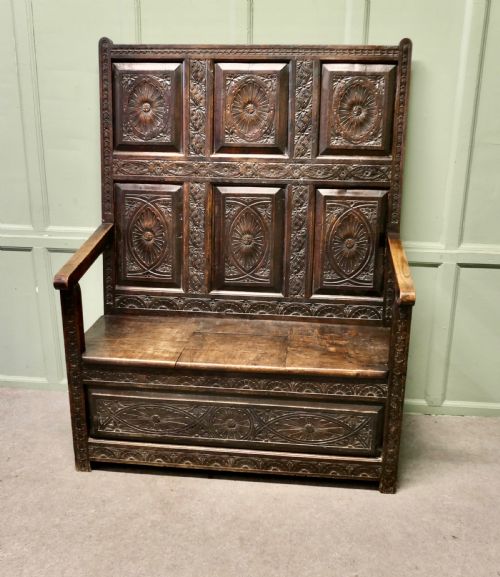
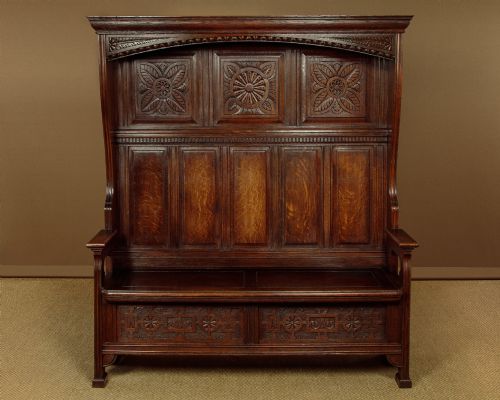
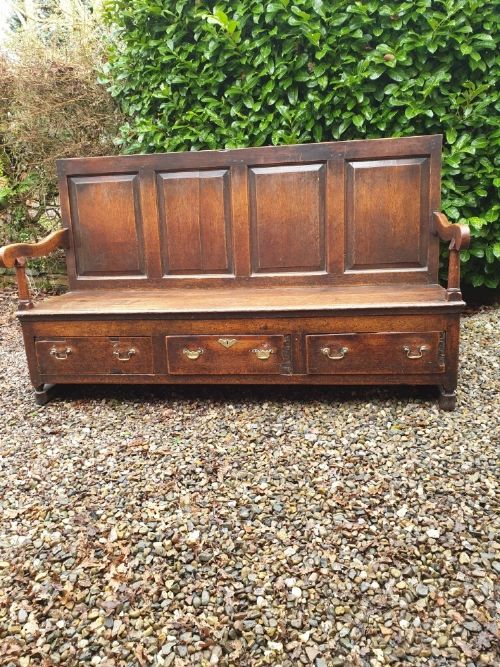
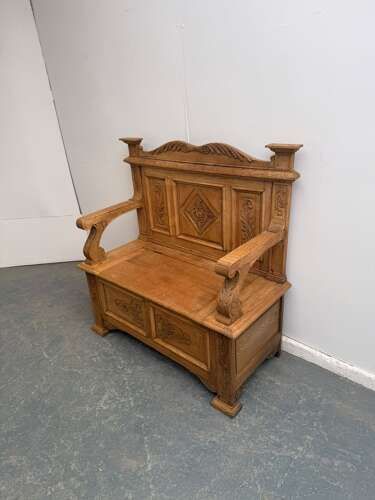
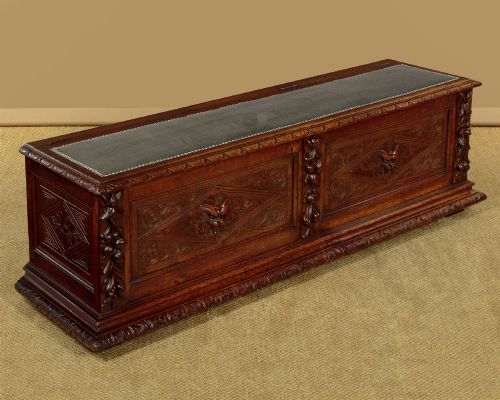
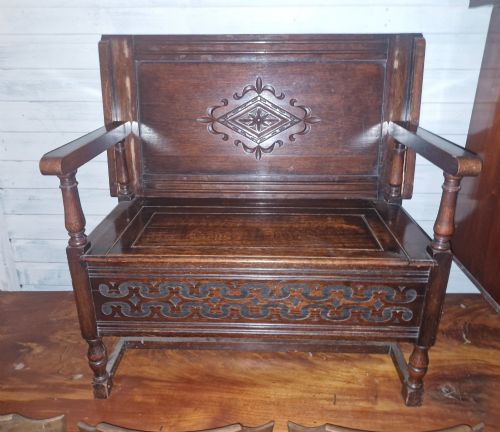
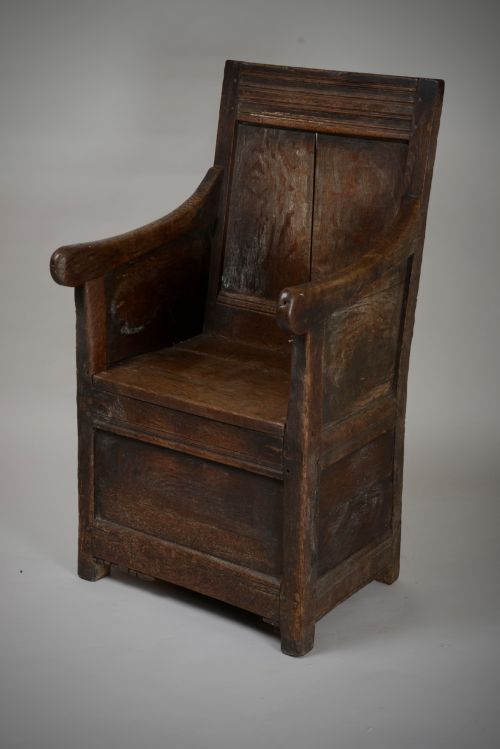
An oak box seat functions as both a place to sit and a concealed chest for storage beneath the hinged lid. These items appear primarily as settles, hall benches, armchairs, and monks benches across various periods.
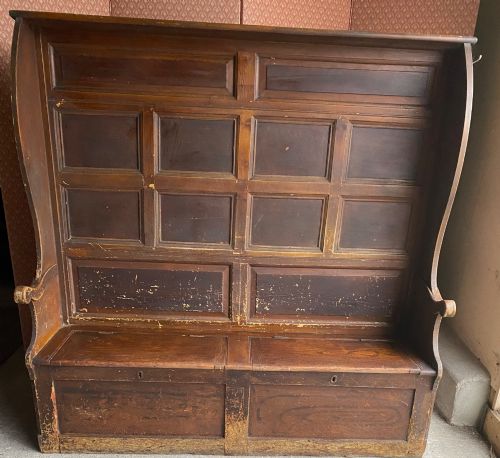
The pieces on this page span from seventeenth-century provincial workshops to Victorian revival pieces and later twentieth-century interpretations. Settles with high backs and enclosed bases are among the most frequently encountered forms in this category.
Rural Welsh and English country makers built many of these dual-purpose seats to keep rooms tidy while offering seating near a hearth or in an entrance hall.
How They Were Made
Joiners relied on solid timber construction, utilising oak augmented by secondary woods like elm, ash, and fruitwood for panels and framing. Surfaces display hand-planed finishes, pegged mortise and tenon joints, and occasional carved ornamentation.
Iron and brass hinges or pivot pins secure the lift-up lids, while panels are often fielded or feature scratch-moulded edges. Wax finishes applied over decades contribute to the warm patina visible on many surviving examples.
Oak Box Seat Retail Price Guide 2026
Typical asking prices for oak box seat among the pieces listed under this phrase on Sellingantiques today, from the lower quarter to the upper quarter. They describe what is for sale here now, not the wider market.
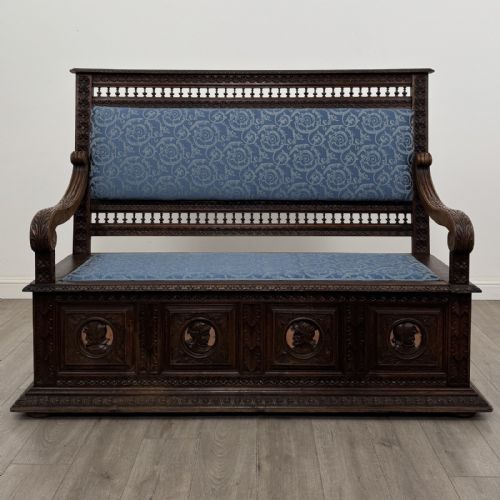
Several pieces feature carved Green Man faces glaring out from the back panels, keeping a watchful, leafy eye on the hallway.
What Varies in Quality
The integrity of the structural timber dictates much of the value, with pieces retaining their original floor timbers and unaltered box bases standing apart from heavily restored examples. Proportion and the crispness of hand-carved details also separate utilitarian workshop items from more ambitious country house commissions.
Original hardware, such as early wrought iron strap hinges or brass cotter pins, enhances the integrity of an older piece. The choice of quarter-sawn oak displaying strong medullary rays indicates careful initial selection of the timber.
The Oak Box Seat Glossary
- Settle
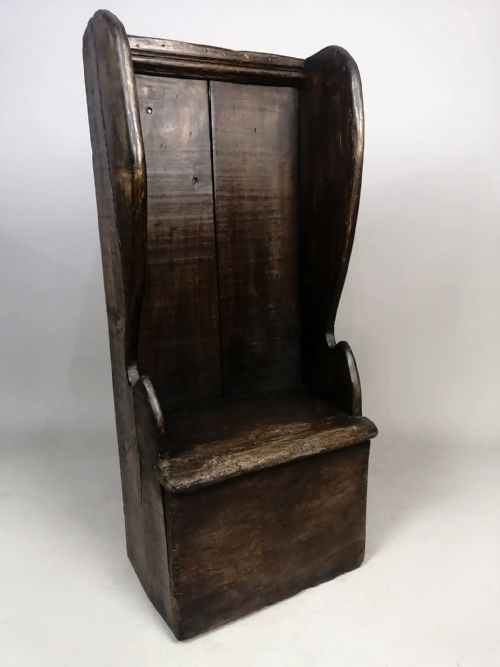
- A wooden bench with a high back, solid arms, and a box base beneath the seat. This form provided draught protection in large, cold rooms.
- Monks Bench
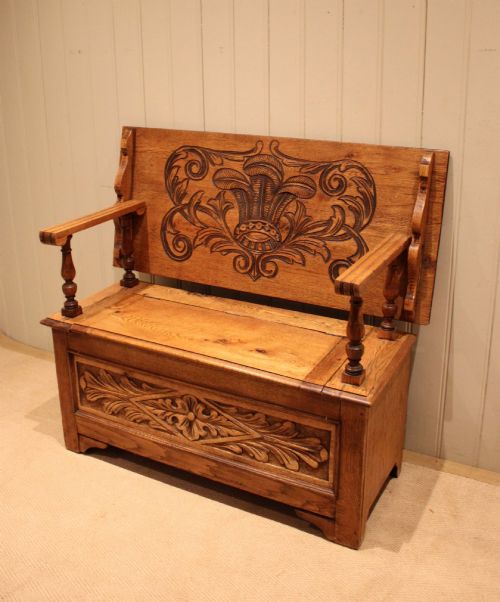
- A convertible piece of furniture featuring a back that folds down to form a table top over a box seat base. These are frequently found in later revival styles.
- Coffer
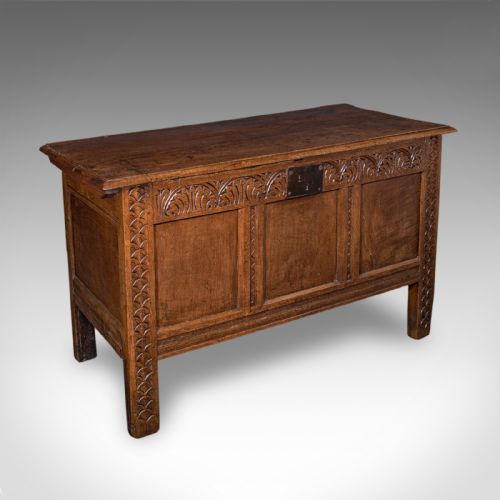
- A large wooden chest with a lid, which forms the basis for many box seats when fitted with arms and a back. They served for storing linen, blankets, and valuables.
- Medullary Ray
- A ribbon-like cellular structure in oak timber that appears as shimmering flake patterns when the log is quarter-sawn. Cabinetmakers prized this figure for its visual depth.
Oak Box Seat: Frequently Asked Questions
What is an oak box seat used for?
These pieces served historically in halls and kitchens to provide seating while keeping blankets, coats, or dry goods stored out of sight. Today they function well in entryways and living spaces for modern storage.
The hinged lid allows quick access to the cavity below while keeping the room orderly.
How do I date an old oak box seat?
Examination of the construction methods, tool marks, and wood species offers the clearest timeline. Hand-pegged joints and irregular hand-sawn boards typically point to seventeenth or eighteenth-century origin.
Later Victorian and twentieth-century examples often display machine-sawn uniformity and heavier, deeper carved decoration inspired by earlier styles.
Are these seats comfortable?
Early wooden benches were designed for upright posture rather than lounging, often featuring high panelled backs to block draughts. Adding a loose squab cushion softens the timber seat for contemporary use.
The solid arms and enclosed bases remain true to their historic seating purpose.
Where should I place a box settle?
An entrance hall or boot room provides an authentic setting where the internal storage proves practical for daily items. They also anchor large living spaces or bay windows effectively.
Allow enough clearance in front of the piece for the lid to open fully without obstruction.