



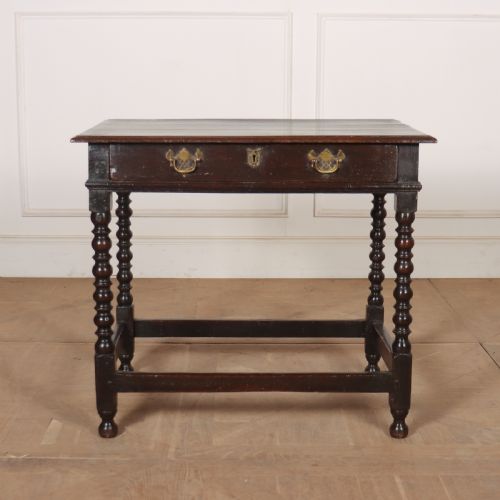


Oak Bobbin Stretcher Table
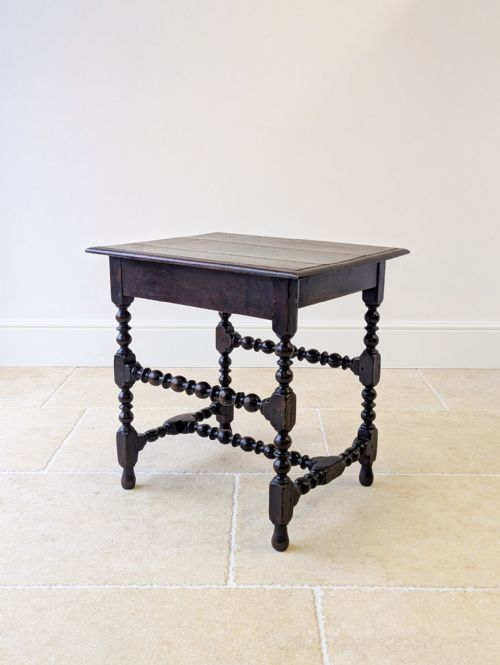
An oak bobbin stretcher table is a sturdy timber side piece built for daily utility, carrying turned cylindrical details that anchor the frame.
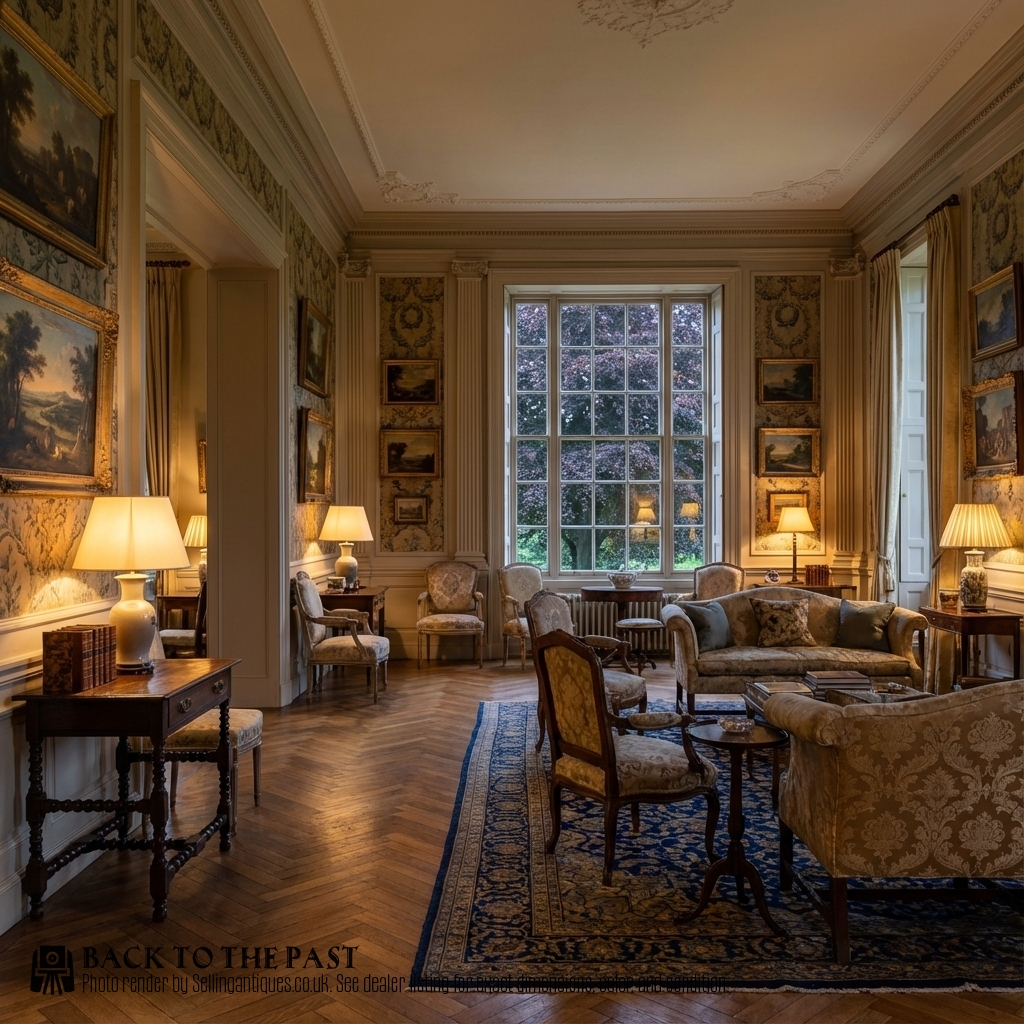
Oak Bobbin Stretcher Table
An oak bobbin stretcher table is a side piece built primarily from solid oak, often supported by turned stretchers near the floor that tie the legs together. When you search for an oak bobbin stretcher table, you enter a field dominated by 17th-century origins, Charles II styling, and later revivals from the 19th century and the 1920s.
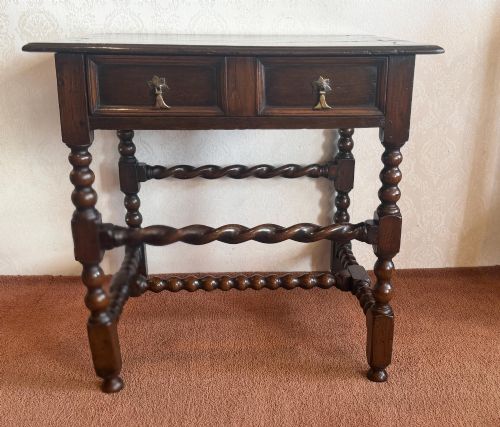
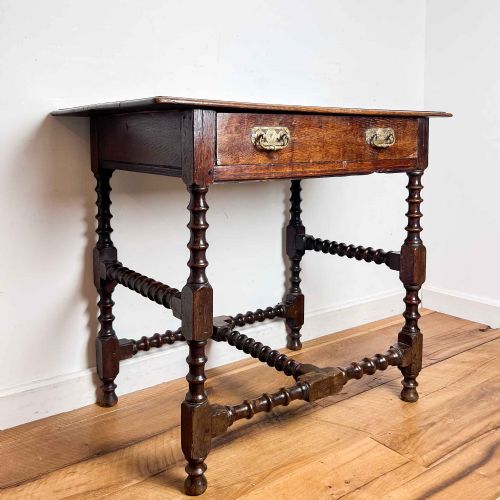
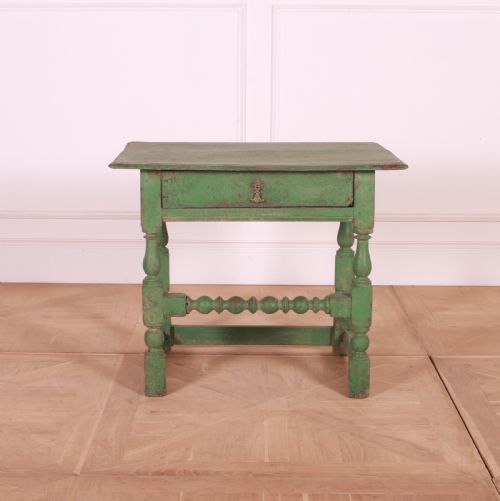
The domestic forms appearing here are principally side tables, lamp tables, and occasional tables, some featuring single drawers or dual drawers. English provincial and country workshops produced these utilitarian designs for everyday rooms rather than grand reception spaces.
Survival rates lean towards heavy 18th-century interpretations and Jacobean revival pieces, though original 17th-century examples occasionally surface. Buyers meet everything from austere provincial work to decorative Victorian adaptations fitted with H stretchers.
How they were made
Joiners built these tables using solid oak for the primary carcass and top, sometimes incorporating secondary timbers like elm and pine in subordinate areas such as drawer bases. Brass hardware occasionally appears on later drawers, though timber pegged joints and traditional joinery dominated the earliest examples.
The characteristic bobbin and barley twist turnings were executed on a lathe, shaping the wooden legs and horizontal stretchers into symmetrical, spool-like profiles. Provincial makers relied on simple hand tools to shape the thick planks and fit the underframes securely together.
Oak Bobbin Stretcher Table Retail Price Guide 2026
Typical asking prices for oak bobbin stretcher table among the pieces listed under this phrase on Sellingantiques today, from the lower quarter to the upper quarter. They describe what is for sale here now, not the wider market.
Jacobean Revival and Charles II styles dominate the aesthetic vocabulary of these side tables.
What varies in quality
The distinction between a standard utility piece and a finer example lies in the crispness of the timber turning and the integrity of the original construction. Sharp, well-proportioned bobbin legs show greater care at the lathe than soft or heavily worn profiles.
Surface character also dictates quality, with genuine age showing in the dry, honest patina of the oak rather than heavy modern restoration. The balance between the top boards and the lower stretcher frame determines the visual success of the piece.
The Oak Bobbin Stretcher Table Glossary
- Bobbin-turned
- A method of lathe-working timber to create a series of rounded, spool-like shapes along the length of a leg or stretcher. This decorative turning became popular during the seventeenth century.
- Stretcher
- A horizontal timber connecting the legs of a table near the floor to provide structural rigidity. In these tables, the stretcher often echoes the turned pattern of the legs above.
- Jacobean Revival
- A nineteenth-century stylistic movement that copied the heavy, dark-oak forms of the early seventeenth century. Revival pieces often display characteristic turnings and panel work.
- Side table
- A small functional table designed to stand against a wall or beside seating. These forms frequently include single or multiple drawers for storage.
- H stretcher
- A floor-level bracing system shaped like the letter H, joining all four legs together for added strength. It is commonly found on seventeenth- and nineteenth-century rectangular tables.
Oak Bobbin Stretcher Table: Frequently Asked Questions
What is an oak bobbin stretcher table?
An oak bobbin stretcher table is a wooden side or lamp table featuring turned spool legs connected near the base by horizontal stretchers. These pieces function as compact surface furniture for hallways and living spaces.
They appear across several eras, ranging from authentic seventeenth-century constructions to nineteenth-century revivals and early twentieth-century interpretations.
How do I date an oak table?
Dating relies on observing construction methods, timber movement, and tool marks rather than relying solely on surface appearance. Seventeenth-century work often shows hand-split timber and pegged joinery.
Later revivals from the nineteenth century or the nineteen-twenties adopt earlier styles while utilising machine-cut elements and standardised fixings.
Where were these tables used?
These tables served practical domestic purposes in English provincial homes, functioning as side surfaces, lamp stands, or small writing desks. Their modest footprints allowed them to fit easily into parlours and hallways.
Today, buyers place them in similar domestic settings as accent pieces that accommodate lamps or books.
Are all bobbin legs original?
Not every turned leg dates to the primary period of manufacture, as tables were frequently repaired or altered over centuries of use. Turnings on nineteenth-century revivals deliberately imitate seventeenth-century models.
Examining the timber colour, wear patterns, and joint construction helps determine whether the base and top belong together.