

Oak Bedding Chest Trunk
These oak bedding chest trunk pieces are solid wooden storage containers built to hold textiles, and you want one for practical storage and authentic period character.
Oak Bedding Chest Trunk
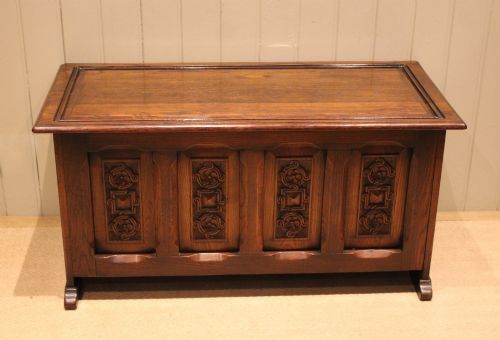
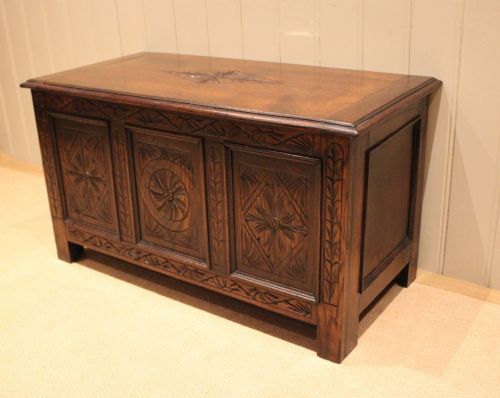
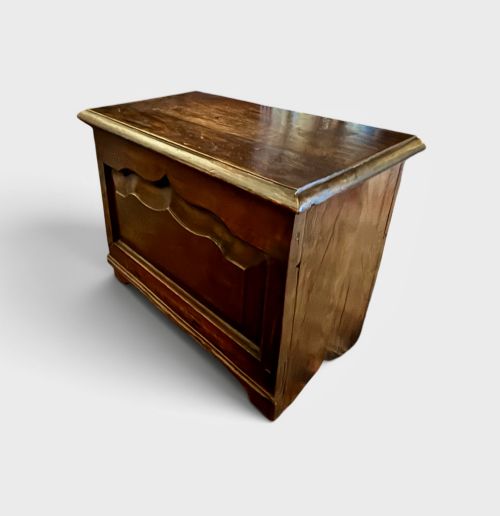
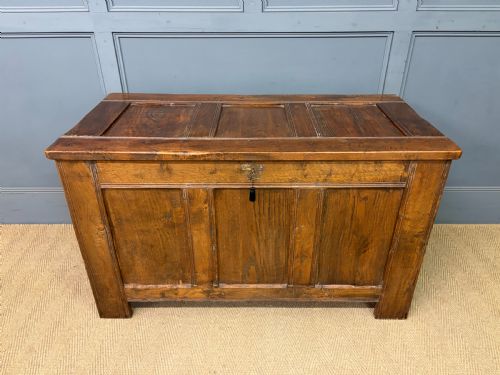
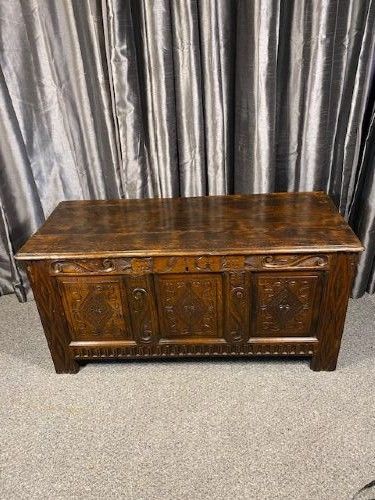
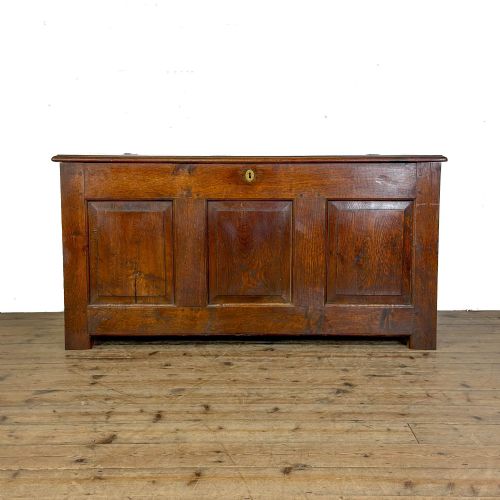
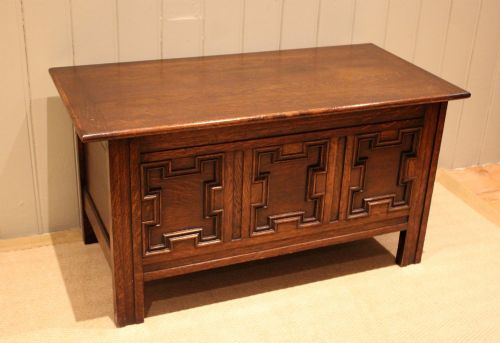
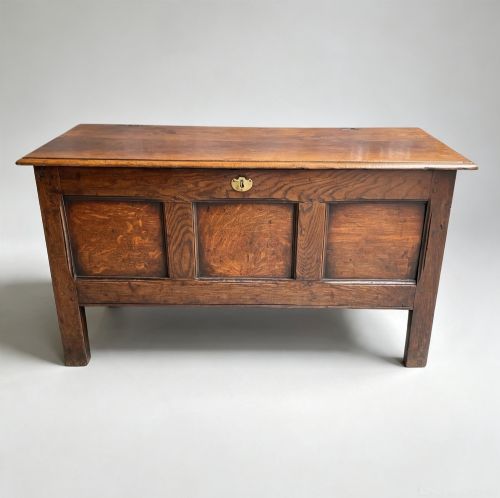
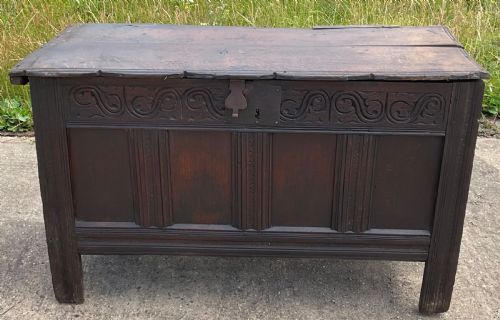
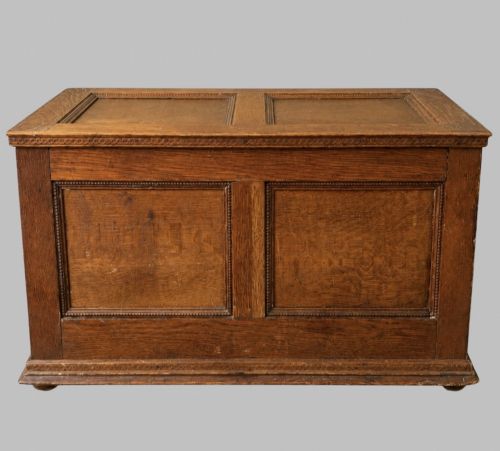
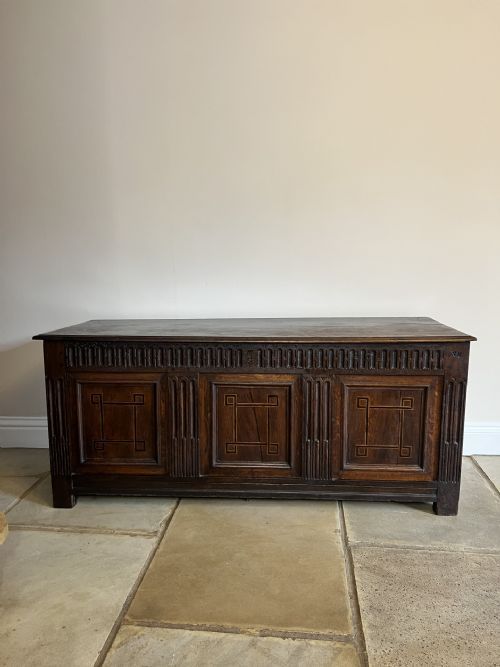
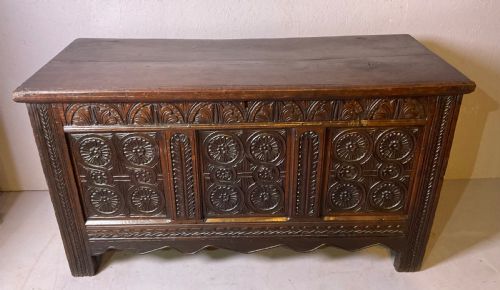
When you search for an oak bedding chest trunk, you are looking at heavy timber storage boxes used for centuries to protect domestic linens and garments. The items available span from seventeenth-century originals to twentieth-century revival pieces, taking the form of coffers, blanket chests, and mule chests.
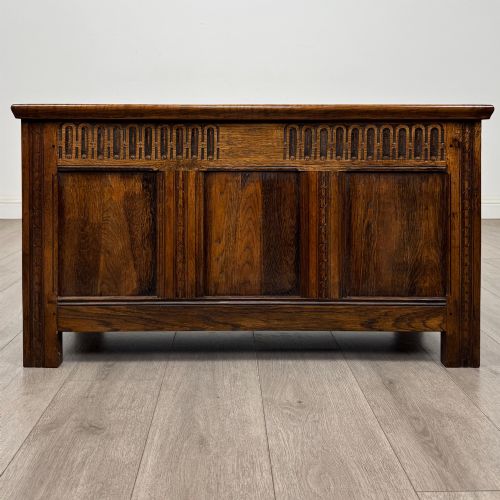
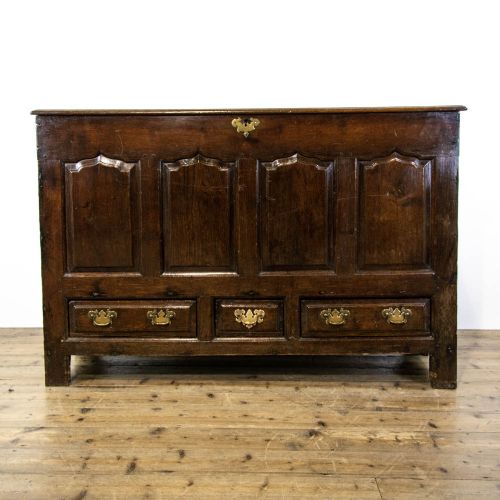
The most common examples you will meet on this page date from the seventeenth and eighteenth centuries, alongside Georgian models and later twentieth-century interpretations. These pieces often feature hinged lids, panelled construction, and sometimes lower storage drawers.
Originating largely from British workshops, these chests served as essential household furniture before fitted wardrobes became standard. Their robust construction allows them to continue functioning as practical storage furniture in modern homes.
Assessing build quality and age
Quality in these pieces is dictated by the integrity of the timber and the crispness of any hand carving. Period authenticity also drives distinction, separating genuine seventeenth and eighteenth-century examples from later revival pieces made in the twentieth century.
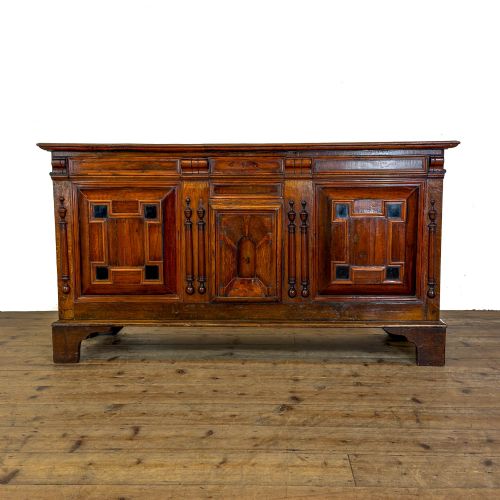
The sophistication of the joinery and the presence of original hardware differentiate finer examples from standard utility boxes. Elements such as inlaid marquetry or integrated drawers beneath the main chest compartment elevate the complexity of the piece.
Listings on this site range from seventeenth-century originals to twentieth-century Jacobean revival pieces, constructed primarily in solid oak with iron and brass hardware.
The Oak Bedding Chest Trunk Glossary
- Coffer
- A heavy wooden chest traditionally used for storing valuables and documents. These pieces usually feature a hinged lid and a rectangular body.
- Mule chest
- A storage chest featuring one or more drawers built into the base beneath the main compartment. This form bridges the traditional coffer and the modern chest of drawers.
- Marquetry
- Decorative veneer work using various woods arranged in geometric or pictorial patterns. It appears on select period chests to create surface ornamentation.
- Kist
- A regional term, particularly Scottish and northern, for a wooden chest or box. These items serve the same domestic storage function as standard blanket chests.
- Panelling
- A method of framing thin wooden boards within thicker stiles and rails to prevent warping. This technique forms the structural walls of most period oak chests.
Oak Bedding Chest Trunk: Frequently Asked Questions
What were oak bedding chest trunk pieces used for historically?
These chests served primarily to store household textiles, woollens, blankets, and precious garments away from dampness and pests. In centuries past, before built-in closets existed, they acted as the main wardrobe for domestic storage.
Beyond simple storage, they frequently doubled as seating benches or tables within the home. Important family documents and valuables were also kept inside under lock and key.
How do I tell a seventeenth-century chest from a revival piece?
Examination of the timber surfaces, tool marks, and construction wear helps indicate the true age of a piece. Seventeenth-century examples show hand-riven or pit-sawn timber characteristics alongside period-appropriate joinery.
Revival pieces from the twentieth century often display machine-cut uniformity and cleaner internal surfaces. Comparing the patination and hardware against known period examples clarifies the distinction.
Where should I place an oak chest in my home?
These pieces function effectively at the foot of a bed, in hallways, or as living room coffee tables with internal storage. Their flat lids provide a useful surface for displaying objects while keeping contents hidden away.
Positioning requires avoiding direct sunlight and excessive heat sources like radiators to protect the historic timber. Maintaining stable room humidity prevents the solid oak from drying out or splitting.
What is the difference between a coffer and a mule chest?
A standard coffer consists of a single deep storage compartment accessed exclusively through the top lid. Everything stored inside sits at the bottom of the box.
A mule chest introduces one or more pull-out drawers beneath the main upper compartment. This addition allows easier access to stored items without needing to lift the heavy top lid.