
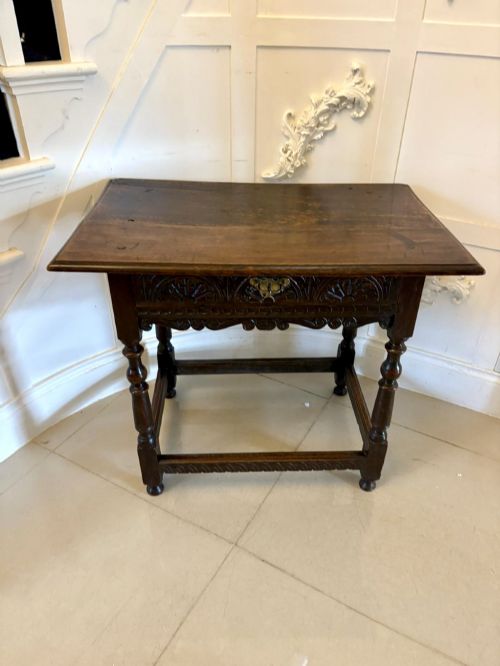
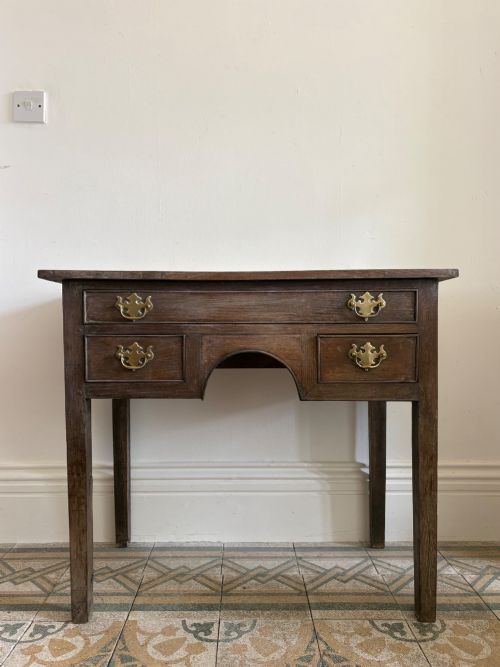
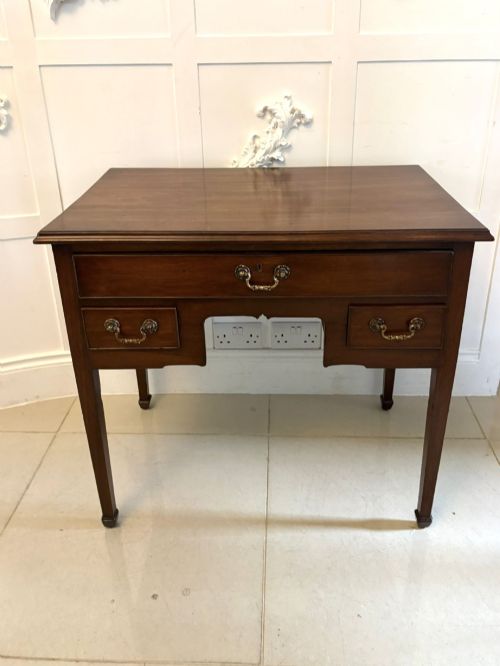
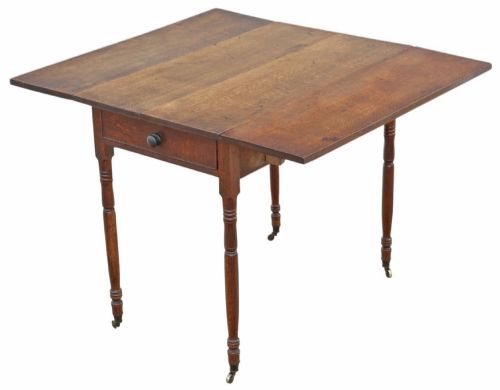
Oak Accent Table Drawers
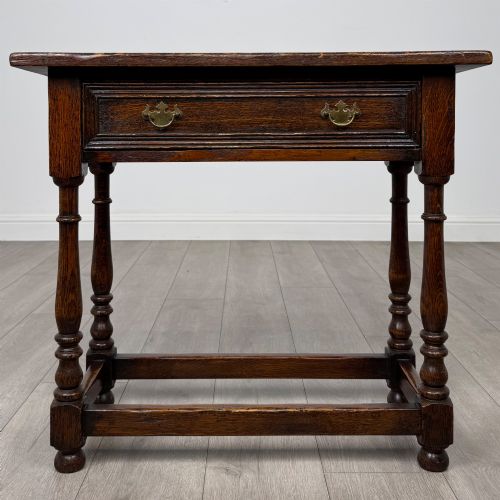
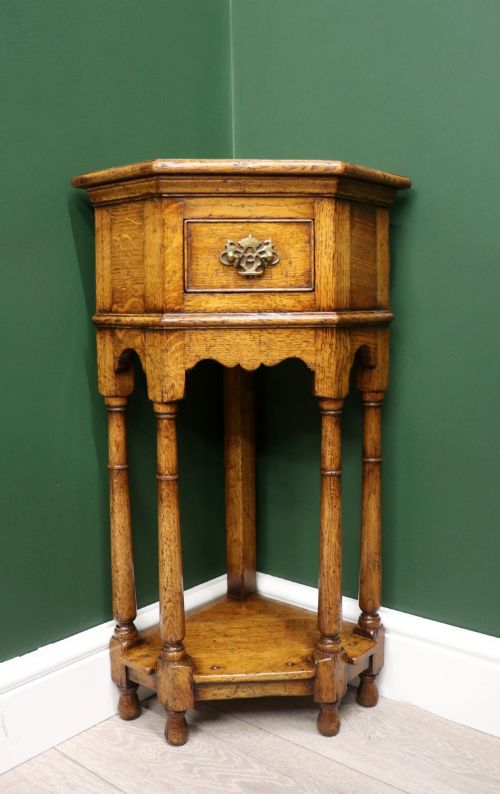
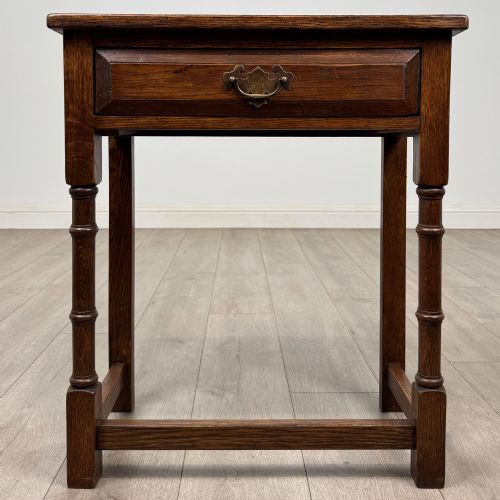
Oak accent table drawers offer practical surface space and concealed storage, bringing period character and sturdy utility into a room.
Oak Accent Table Drawers
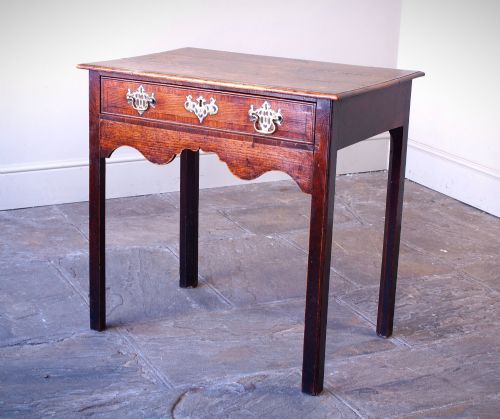
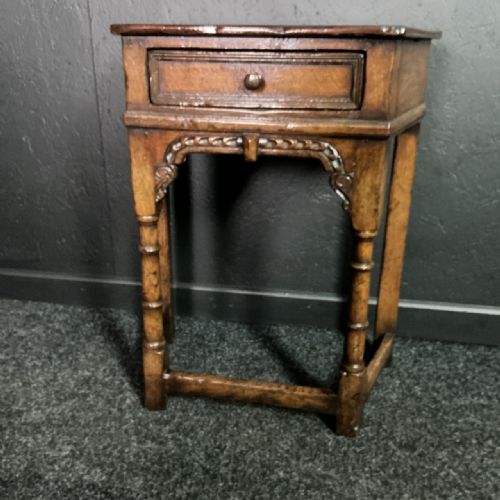
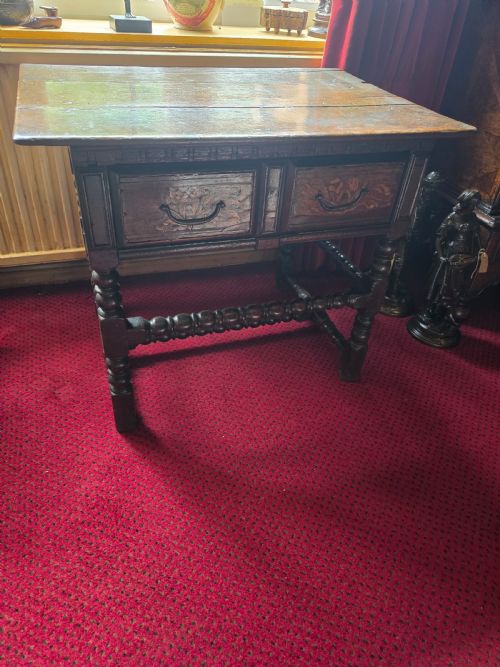
When seeking oak accent table drawers, buyers encounter functional small tables equipped with one or more compartments for storage. These pieces bridge the gap between decorative surface furniture and practical utility.
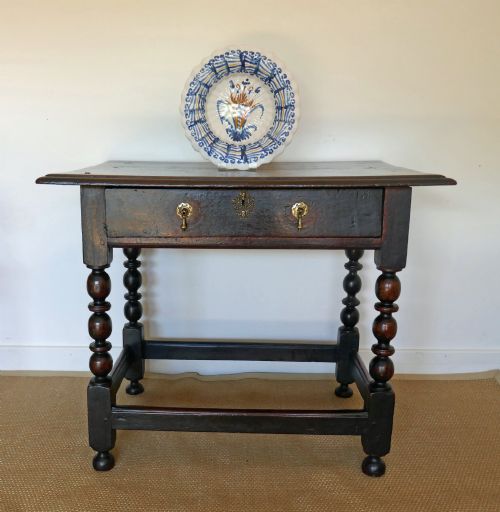
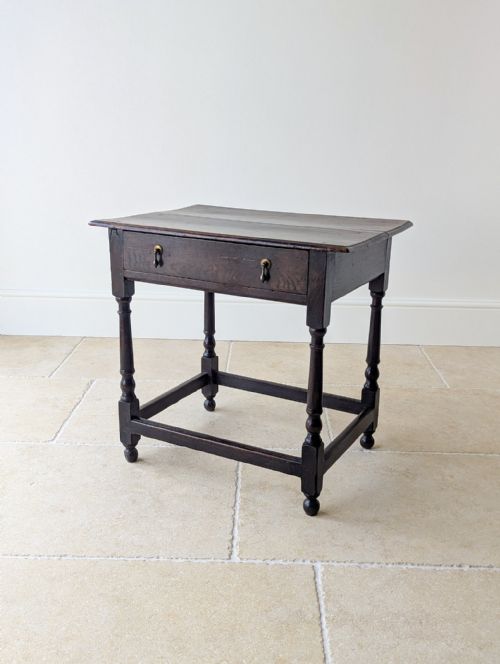
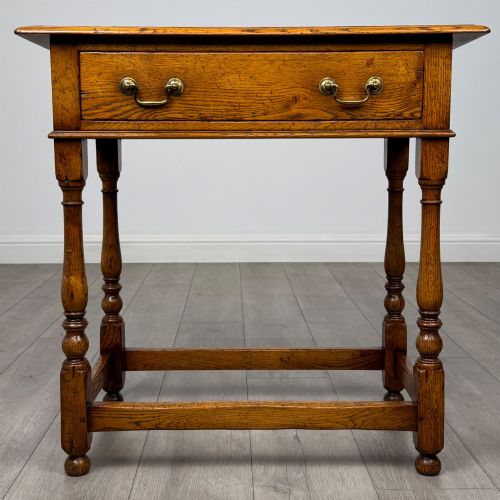
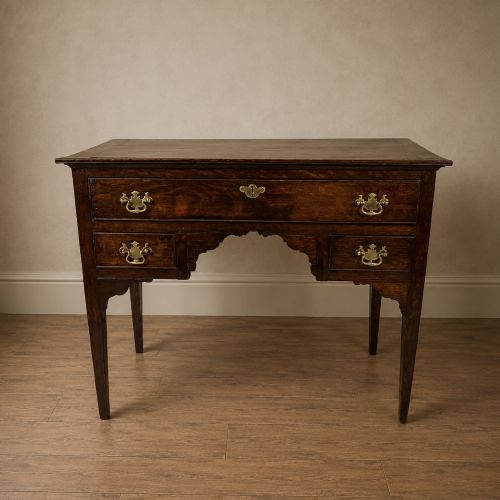
The selections span multiple eras, most frequently appearing as side tables, lowboys, and lamp tables from the seventeenth, eighteenth, and nineteenth centuries. Regional country workshops and formal urban cabinetmakers alike produced these compact forms.
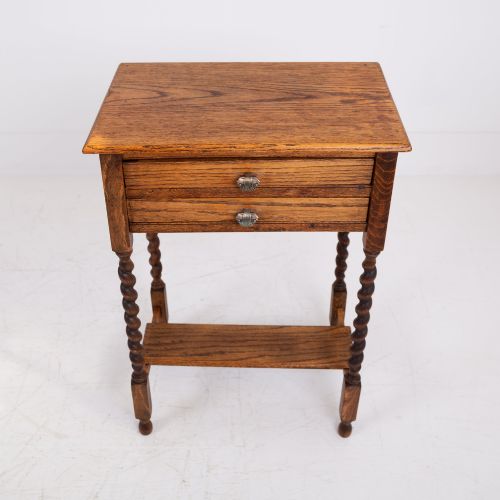
Earlier examples often take the form of lowboys featuring fitted drawers beneath the main surface, while later twentieth-century iterations continue the tradition in golden or narrow proportions. Each piece serves to anchor a corner or hallway with solid timber construction.
Quality and Craftsmanship
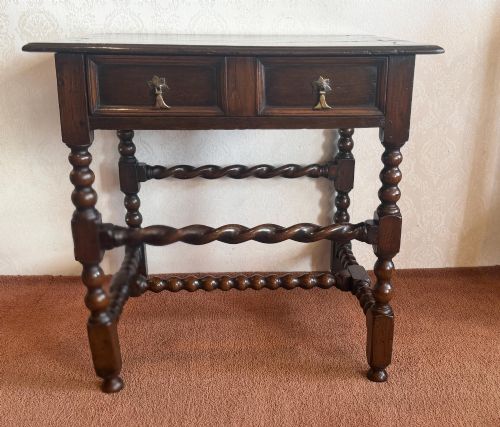
The standard of a piece depends heavily on the crispness of timber carving, the integrity of the original joints, and the retention of period hardware. Examples with hand-turned legs and precise joint work demonstrate superior workshop origins.
Proportion and scale dictate the visual success of the table, with narrower or bolder proportions commanding stronger presence. Pieces retaining their original timber patination and minimal structural alteration sit firmly at the higher end of the range.
The Oak Accent Table Drawers Glossary
- Lowboy
- A small table with one or more drawers, typically raised on four legs and used as a dressing table or side table in the eighteenth century.
- Bobbin turned
- A decorative turning technique producing a series of rounded, spool-like shapes along the length of a leg or stretcher.
- Barley twist
- A spiral column turning resembling a twisted rope, popular during the seventeenth century.
- Pembroke
- A small table with folding or drop leaves on either side, often fitted with a single drawer.
- Credence table
- A folding table with a semicircular top supported by a swinging leg, originating from ecclesiastical and domestic settings.
Oak Accent Table Drawers: Frequently Asked Questions
How do I date an oak table?
Dating relies on examining construction methods, timber choice, and leg turning styles. Pegged joints and bobbin turnings often indicate seventeenth-century origin.
Later nineteenth-century revivals adopt these earlier motifs while utilising machine-sawn timber elements and different internal construction details.
Where should I place a side table?
These tables suit hallways, living rooms, and bedrooms where surface space is needed without blocking walkways. Their compact proportions fit neatly beside seating.
The integrated drawers provide convenient storage for small household items while the timber top holds lamps or decorative objects.
Are these tables solid oak?
Most examples utilise solid oak for the primary framework, topboards, and drawer facades. Secondary woods like pine frequently appear in internal drawer box linings.
Checking the drawer interiors and underside construction reveals the mixture of timbers employed by the original cabinetmaker.