


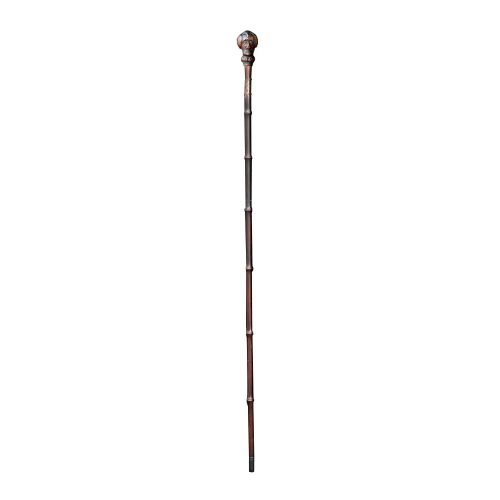

Novelty Wooden Walking Stick
These novelty wooden walking stick examples combine practical support with sculptural wit, offering collectors whimsical handles carved from timber, bone, and horn.
Novelty Wooden Walking Stick
A novelty wooden walking stick is a functional cane distinguished by an unusual, carved, or cleverly concealed handle designed to amuse or serve a secondary purpose. When buyers search for a novelty wooden walking stick, they encounter pieces fashioned primarily during the Victorian and Edwardian eras, spanning the nineteenth century up to nineteen hundred.
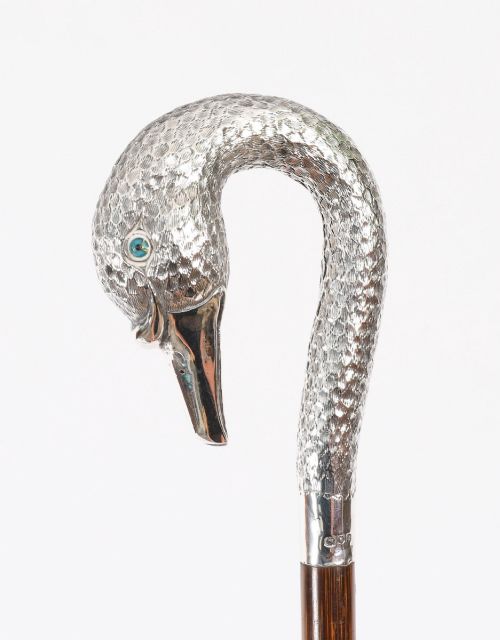
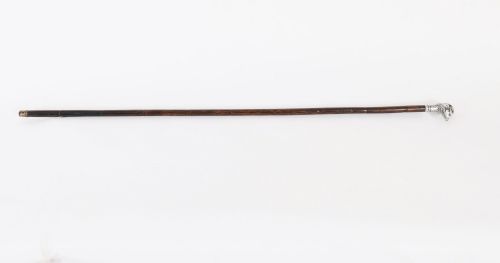
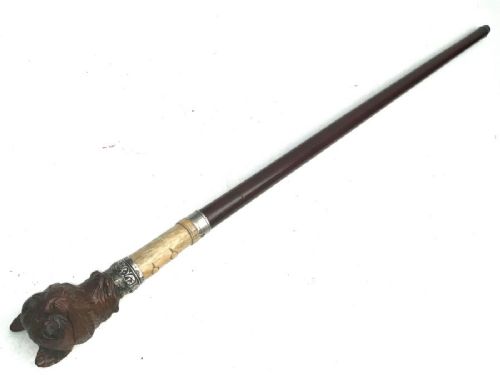
The forms on this page include animal heads such as swans, ducks, boars, and dogs, alongside ingenious gadget sticks containing swords, corkscrews, or musical flutes. Most examples originate from British and European workshops, utilising dense hardwoods and linden wood fitted with silver mounts.
How they were made
Carvers shaped handles from hardwood, fruitwood, linden wood, bone, and horn, often capturing intricate details in animal subjects like Black Forest bears and German shepherds. These carved heads were joined to timber shafts, sometimes incorporating sterling silver collars or bands dated with assay marks.
Makers integrated hidden mechanisms into the shafts to create gadget canes, housing swords, corkscrews, or functional tools within the wooden body. The construction required precise woodworking to ensure the concealed compartments remained secure while maintaining the structural strength needed for daily walking support.
Some nineteenth-century gentlemen concealed a working musical flute inside their walking stick for impromptu woodland performances.
What varies in quality
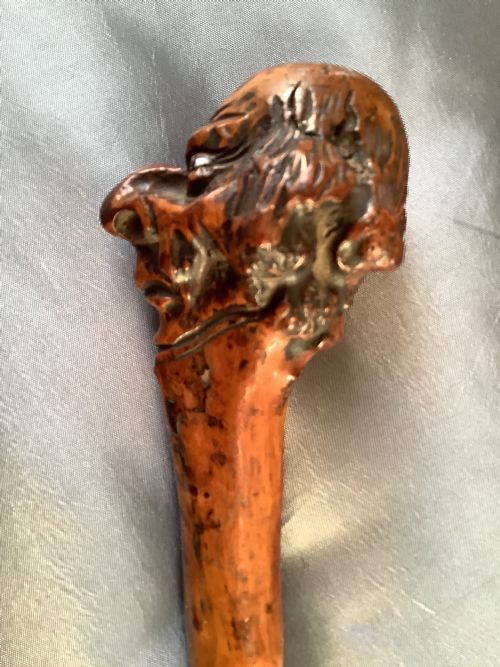
The standard of carving dictates the appeal of each piece, distinguishing lively, deeply modelled animal forms from rigid or plain handles. Finer specimens display expressive anatomical detail in subjects like clenched fists or hound heads, carved with sensitivity to the grain of the fruitwood or hardwood.
The complexity of the mechanism influences value, particularly in gadget sticks where internal components like swords or corkscrews operate smoothly within the wooden shaft. Sterling silver mounts with clear hallmarks add a layer of distinction, contrasting with simpler metal or horn fixtures.
The Novelty Wooden Walking Stick Glossary
- Black Forest
- A style of wood carving originating from the mountain region of Germany and Switzerland, known for realistic animal figures such as bears and dogs. Pieces often utilise linden wood and exhibit deep, expressive texturing.
- Gadget stick
- A walking cane fitted with a concealed utility, such as a sword, flute, or corkscrew. These items combined practicality with secrecy, popular among gentlemen of the nineteenth century.
- Swagger stick
- A short, light cane traditionally carried by military officers rather than used for physical support. They often feature decorative silver mounts or carved handles.
- Sterling silver
- An alloy of silver containing ninety-two point five percent silver by mass, frequently used for collars and handles on nineteenth-century canes. Assay marks on these mounts often reveal the year and city of manufacture.
Novelty Wooden Walking Stick: Frequently Asked Questions
What is a novelty wooden walking stick?
A novelty wooden walking stick is a nineteenth-century cane featuring a carved figurative handle or a hidden mechanical gadget. These pieces range from animal head sculptures to functional tool canes.
They reflect Victorian and Edwardian craftsmanship, combining everyday utility with ornamental wit. Collectors value them for their sculptural handles and ingenious hidden compartments.
How do I identify a gadget cane?
A gadget cane conceals a secondary function, such as a sword blade, a corkscrew, or a timber flute, within its wooden shaft. Examining the joinery near the handle often reveals the seam of the hidden compartment.
Makers engineered these walking sticks to appear ordinary until the handle was unscrewed or pulled. The presence of internal metalwork or specialised mechanisms distinguishes them from standard walking sticks.
What materials are used in these canes?
The shafts and handles are constructed from various hardwoods, fruitwood, linden wood, horn, and bone. Many examples incorporate sterling silver collars, mounts, or handles stamped with period assay marks.
Carvers selected dense timbers to withstand regular use while permitting fine detail work. Secondary materials like metal and horn provided contrast and structural reinforcement.
Are these walking sticks antique?
The listings on this page date primarily from the nineteenth century through to nineteen hundred, encompassing the Victorian and Edwardian periods. Stylistic cues and material types help verify their age.
Hand-carved details, period silver hallmarks, and traditional joinery separate genuine antique pieces from later reproductions. Dealers attribute these items based on historical manufacturing techniques and documented design styles.