






Hand Carved Wood Stick
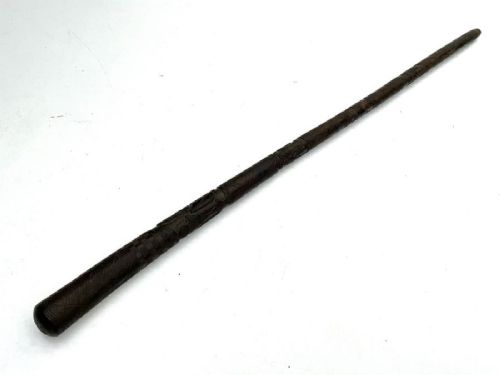
These hand carved wood stick examples range from folk art walking canes to tribal fighting clubs shaped from timber and hardwood.
Hand Carved Wood Stick
When you search for a hand carved wood stick, you encounter a diverse array of utilitarian and decorative objects shaped by makers from various traditions. The selection includes walking sticks, treen, knitting sheaths, and ethnographic pieces carved from timber.
You are most likely to meet nineteenth century folk art pieces alongside items originating from British, Japanese, Southern African, and Australian traditions. These objects encompass functional walking canes, decorative candlesticks, and traditional hunting or fighting implements.
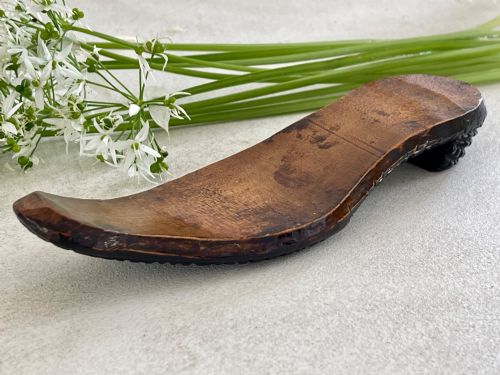
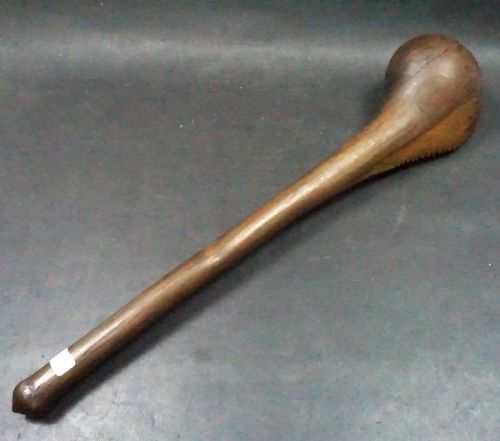
The category spans domestic items like shoe-shaped knitting sheaths and distaffs, as well as foreign weapons such as knobkerries and woomeras. Each piece reflects the specific cultural context and carving techniques of its maker.
Materials and construction methods
Carvers utilised local and imported timbers, ranging from standard hardwood and malacca wood to specific varieties like kashi oak and thorn wood. Additional components such as bone, glass, and iron occasionally appear on specific walking sticks and decorative objects.
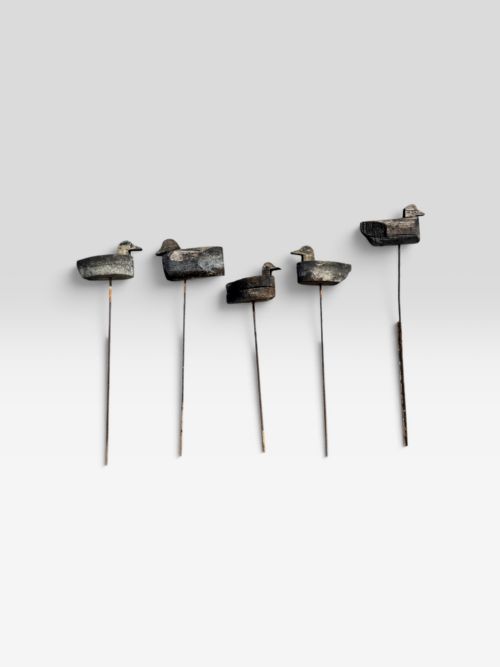
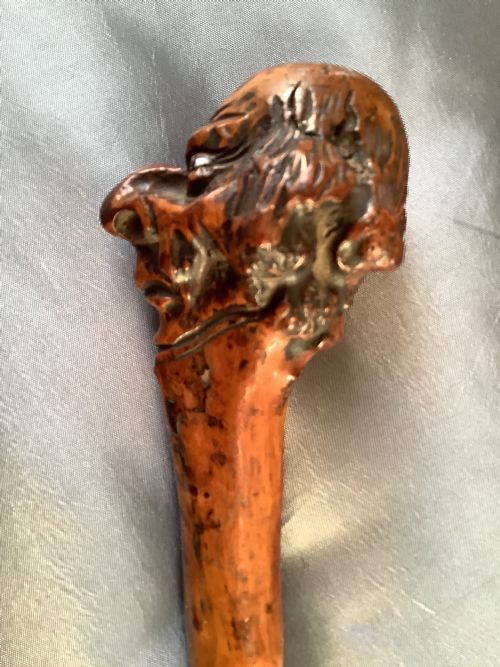
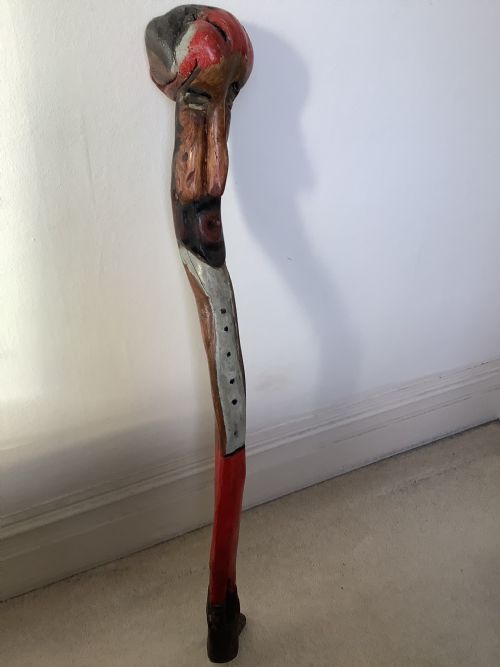
Master artisans employed hand-carving techniques to shape raw timber into complex figurative designs, such as clenched fists, animal forms, and human figures. Surface decoration sometimes involved polychrome painting or careful polishing to highlight the natural grain of the wood.
Object forms span walking sticks, treen, candlesticks, knitting sheaths, and tribal fighting weapons from various global traditions.
Assessing quality in carved wooden objects
The standard of a hand carved wood stick depends heavily on the ambition of the carving and the precision of the artisan's hand. Pieces with detailed figural work, such as expressive handles or complex folk art scenes, demand greater skill than plain utilitarian shafts.
Condition and originality dictate the standing of an antique piece within its category. Items retaining their original surface treatment, whether polychrome pigment or aged patina, show greater integrity than heavily restored examples.
The Hand Carved Wood Stick Glossary
- Knobkerrie
- A traditional Southern African wooden club featuring a heavy knob at the end, utilised for hunting or combat. These items are typically fashioned from dense hardwood.
- Knitting sheath
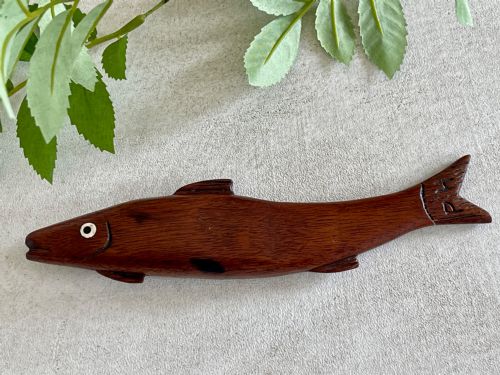
- A domestic wooden device tucked into a belt or apron to hold one knitting needle steady while the other is manipulated. Nineteenth-century examples often display whimsical folk art shapes like shoes or fish.
- Woomera
- An Australian Aboriginal spear-thrower that acts as a lever to increase the velocity of a projectile. These wooden implements frequently form part of indigenous artefact collections.
- Treen
- Small, functional wooden household objects made by local turners and carvers. This category encompasses items ranging from candlesticks to knitting sheaths.
- Distaff
- A tool used in spinning to hold unspun fibres ready for the spindle. Folk art examples are hand carved from timber.
Hand Carved Wood Stick: Frequently Asked Questions
What is a knobkerrie?
A knobkerrie is a traditional wooden club originating from Southern Africa, characterised by a distinctive rounded knob at the striking end. These items were fashioned from dense hardwood for use in hunting or defence.
Today, they are collected as ethnographic art and appreciated for their robust construction and historical significance within indigenous African cultures.
How were antique knitting sheaths used?
Antique knitting sheaths were tucked into the waist or apron strings of a knitter to support one needle, allowing the practitioner to work faster with one hand free. They were common household accessories in regions like Durham during the nineteenth century.
Carvers often shaped them into novelty forms, including shoes, fish, and animals, turning a simple domestic tool into a piece of folk art.
What is a woomera?
A woomera is an Australian Aboriginal spear-thrower designed to increase the leverage and velocity of a thrown spear. It doubles as a multi-purpose tool and ceremonial object.
These wooden implements display traditional carving techniques and are gathered by collectors of indigenous Australian material culture.
How do I date a carved wooden stick?
Dating a carved wooden stick involves examining the tool marks, the type of wood utilised, and the wear patterns on the handle and shaft. Nineteenth-century pieces often exhibit hand-cut facets and traditional folk art motifs.
Comparing the style against documented examples from specific regions, such as British folk art or Japanese master craft, helps narrow down the period of manufacture.