







Folk Art Cane
These folk art cane examples bring together carved bone, whalebone, and timber from the nineteenth century for daily use.
Folk Art Cane
A folk art cane bridges practical support and imaginative carving, taking shape as walking sticks, swagger sticks, and pointer sticks from the nineteenth century. The examples on this page encompass rural vernacular items alongside maritime pieces and continental carving traditions.
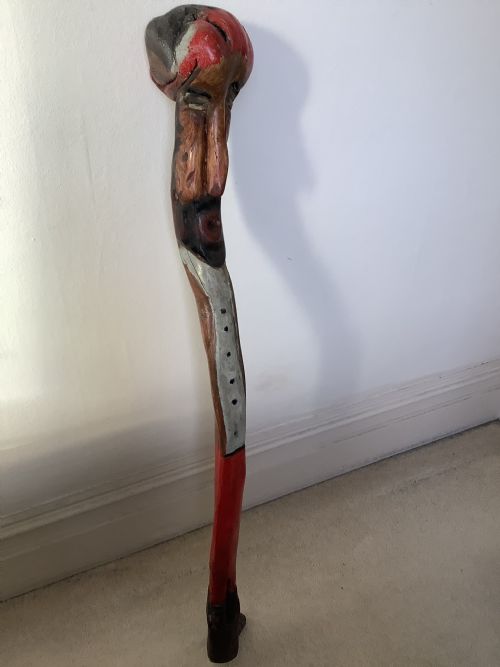
Buyers will encounter utilitarian walking sticks alongside elaborate novelty designs featuring articulated animal heads or functional elements hidden in the shaft. These pieces range from substantial polychromed thorn wood to slender items formed from shark vertebrae and horn.
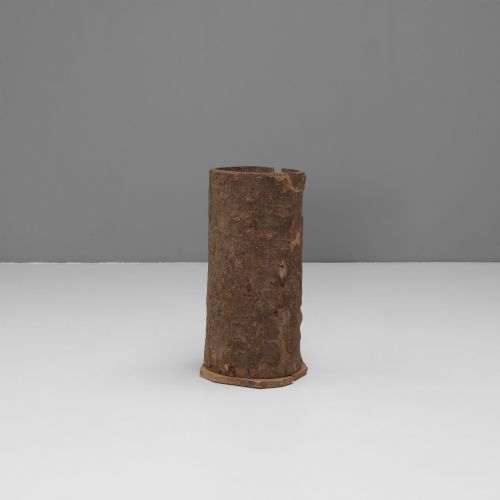
Rural traditions appear through items fashioned from elm wood, log, and bark, while maritime works utilise whalebone and bone. Continental workshops contribute Black Forest styles depicting dogs and bears.
Materials and construction
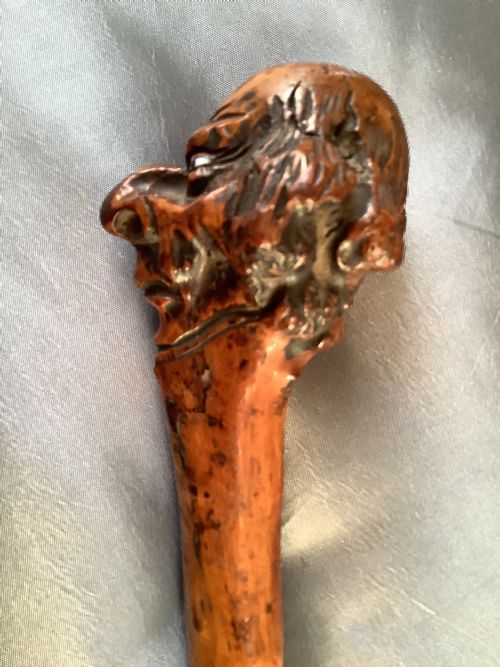
Maker materials draw directly from natural and marine sources, combining wood, bone, horn, and whalebone within a single shaft or handle. Elm wood and thorn wood provide sturdy foundations for country pieces, while fruitwood allows for detailed carving of clenched fists and human heads.
Marine items utilise whalebone and shark vertebrae assembled with organic components, requiring specialised carving techniques for hard materials. Surface decoration ranges from natural bark left on the shaft to polychrome paint applied over carved wood.
Folk Art Cane Retail Price Guide 2026
Typical asking prices for folk art cane among the pieces listed under this phrase on Sellingantiques today, from the lower quarter to the upper quarter. They describe what is for sale here now, not the wider market.
At least one nineteenth-century cane doubles as a functional gadget nut cracker featuring a pair of carved heads.
Judging quality in folk art canes
Quality rests upon the ambition of the carving and the coherence of the materials utilised throughout the piece. Finer examples display animated figures, such as articulated animal jaws or detailed facial expressions carved into fruitwood and bone.
The integrity of the construction separates standard utility sticks from exceptional vernacular pieces. A balanced weight, thoughtful integration of natural knots and burls, and crisp detail in whalebone or horn indicate superior craftsmanship.
The Folk Art Cane Glossary
- Folk art cane
- A walking stick or cane created outside formal academic traditions by vernacular makers, sailors, or rural craftspeople. These pieces utilise accessible local or maritime materials.
- Whalebone
- Material derived from baleen plates of whales, utilised by sailors for carving intricate walking stick shafts. It offers flexibility and a smooth texture.
- Black Forest
- A nineteenth-century carving style originating in Central Europe, known for realistic depictions of animals such as dogs and bears. These pieces often incorporate articulated elements.
- Swagger stick
- A short, light cane traditionally carried by officers or gentlemen rather than used for weight-bearing support. Folk art versions often feature carved handles or pointers.
- Shark vertebrae
- Discs of cartilage stacked to form the spine of a shark, threaded onto a central core to create a textured walking stick shaft. This material demonstrates maritime resourcefulness.
Folk Art Cane: Frequently Asked Questions
What is a folk art cane?
A folk art cane is a hand-carved walking stick made by rural craftspeople, sailors, or self-taught makers using materials like wood, bone, and whalebone.
These items combine practical support with imaginative decoration, ranging from simple rustic branches to complex figural handles.
How were whalebone canes used?
Sailors carved whalebone canes during long voyages at sea, utilising marine materials available on whaling ships.
They served as personal possessions, tokens to bring home, or light walking aids.
How do I identify Black Forest canes?
Black Forest canes typically feature distinct carvings of animals, such as dogs or bears, executed with deep relief and realistic textures.
Originating in Central Europe during the Victorian era, these pieces focus on naturalistic animal forms integrated into the handle or shaft.
Are these canes meant for walking?
Many of these pieces were made for everyday use, while others functioned as swagger sticks or decorative accessories.
Sturdy timber and heavy thorn wood provided reliable support, whereas delicate bone or articulated novelty sticks suited lighter handling.
What materials appear in these canes?
Makers utilised timber such as elm, fruitwood, and thorn wood alongside organic matter like bone, horn, whalebone, and shark vertebrae.
Some pieces incorporate natural bark and log formations directly into the shaft design.