
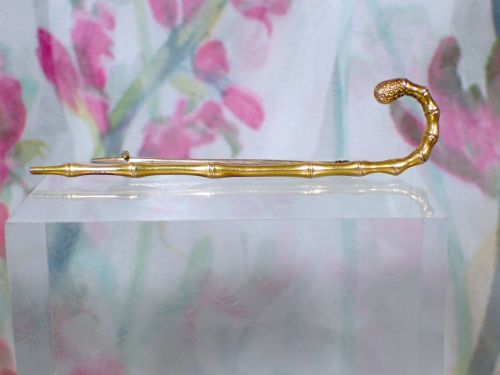


Novelty Walking Cane
A novelty walking cane brings wit and surprise to daily support, combining clever concealed functions or animal handles with Victorian and Edwardian craftsmanship.
Novelty Walking Cane
A novelty walking cane is a functional support fitted with an amusing, animal-shaped or disguised handle. You meet these pieces most frequently originating from the nineteenth century, the Victorian era, and the Edwardian period.
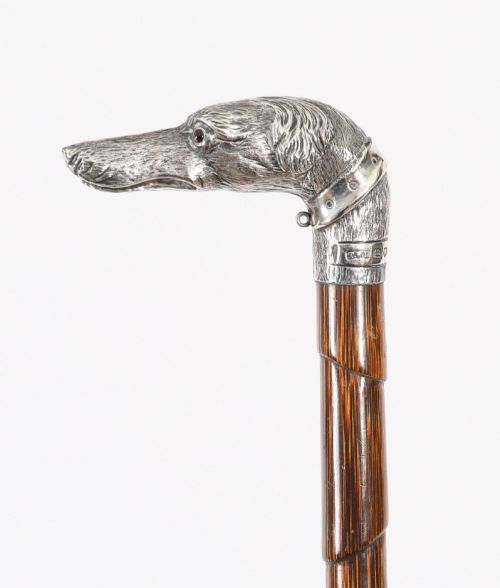
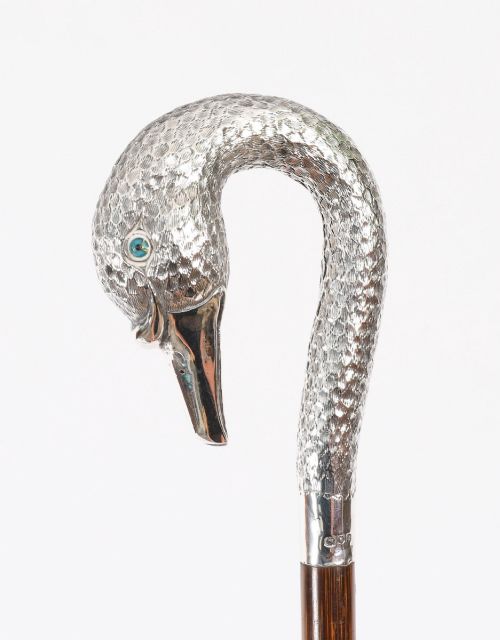
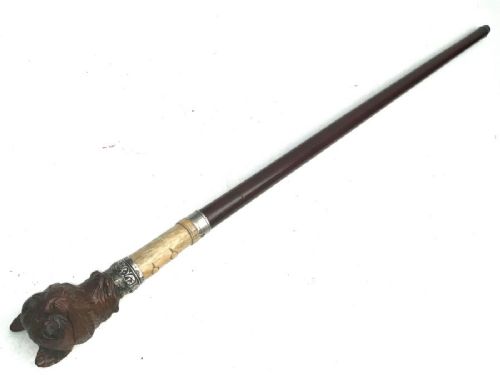
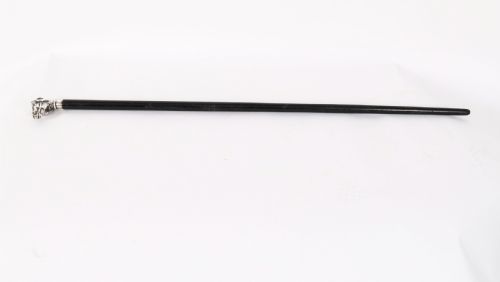
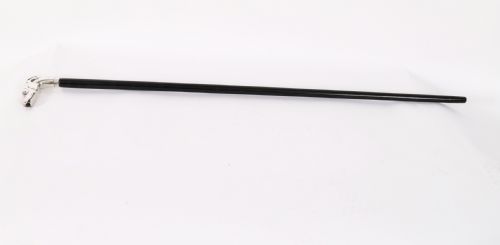
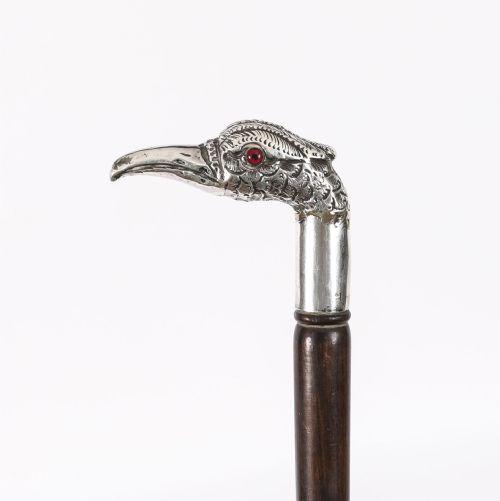
The category encompasses clever utility pieces alongside decorative animal heads carved from wood, bone, or horn, or cast in sterling silver. Makers rendered handles as greyhounds, ducks, horses, parrots, and boars, or concealed swords, watches, telescopes, flutes, and corkscrews inside the shaft.
These canes served gentlemen and ladies as conversation pieces during walks or social calls, doubling as practical tools or secret containers. The selection ranges from carved Black Forest dogs to silver-mounted French greyhounds and English bone telescope sticks.
How they were made
Craftsmen shaped shafts from hardwoods, bamboo, snakewood, and malacca, fitting them with ferrules and joining them to handles through pegged or screwed joints. Silver handles were cast and chased, often bearing hallmarks that record assay offices in cities like London.
Carvers shaped wood, horn, ivory, and bone into realistic animal heads, clenched fists, and elaborate figures using hand chisels and fine files. Concealed mechanisms for gadgets, swords, and corkscrews required precise metalwork fitted flush within hollowed wooden sections.
Some nineteenth-century gentlemen walked out with a cane that doubled as a nutcracker or housed an articulated barking monkey.
What varies in quality
Quality rests in the fidelity of the carving and the weight of the metalwork used on the handle. Superior examples display detailed articulation in animal fur and feathers, clean hallmarks on silver mounts, and tight alignment where hidden mechanisms close within the shaft.
The choice of shaft material also separates grades, with dense snakewood, malacca, and sterling silver mounts marking out pieces intended for affluent patrons. Inferior versions rely on simple turned timber and cast metal plating without detailed hand finishing.
Asprey
The Novelty Walking Cane Glossary
- Ferrules
- The protective metal cap fitted to the bottom of a walking stick to prevent wear. It absorbs impact against pavements and stone paths.
- Malacca
- A slender, durable rattan cane imported from Southeast Asia, prized for its mottled brown skin and flexibility. It forms the lightweight shaft of many fine nineteenth-century sticks.
- Helixophile
- A collector of corkscrews. This term applies when a novelty cane houses a concealed corkscrew in the handle or shaft.
- Snakewood
- A dense, heavy South American timber marked with dark brown spots resembling snakeskin. Makers selected it for luxury walking sticks due to its striking natural pattern.
- Pommel
- The rounded handle or knob at the top of a walking cane. It is shaped to fit comfortably into the palm of the hand.
Novelty Walking Cane: Frequently Asked Questions
What is a novelty walking cane?
A novelty walking cane is a historic walking stick featuring a decorative handle shaped like an animal head, human feature, or object. Many also conceal functional gadgets inside the shaft, such as swords, flasks, watches, or corkscrews.
These pieces were made primarily during the nineteenth and early twentieth centuries for fashionable gentlemen and ladies. They combine practical walking support with wit, clever engineering, and fine sculpture.
How were hidden gadgets used?
Concealed mechanisms allowed owners to carry secret tools disguised as standard walking aids for protection, entertainment, or utility during travel. Watch canes told the time, telescope sticks aided observation, and sword sticks provided personal defence.
Makers engineered these elements to sit flush within the timber shaft so the stick appeared entirely ordinary until unlatched. Gentlemen used them as conversation pieces during social outings and country walks.
How do I date a walking cane?
Dating relies on hallmarks stamped on silver handles, material choices, and prevailing artistic styles such as Victorian, Edwardian, or Art Deco. London hallmarks and stamped date letters on silver mounts provide precise years of manufacture.
Stylistic cues like Black Forest carving, French silverwork, and specific animal motifs also help place pieces within the nineteenth or early twentieth centuries.
How should I display a cane?
Displaying canes safely involves using a wall-mounted rack or a sturdy floor-standing umbrella and stick stand that keeps them upright. Placing them away from direct sunlight and radiators protects organic materials like wood, horn, and bone from drying out.
Handling them periodically allows you to inspect silver mounts and appreciate the carved details of the handles.