





English Walking Cane
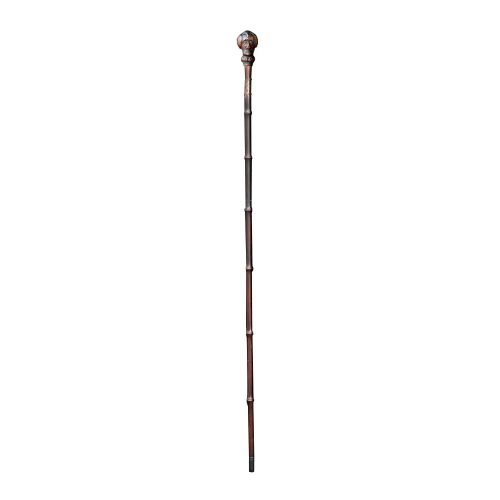
An English walking cane carries the social weight of the nineteenth century in a single polished length of malacca or ebonised wood.
English Walking Cane
An English walking cane serves as a portable support and a mark of status for the Victorian gentleman, often finished with sterling silver handles or carved bone details.
Buyers encounter examples formed from malacca, ebonised wood, and bamboo, frequently incorporating concealed folding telescopes or hidden sword blades.
The historical record spans the late seventeenth century through the Edwardian period, with the majority of surviving pieces originating in the Victorian era.
Materials and Construction
Craftsmen shape shafts from dense timbers like ebony, fruitwood, coromandel, and bird's-eye maple, or steam-bend malacca and bamboo into rigid columns.
Metal components utilise cast brass, copper, and hallmarked sterling silver for mounts, ferrules, and decorative handles shaped as dog heads or geometric knobs.
Specialised examples integrate turned ivory, bone sections, and pique work, alongside internal mechanisms for concealed blades or threaded telescope tubes.
The documented periods extend from the seventeenth century through the Victorian era to the 1920s.
Markers of Quality
Quality rests upon the integrity of the timber selection and the precision of the silver smithing, evident in legible hallmarking and crisp chased engraving.
Complex mechanical elements such as functional telescope optics and concealed sword mechanisms distinguish sophisticated gadget canes from standard walking sticks.
The continuity of the shaft material and the firm attachment of horn, bone, or silver handles determine the structural longevity of each piece.
John Grinsell·Thomas Longmire·Peter Pilote
The English Walking Cane Glossary
- Malacca
- A sturdy stem derived from Asiatic palms, prized for its mottled brown surface and utilised extensively for high-grade walking stick shafts.
- Ebonised wood
- Timber treated with chemical stains or dark finishes to imitate true ebony, offering a uniform black lustre popular in Victorian accessories.
- Ferrule
- The protective metal cap fitted to the bottom of a walking stick to absorb ground impact during daily use.
- Gadget cane
- A multi-functional walking stick containing a concealed instrument, such as a sword blade, telescope, or measuring tool.
- Pique
- Decorative inlay work using tiny points of gold, silver, or ivory set into a dark organic background material like tortoiseshell or horn.
English Walking Cane: Frequently Asked Questions
How were walking canes used historically?
Gentlemen carried these pieces as accessories of dress and social standing during daily promenades and formal outings through the nineteenth and early twentieth centuries.
Beyond simple support, certain specimens functioned as concealment vessels for tools, weapons, or optical instruments.
What materials make up these canes?
Shafts rely upon tropical woods and canes like malacca, bamboo, ebony, and coromandel, paired with handles formed from sterling silver, carved bone, ivory, and horn.
Metal mounts incorporate brass and copper collars, while internal mechanisms utilise steel for blades and brass for telescoping tubes.
How do I date an English cane?
Silver mounted examples frequently bear assay office hallmarks and date letters that identify the exact year of manufacture and the silversmith involved.
Stylistic shifts, from early Victorian carvings to Arts and Crafts or Art Nouveau brass work on related hall stands, help place unmarked pieces.
How should I display a walking cane?
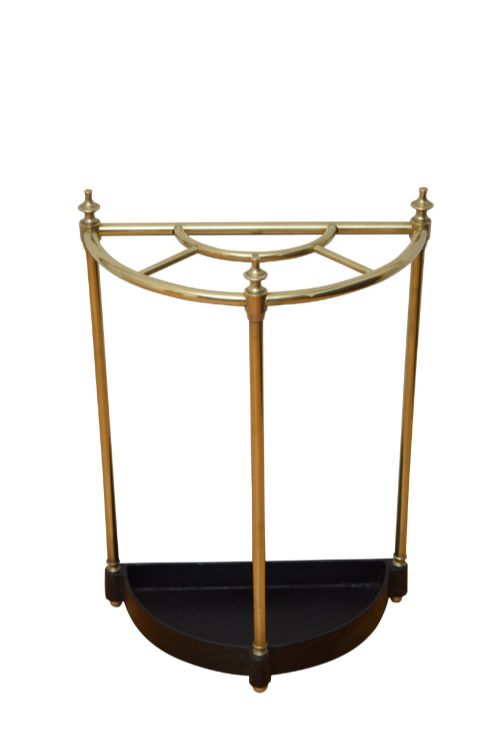
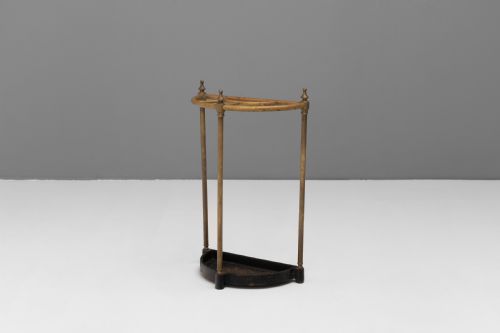
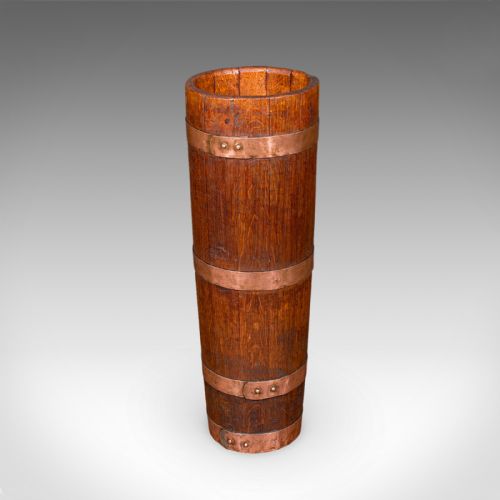
Sturdy examples balance well inside nineteenth-century oak, brass, or copper stick stands and hall racks designed specifically for hallway storage.
Wall mounting brackets or horizontal display cabinets protect delicate silver handles and prevent warping of the slender wooden shafts.