


Novelty Silver Walking Cane
A novelty silver walking cane carries the wit and craftsmanship of the nineteenth and early twentieth centuries in a single handled shaft.
Novelty Silver Walking Cane
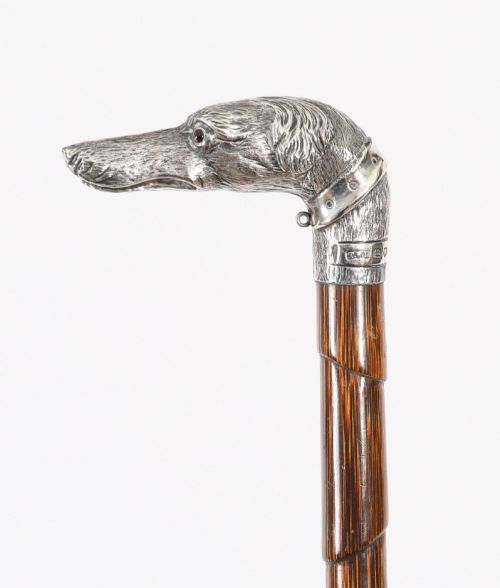
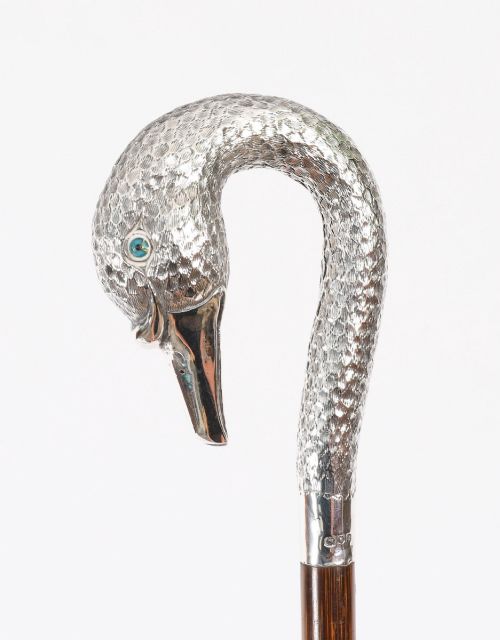
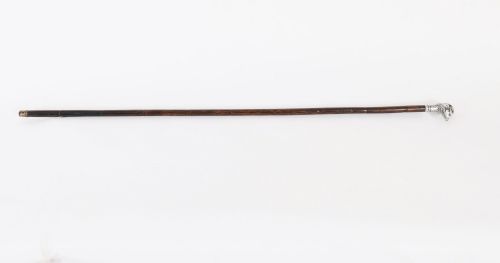
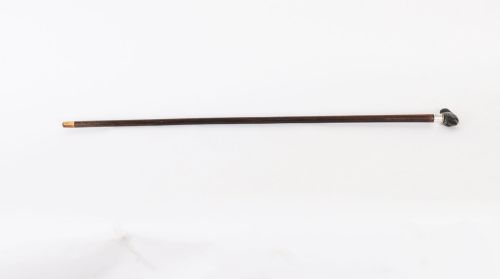
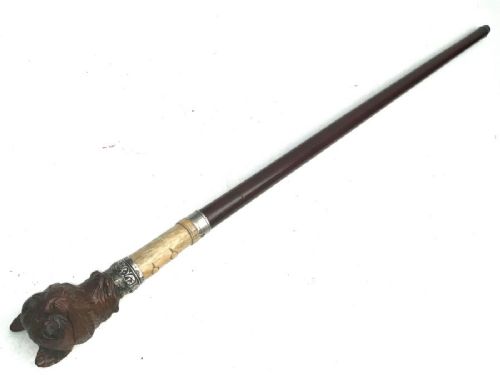
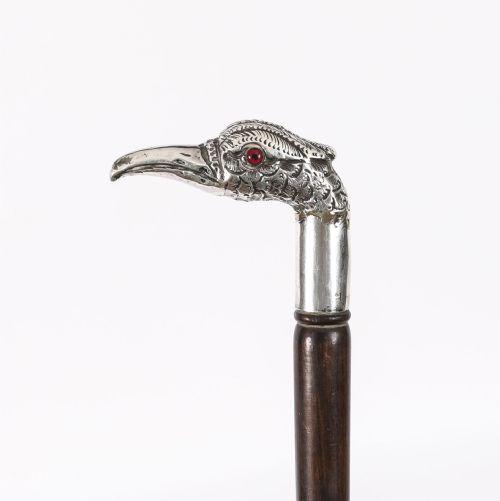
A novelty silver walking cane is a functional accessory featuring a handle shaped as an animal, a bird, or an ingenious hidden device. The pieces available on this page range from Victorian and Edwardian examples to Art Deco creations, reflecting the playful taste of past generations.
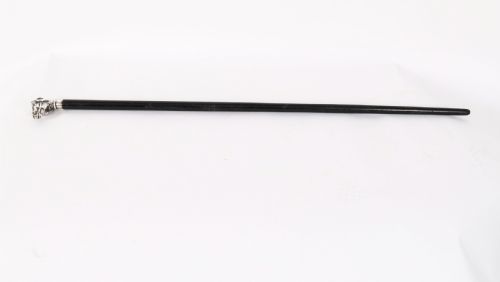
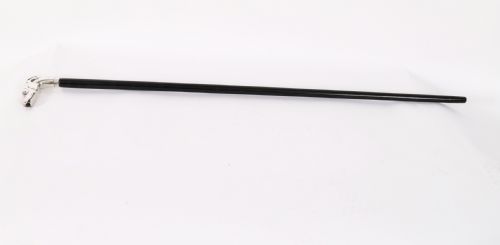
Most items combine a cast silver handle with a wooden or ebonised shaft, though some incorporate specialised compartments like snuff boxes or corkscrews. Animals feature prominently, with greyhounds, ducks, swans, horses, boars, hares, and rabbits cast in silver.
The selection also includes functional gadget sticks such as sword sticks, watch canes, and golf club shapes. These pieces demonstrate how utility was blended with humour and sculptural detail during the nineteenth and early twentieth centuries.
Materials and construction
Handles are typically formed from silver or sterling silver, shaped through casting and chasing to create detailed animal heads and motifs. These silver mounts are fitted to shafts made from various woods, including hardwood, ebonised wood, and snakewood, sometimes incorporating glass, horn, or steel components.
Many items integrate mechanical elements into the design, such as hidden corkscrews, watch movements, or internal compartments for snuff. The construction relies on secure joins between the metal handle and the wooden shaft to maintain structural integrity during use.
Several canes double as miniature toolkits, hiding corkscrews, timepieces, and snuff boxes beneath their cheerful animal heads.
Assessing quality and craftsmanship
The choice of shaft material and the complexity of any hidden mechanisms also distinguish the pieces. Integrated watches, functional corkscrews, or uncommon materials like snakewood elevate the standard of a walking cane significantly.
The Novelty Silver Walking Cane Glossary
- Sterling silver
- A silver alloy containing 92.5 percent pure silver by mass, frequently marked on the handles of these canes to denote standard composition.
- Ebonised wood
- Timber treated with a dark finish to resemble ebony, commonly used for the shafts of walking sticks.
- Snakewood
- A dense, heavy wood named for its mottled, snake-like pattern, utilised in select nineteenth-century walking canes.
- Gadget cane
- A walking stick that conceals a practical tool, such as a watch, corkscrew, or blade, within its structure.
- Parasol handle
- A smaller handle format, similar to those found on walking sticks, intended for sunshades and umbrellas.
Novelty Silver Walking Cane: Frequently Asked Questions
How are these canes dated?
Dating relies on hallmarks stamped into the silver, stylistic indicators of the Victorian, Edwardian, or Art Deco periods, and construction methods. Assay office marks and date letters provide precise years for hallmarked pieces.
Unmarked pieces are attributed through material combinations, design motifs, and the typical forms of the nineteenth and early twentieth centuries.
What materials were used for the shafts?
Shafts are predominantly constructed from various woods, including ebonised wood, hardwood, and snakewood. Some examples incorporate steel, glass, or horn elements along the length.
The choice of wood often dictated the weight and balance of the stick, complementing the silver handle at the top.
Are the hidden mechanisms still functional?
Many integrated mechanisms, such as corkscrews, watch compartments, or snuff boxes, remain operational. Their usability depends on the specific condition of the individual piece and its internal fittings.
Careful handling is recommended for any cane featuring moving parts or hidden compartments to preserve the historical mechanism.
How do I display a walking cane?
Walking canes are traditionally displayed upright in umbrella stands, wall-mounted racks, or specialised display cases. This keeps the shafts straight and showcases the sculpted silver handles.
Placement should avoid direct sunlight and extreme temperature fluctuations to protect both the silver and the wooden or organic shaft materials.