


Novelty Silver Condiment Pot
A novelty silver condiment pot brings animal and figural forms to the dining table, combining practical function with Victorian and Edwardian wit.
Novelty Silver Condiment Pot
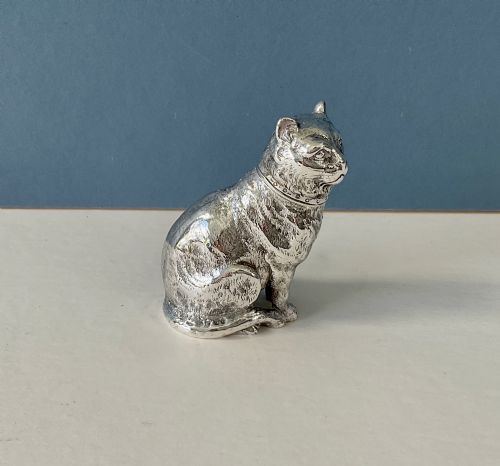
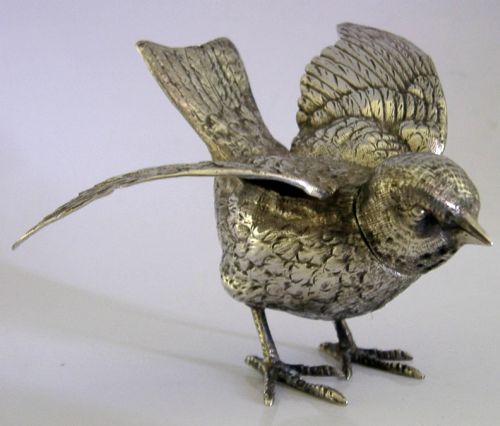
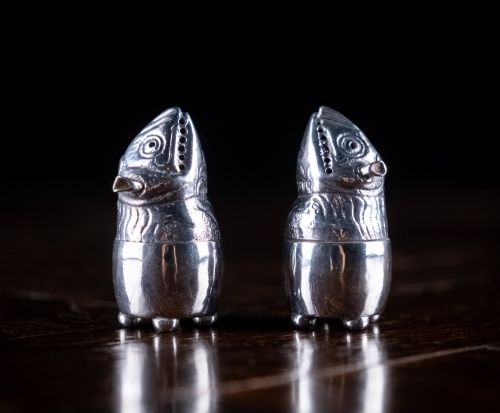
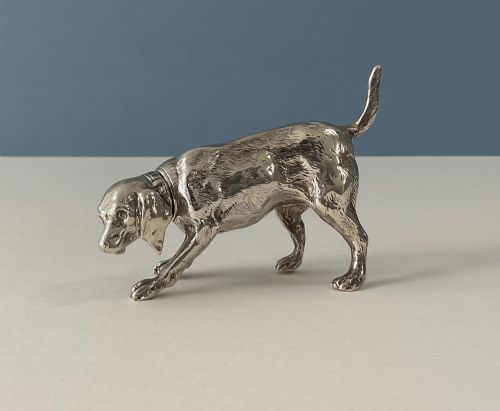
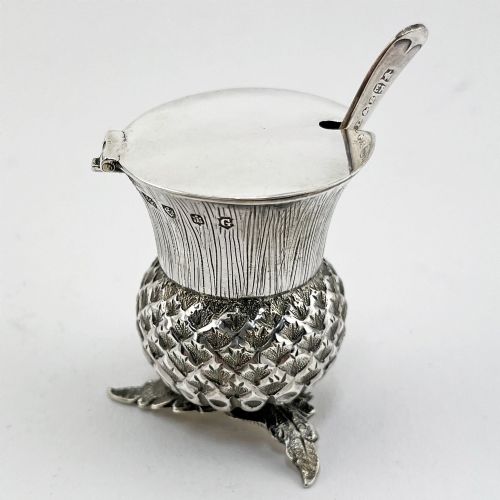
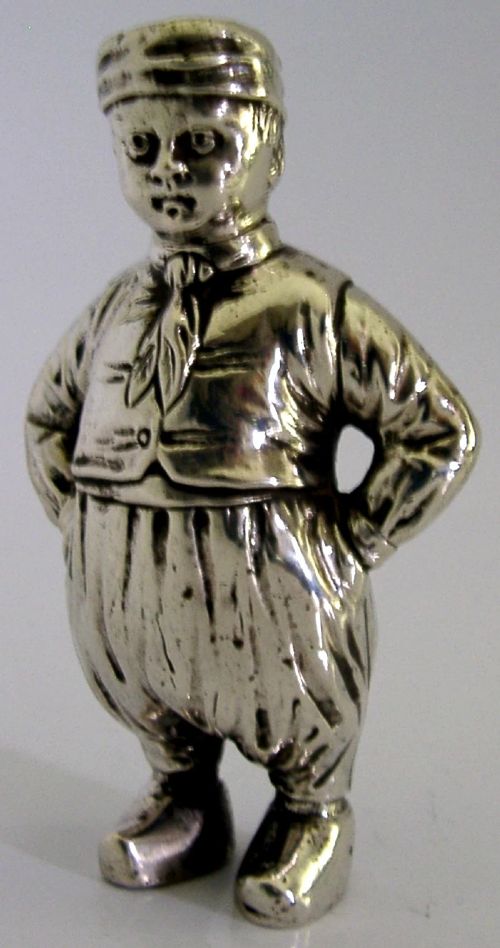
A novelty silver condiment pot takes the form of animals, birds, or everyday objects such as owls, dogs, chicks, apples, and musical instruments. When searching for a novelty silver condiment pot, buyers encounter pepper pots, mustard pots, preserve jars, and complete cruet sets shaped to amuse guests at the dinner table.
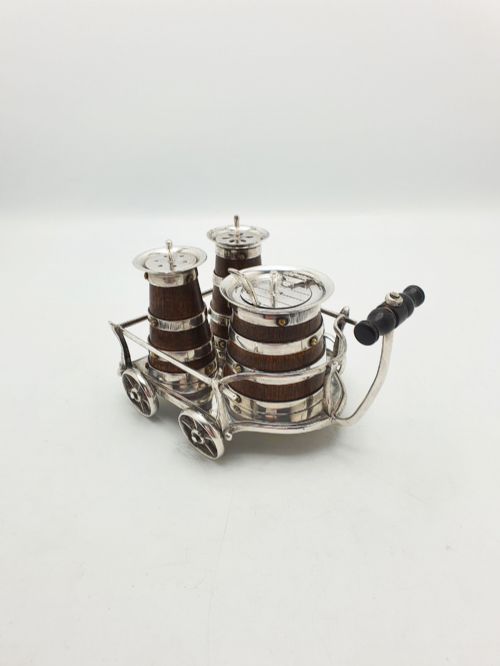
The pieces on this page span the Victorian and Edwardian eras alongside later twentieth-century examples, shifting from naturalistic birds and beasts to whimsical characters and architectural items like barrels and carts. Sterling silver and silver plate dominate, frequently combined with glass inserts, oak, or cut glass to hold the seasoning.
Makers ranged from specialist silversmiths to major manufacturing firms, producing everything from individual pepperettes to matched sets involving foxes, cats, and seals. These objects served a serious social function during formal meals while providing a distinct talking point for hosts.
How they were made
Silversmiths utilised sterling silver and silver plate, often casting figures in solid metal before chasing fine details like feathers, fur, and facial expressions by hand. Hinged elements allowed heads or lids to lift cleanly for refilling the salt, pepper, or mustard inside.
Makers combined silver with materials like cut glass, oak, and walnut to build functional condiment sets, barrels, and trays that kept multiple pots together. Interior glass liners protected the metal from corrosive salts and vinegars while maintaining a stable container for daily use.
Listings feature sterling silver and silver plate alongside organic elements like oak, walnut, and cut glass across the Victorian and Edwardian eras.
What varies in quality
The distinction between ordinary and exceptional work rests on the crispness of the casting and the naturalism of the form. Top-tier pieces retain sharp feather and fur texturing, secure hinges, and clear hallmarks that identify the silversmith and assay office.
Weight and balance dictate quality in figural condiments, as sturdier gauge silver prevents dents and maintains stability when standing on a dining table. Inferior examples show smoothed details from over-polishing or replacement parts that disrupt the original design.
Frederick Brasted·Hukin and Heath·Sampson Mordan·Berthold Muller·Mappin and Webb
The Novelty Silver Condiment Pot Glossary
- Pepperette
- A small container designed specifically for dispensing ground pepper onto food. These often take miniature figural shapes in silver or silver plate.
- Cruet set
- A matched group of bottles, jars, or pots holding condiments like oil, vinegar, salt, and pepper, typically held within a fitted stand or tray.
- Hallmark
- A series of stamped marks on precious metals indicating the standard of silver, the assay office, the maker, and the year of production.
- Chasing
- A metalworking technique where the silversmith depresses the surface with punches to create decorative relief patterns without removing metal.
- Solid silver
- An object made entirely of silver alloy throughout, distinct from plated items where a thin layer of silver coats a base metal.
Novelty Silver Condiment Pot: Frequently Asked Questions
What were novelty silver condiment pots used for?
These vessels held salt, pepper, mustard, and preserves during formal dining, serving both a culinary purpose and a social role as conversation pieces.
Hosts placed them around the table to amuse diners with their whimsical animal and object shapes.
How do I clean a silver condiment pot?
Use a soft cloth and a gentle, non-abrasive silver polish to maintain the shine without wearing away fine engraved or chased details.
Avoid submerging pieces with glass or wooden components in water to protect the internal fittings and adhesives.
Are these pots still functional today?
Most pieces remain fully usable for serving salt, pepper, or mustard, provided the interior glass liners and hinges are intact.
Many collectors also display them in cabinets as cabinet pieces or decorative ornaments without using them for dining.
How can I tell the age of a piece?
Examine the hallmarks stamped on the silver, which reveal the assay office and date letter corresponding to specific years of manufacture.
Stylistic cues such as Victorian naturalism or Art Deco geometric lines also help narrow down the period of creation.