


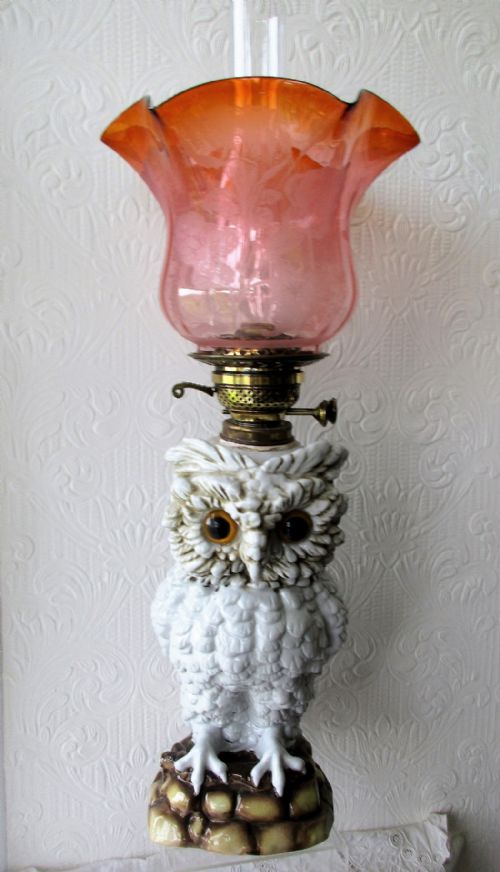
Novelty Animal Table Lamp
A novelty animal table lamp brings character to a room through sculpted form, and the pieces here range from Victorian porcelain owls to Black Forest bears.
Novelty Animal Table Lamp
A novelty animal table lamp combines illumination with figural sculpture, taking the shape of creatures such as owls, dogs, and bears. When you search for a novelty animal table lamp, you find domestic lighting designed to catch the eye long before it is switched on.
The selections on this page draw from the nineteenth century, the Victorian period, and the 1920s and 1930s. You will encounter table lamps and oil lamps that have been adapted for modern electrical use.
Originating from workshops and makers in Britain, France, Germany, and America, these items reflect diverse regional tastes in domestic ornament. Ceramic and porcelain forms dominate the older items, while cast iron and linden wood appear in other regional designs.
How they were made
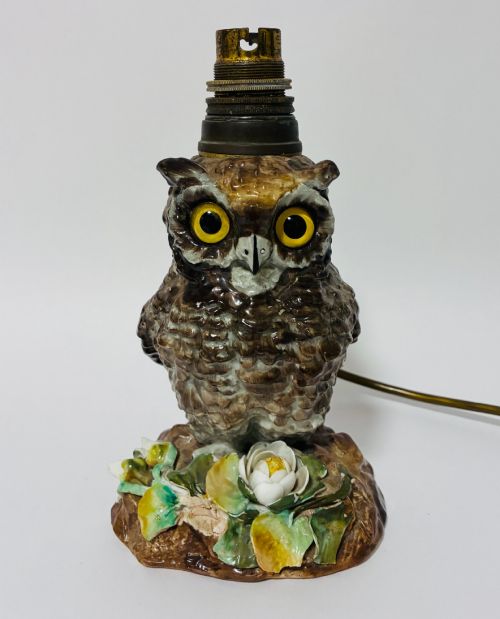
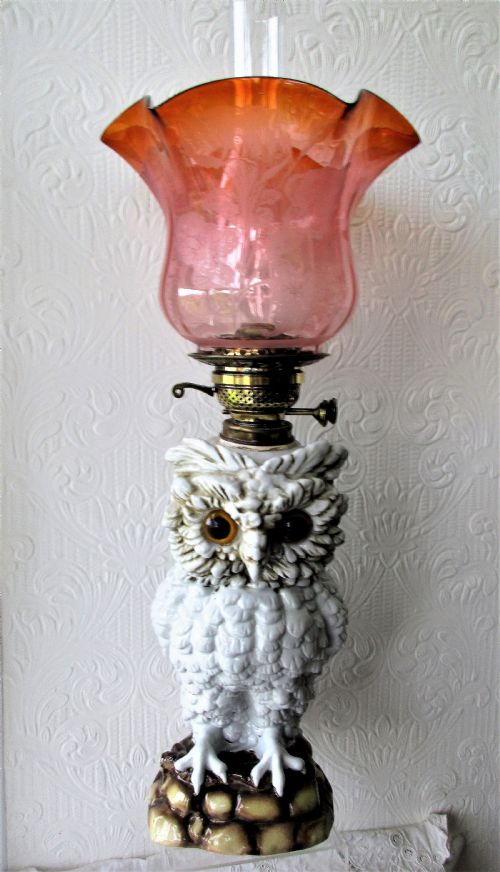
Porcelain and ceramic pieces from German and Victorian makers were moulded and hand-painted to capture the fine feather and fur details of subjects like owls and spitz dogs. Glazes were applied before firing to create both bright white finishes and naturalistic coloured plumage.
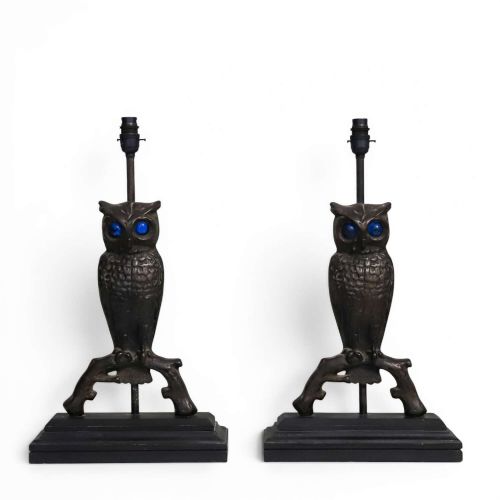
Black Forest pieces utilise linden wood, carved by hand to depict animals such as bears with deep textures and rich grain. In other workshops, metalworkers cast iron into sculptural bases, sometimes adapting functional items like andirons into domestic lamps.
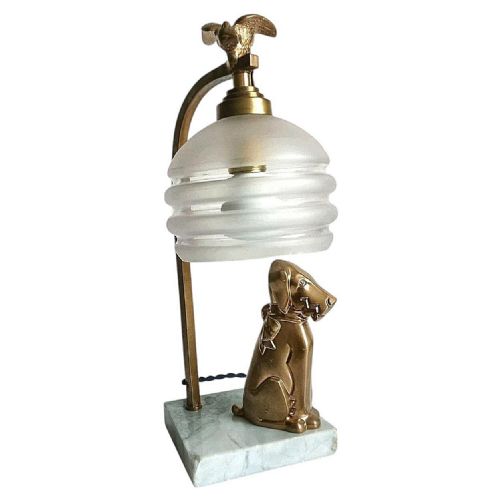
Glass elements, including frosted glass, appear alongside fabric shades to diffuse the light emitted by these sculptural bases. Each material required distinct artisanal skills, from the potter's kiln to the woodcarver's chisel.
A cast iron owl lamp standing on your sideboard started its career holding logs in a fireplace.
What varies in quality
The distinction between ordinary and exceptional work rests on the precision of the modelling and the sensitivity of the hand-painted details. Superior porcelain and ceramic figures display sharp anatomical definition and subtle shading, whereas simpler pieces rely on flat glazes and coarser moulding.
In carved wooden examples, the depth of the chisel work and the life in the animal's expression determine the merit of the object. Master carvers capture muscle and posture with vitality, while lesser pieces remain stiff and generic.
The integrity of the conversion from oil to electricity also influences the standing of a piece. Thoughtful adaptation preserves the original metal collars, burners, and ceramic bodies without compromising the sculptural balance.
Sitzendorf·Ernst Bohne und Sohn
The Novelty Animal Table Lamp Glossary
- Black Forest
- A nineteenth and early twentieth century style originating in the mountainous region of central Europe, known for hand-carved linden wood animals and furniture. These carvings often depict bears and woodland creatures with dark, waxed finishes.
- Sitzendorf
- A nineteenth century German porcelain manufacturer famous for ornate figures and oil lamps modelled as birds and animals. Their output is characterised by delicate painting and applied floral or feathered details.
- Andirons
- Iron fire dogs used to support logs in an open hearth, which were occasionally repurposed as sturdy table lamp bases. This conversion practice accounts for some heavier cast iron animal forms found in American folk art pieces.
- Linden wood
- A pale, fine-grained timber favoured by European woodcarvers for its uniform texture and lack of splintering. It accepts fine detail work readily, making it ideal for sculptural animal lamps.
- Frosted glass
- Glass treated by acid-etching or sandblasting to create a matte, translucent surface that softens glare. It is frequently utilised in lamp shades to diffuse light evenly across the room.
Novelty Animal Table Lamp: Frequently Asked Questions
How do I date a porcelain animal lamp?
Dating relies primarily on the style of the modelling, the type of glaze, and any factory marks stamped or painted on the base. Victorian and nineteenth century pieces often exhibit hand-painted detailing and specific earthenware or porcelain compositions.
Later pieces from the 1920s and 1930s adopt different aesthetic lines, such as Art Deco stylisation or folk art casting methods, which help distinguish them from earlier Victorian works.
Were these lamps originally electric?
Most older examples started life as oil lamps or decorative figures before being converted for modern electrical use. Adapting nineteenth century oil lamps or even nineteenth century andirons was a common practice to keep decorative objects functional in homes.
When examining these conversions, look at how the wiring passes through the original collar and burner fittings to assess the care taken during the adaptation.
What is Black Forest carving?
Black Forest carving refers to nineteenth and early twentieth century woodwork originating from the wooded regions of Germany and Switzerland. Artisans utilised linden wood to sculpt domestic animals, most notably bears, into functional objects like lamps, clocks, and umbrella stands.
This tradition is recognised by the deep relief work, dark waxed patina, and realistic postures given to the animals.