


Ribbed Glass Shade Lamp
A ribbed glass shade lamp brings direct, diffused task illumination into a room, combining practical utility with clean decorative lines.
Ribbed Glass Shade Lamp
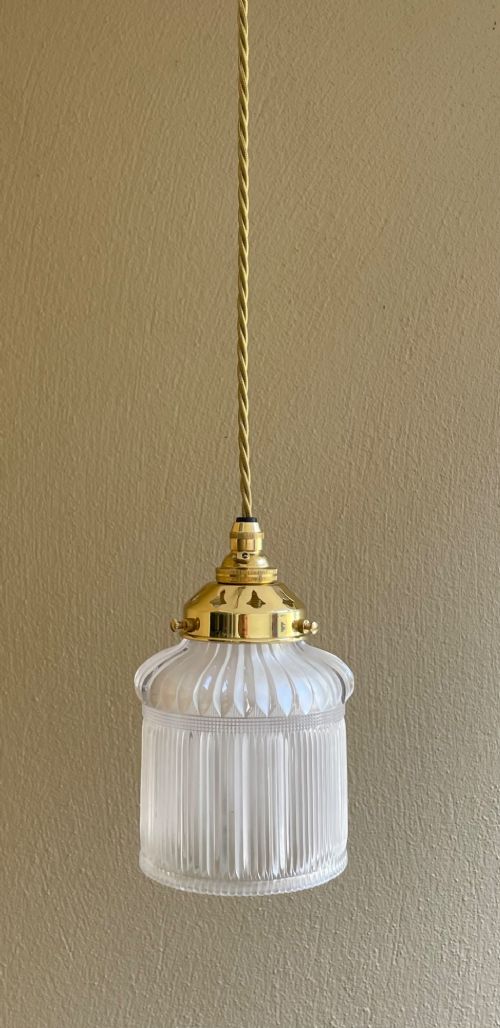
A ribbed glass shade lamp uses moulded or pressed glass profiles to catch and scatter light across a space. These fittings originate from periods spanning the Victorian era through the mid-twentieth century, capturing shifts in domestic and commercial illumination.
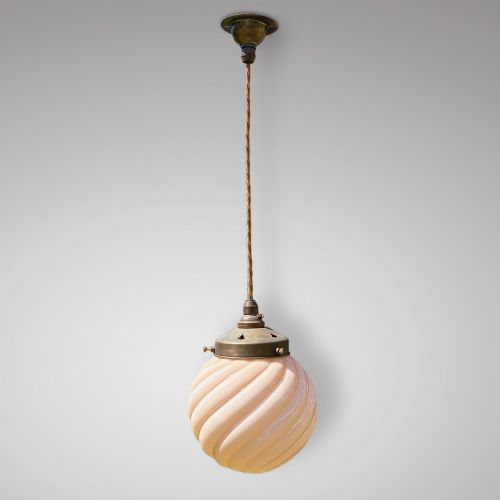
The versions most commonly met on this page include pendant lights and ceiling shades paired with metallic galleries. They draw upon industrial, Edwardian, and Art Deco styles, often featuring prismatic or opaline finishes designed to reduce glare.
Makers and designers of these fixtures utilised durable materials suited to both grand houses and functional workspaces. The resulting lamps survive as practical items that anchor period interiors with authentic character.
How they were made
The construction relies on heavy glass pressed into moulds to create distinct exterior ribs or internal prisms. This technique strengthens the material while directing the path of light from the bulb.
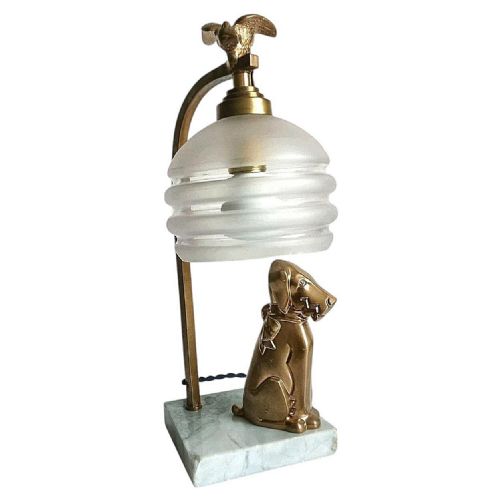
Metal components such as brass galleries, chrome holders, and marble bases provide structural support and secure the glass shade. Fabric flex wiring is often integrated to connect the pendant assemblies to power sources safely.
French novelty lamps occasionally combine utilitarian illumination with sculptural animals like dogs and parrots.
What varies in quality
Quality rests in the crispness of the moulding and the clarity of the glass. Heavier, dense glass with sharp ribbing diffuses light more evenly than thinner, softer pressings.
The integrity of the accompanying metalwork dictates overall durability. Solid brass galleries and heavy fixings demonstrate superior manufacture compared to lighter, plated substitutes.
The Ribbed Glass Shade Lamp Glossary
- Prismatic Glass
- Glass moulded with precise geometric patterns designed to refract and scatter light efficiently. It maximises illumination while concealing the glowing filament.
- Opaline Glass
- An opaque or semi-translucent white glass that produces a soft, milky glow. This material gained popularity in nineteenth and early twentieth century lighting.
- Gallery
- The metal collar or ring that grips the upper rim of a glass shade and connects it to the suspension rod or flex. It secures the shade in position.
- Pendant Light
- A light fixture suspended from the ceiling by a cord, chain, or metal rod. It typically positions the illumination lower down within a room.
Ribbed Glass Shade Lamp: Frequently Asked Questions
How do I clean a ribbed glass shade?
Wash the glass gently in warm soapy water using a soft cloth to remove dust and grease. Avoid harsh abrasives that might scratch the surface or dull the finish of the glass.
Dry the shade thoroughly with a lint-free towel before reattaching it to the metal gallery and turning the power back on.
Can these pendant lights take modern bulbs?
Most vintage fittings accept standard modern LED or incandescent bulbs provided the wattage matches the capacity of the original lampholder. Check the interior of the holder for any specific power guidance.
Consult a qualified electrician if the internal wiring needs updating to comply with current safety standards for your property.
What rooms suit a prismatic shade?
Kitchens, hallways, and studies benefit greatly from the direct yet diffused task lighting provided by prismatic glass. The focused downward beam helps illuminate work surfaces effectively.
They also work well in dining spaces where a lower hanging position creates a warm and purposeful focal point above a table.
How do I date a glass lamp?
Examine the style of the metal galleries, the weight and tone of the glass, and the type of wiring or fixings present. Industrial designs often feature utilitarian brass or iron mounts.
Victorian and Edwardian examples tend to display more ornate detailing, whereas Art Deco pieces show geometric symmetry and cleaner silhouettes.