

Nomadic Weaving Rug
When you search for a nomadic weaving rug, you enter a world of practical tribal artistry made to travel across harsh landscapes.
Nomadic Weaving Rug
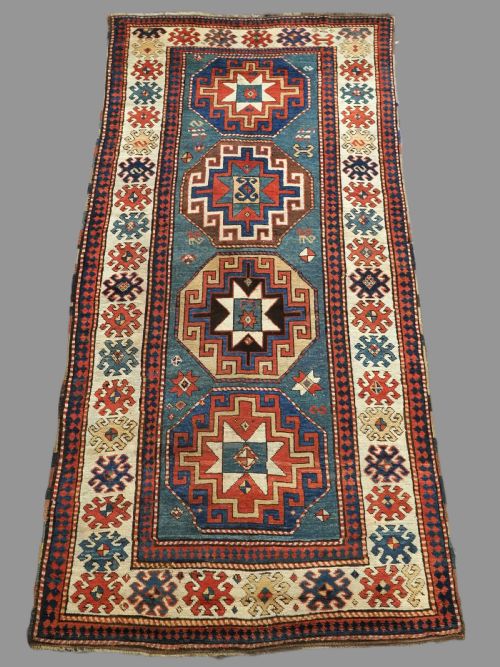
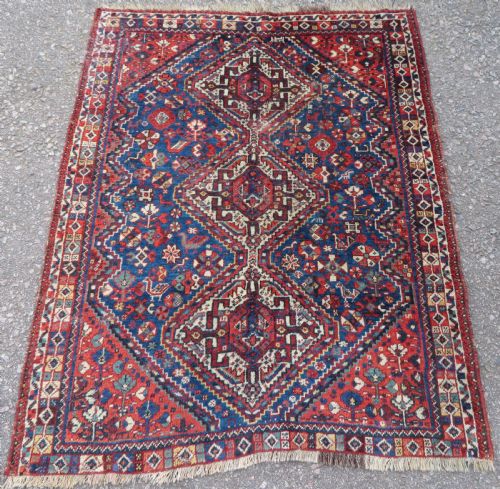
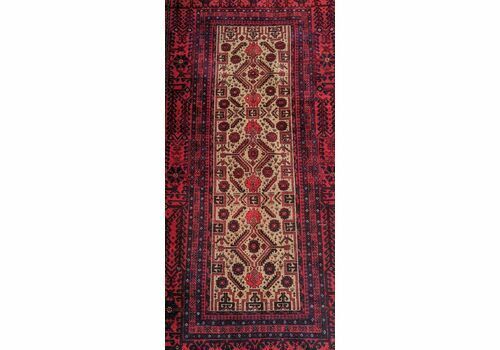
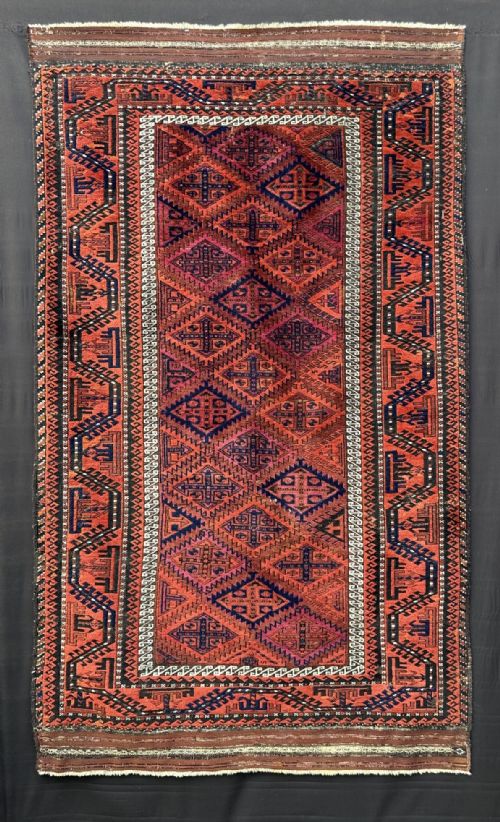
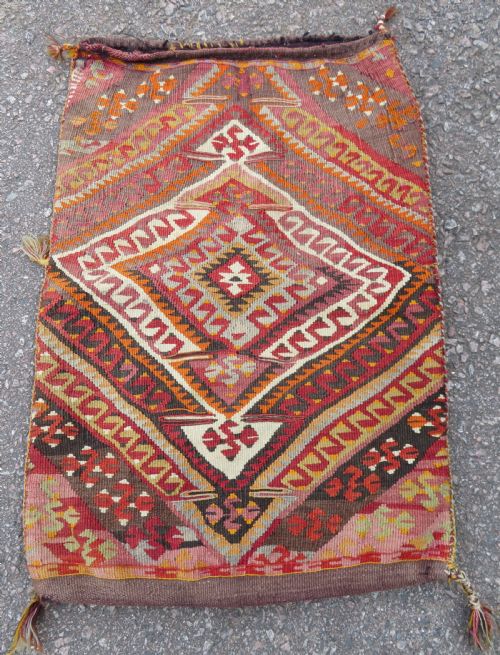
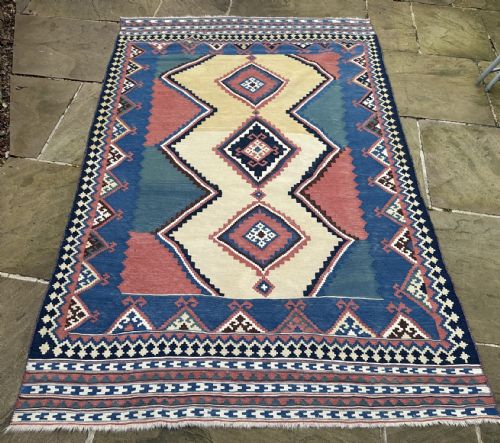
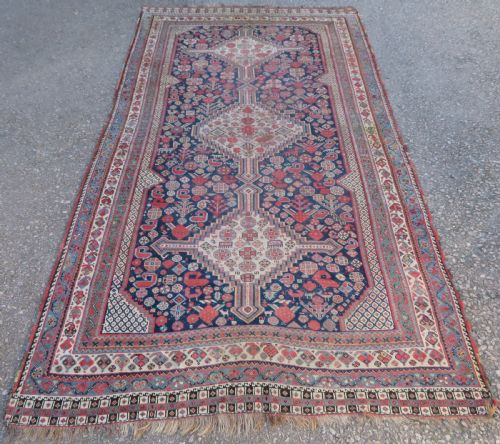
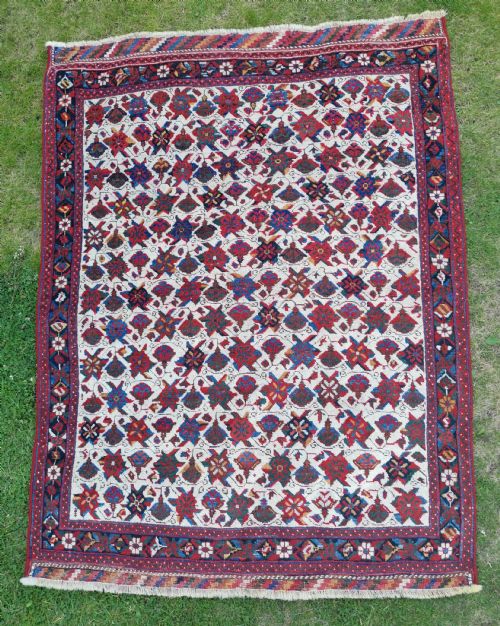
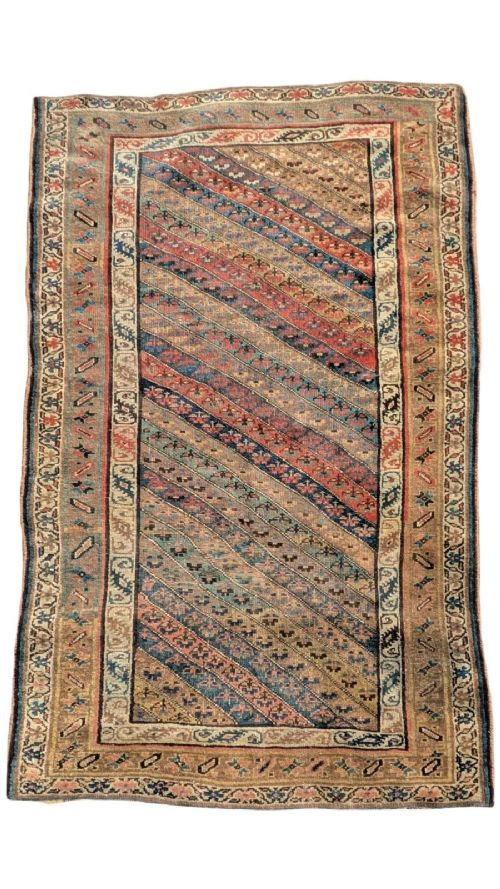
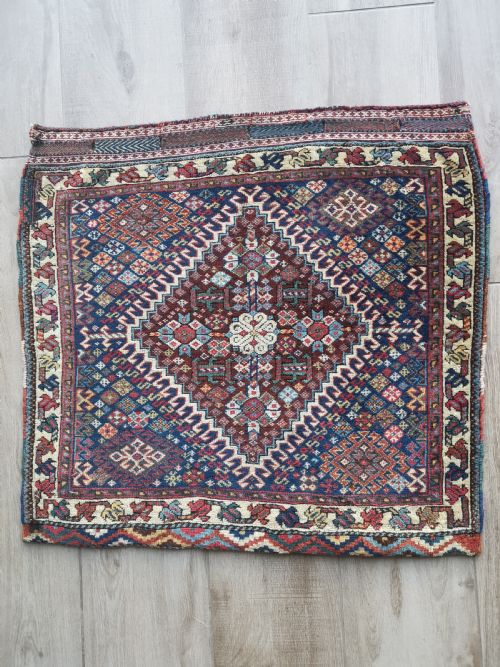
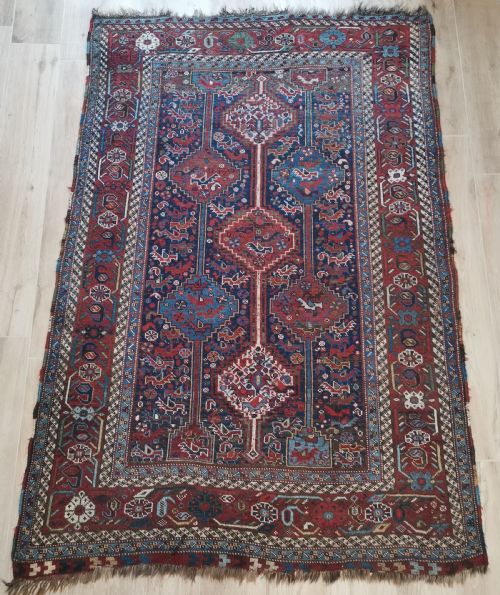
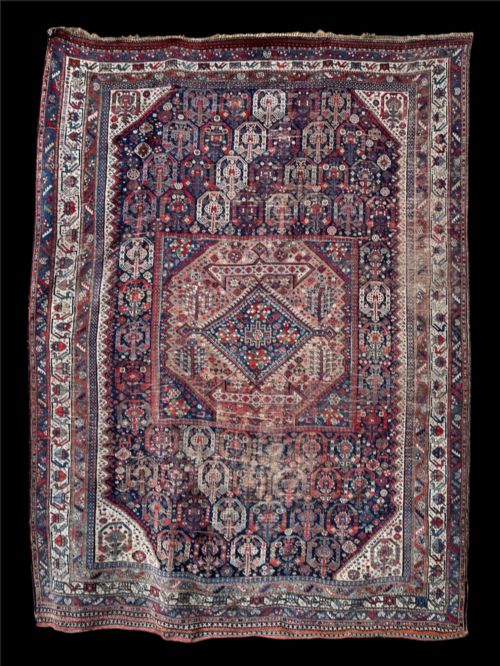
A nomadic weaving rug encompasses a wide variety of portable textiles, from floor coverings to functional storage bags and animal trappings. These pieces originate from distinct tribal groups and confederacies across Persia, the Caucasus, and Central Asia.
Most examples encountered on this page date from the nineteenth and early twentieth centuries, reflecting the traditional pastoral lifestyles of makers such as the Qashqai, Khamseh, Baluch, and Turkmen tribes.
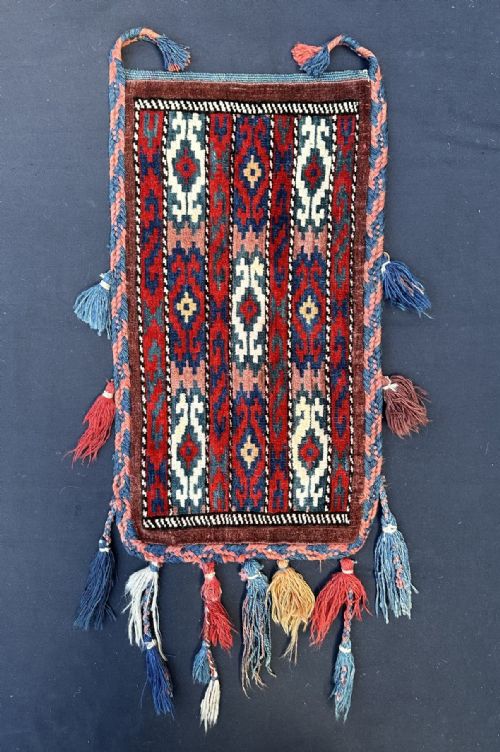
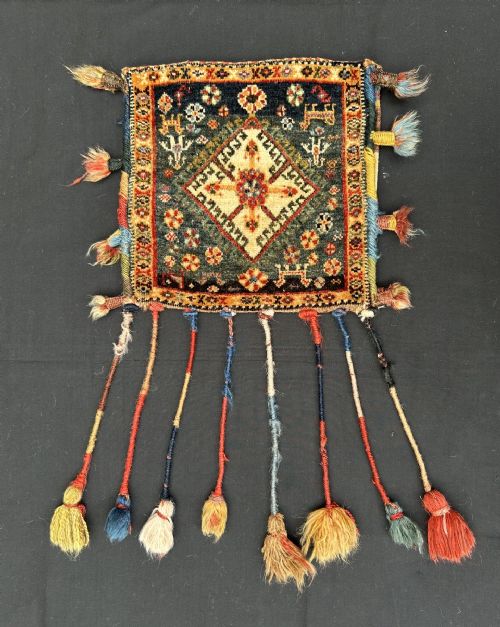
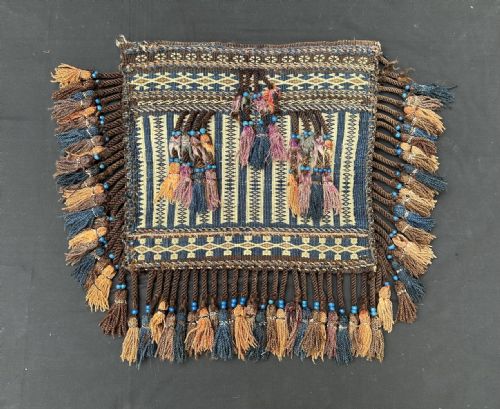
Beyond standard area rugs, the selections frequently include specialised forms like salt bags, vanity bags, saddle covers, and grain sacks, all originally tailored for life on the move.
Materials and Construction
These textiles rely principally on hand-spun wool for both the pile and the foundational warps and wefts, providing natural resilience against heavy use. Cotton also appears in foundations for certain regional weaving traditions.
Makers utilised natural dyes derived from local plants and minerals to achieve deep, varied colours that age gracefully over decades. Occasional decorative embellishments incorporate glass beads and cowrie shells into the woven structures.
The inventory includes Turkmen, Baluch, Kurdish, Persian, and Caucasian tribal styles represented through rugs and utilitarian bags.
Assessing Quality and Execution
Quality in these textiles rests upon the fineness of the knotting and the tightness of the weave, which dictated the durability required for a nomadic existence. Tightly packed structures allow intricate geometric and tribal motifs to retain sharp definition.
The vibrancy and depth of the palette signal the skill of the dyer, particularly where natural dyes produce subtle tonal variations across the wool. The integrity of the original tribal design and the completeness of surviving side cords further distinguish finer examples.
The Nomadic Weaving Rug Glossary
- Kap
- A large storage bag used within a tent or yurt to hold household belongings and bedding. These pieces usually feature elaborate face designs.
- Khorjin
- The Persian term for a double saddlebag woven to transport possessions across pack animals. Surviving examples are often separated into individual bagfaces.
- Asmalyk
- A large, pentagonal decorative trapping mounted on the flank of a camel during traditional Turkmen wedding processions. They display distinctive guls and geometric symbolism.
- Kilim
- A flat-woven textile produced without a pile by tightly interweaving warp and weft strands. These utility pieces served as rugs, covers, and grain sacks.
- Gul
- A medallion-like primary motif repeated across Turkmen and other Central Asian tribal carpets. Each design typically identifies a specific tribe or clan.
Nomadic Weaving Rug: Frequently Asked Questions
What is a nomadic weaving rug?
A nomadic weaving rug is a textile created by pastoral peoples for daily utility, shelter, and transport rather than static stationary decoration.
These pieces reflect the specific cultural motifs and practical needs of various tribes across the Middle East and Central Asia.
How were these bags used originally?
Storage bags, saddlebags, and salt bags served as durable containers for household goods, food, and personal items during seasonal migrations.
Loaded onto camels, horses, or donkeys, they combined structural strength with symbolic tribal patterns.
How do I care for an antique rug?
Protect the wool pile by placing the textile in low-traffic areas or mounting wall-hanging bags securely without distorting the structure.
Vacuum gently with a suction-only attachment and keep the natural wool away from direct, prolonged sunlight.
How do I identify tribal origins?
Origin is determined by analyzing specific structural traits, colour palettes, wool characteristics, and recurring geometric motifs.
Distinctive weaving habits link pieces directly to specific confederacies such as the Qashqai or Khamseh.