


Nomadic Turkmen Carpet
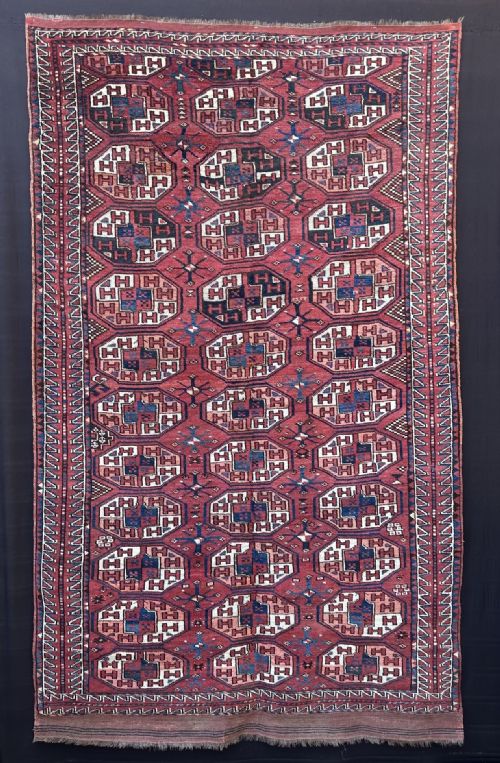
A nomadic turkmen carpet brings the geometric mastery of Central Asian tribal weaving into modern spaces through deep madder tones and repeated tribal guls.
Nomadic Turkmen Carpet
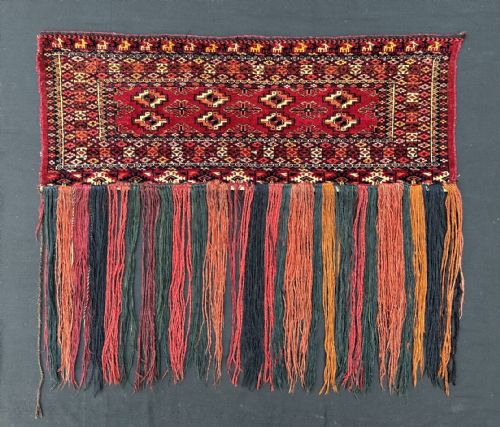
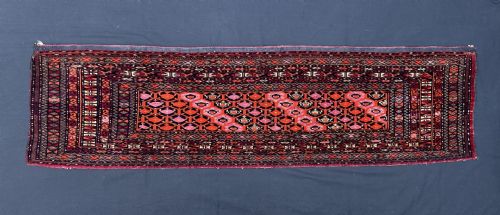
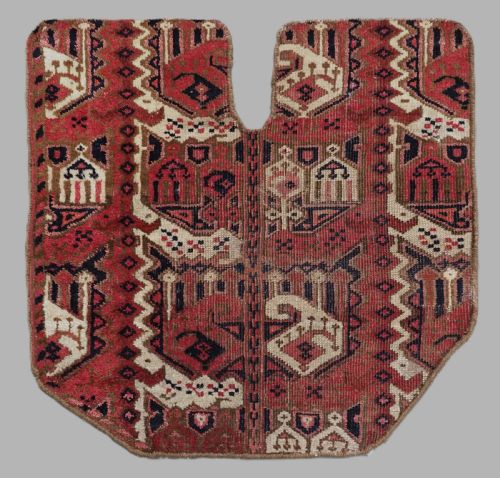
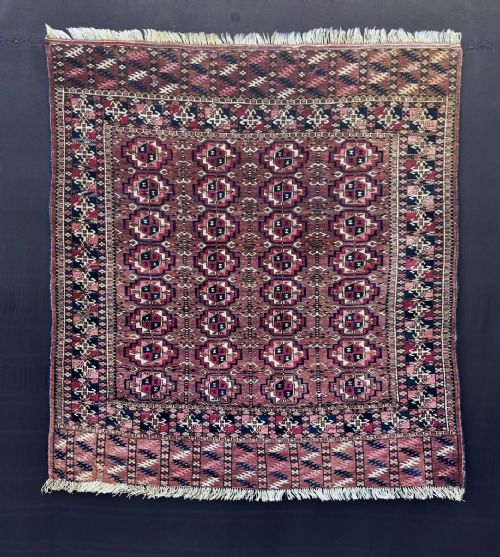
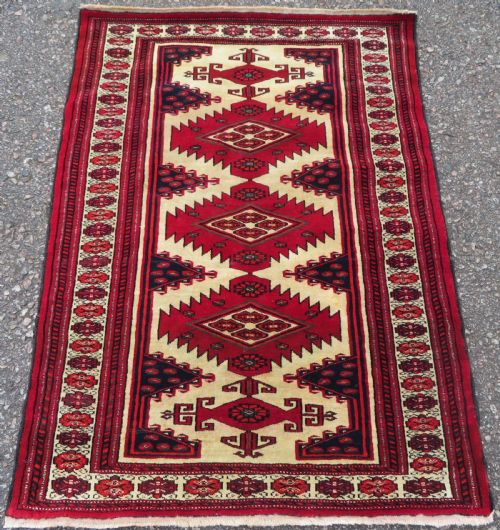
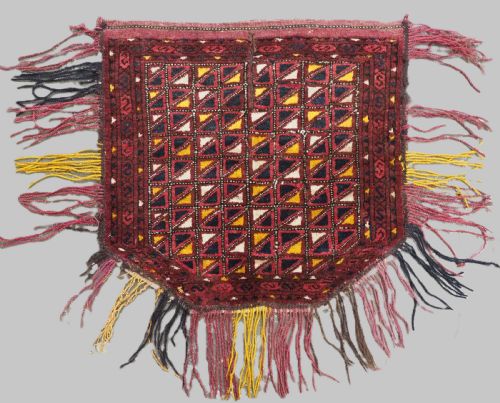
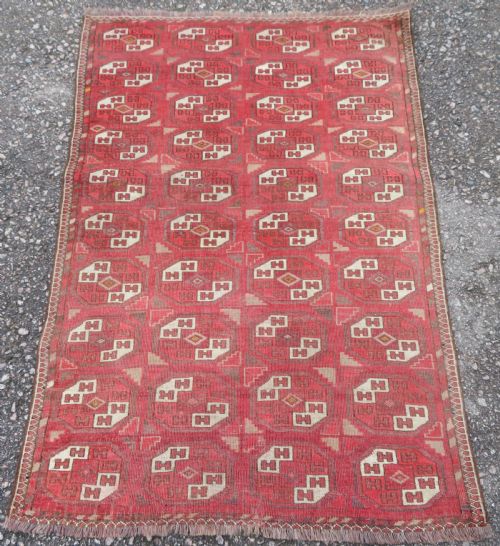
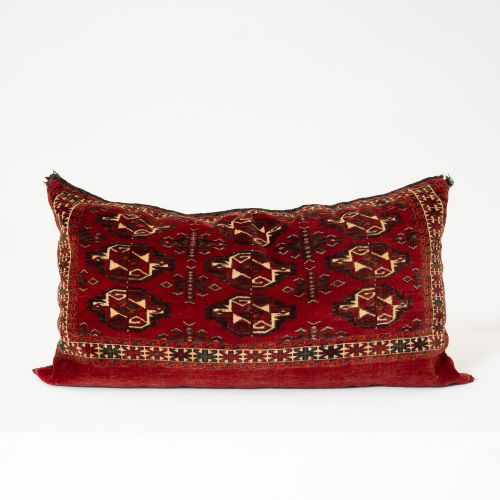
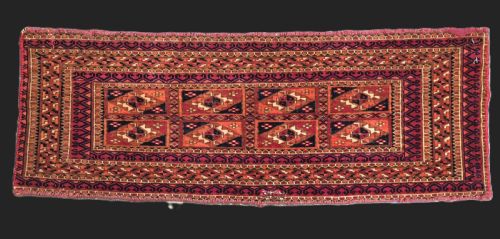
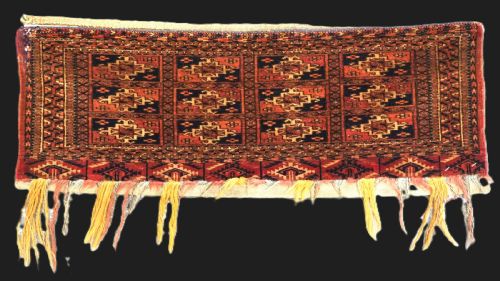
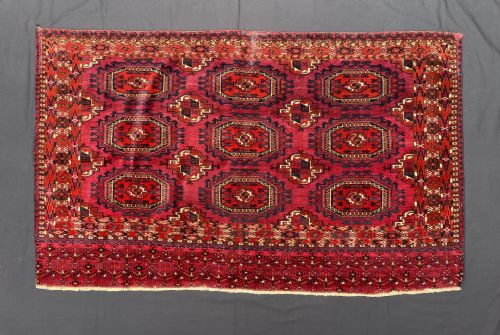
A nomadic turkmen carpet encompasses floor carpets alongside smaller tribal furnishings such as torbas, chuvals, and tent door rugs made across the Trans-Caspian steppes and oases.
The pieces on this page span the mid-nineteenth century to the early twentieth century, originating from tribal groups including the Tekke, Yomut, Ersari, and Saryk.
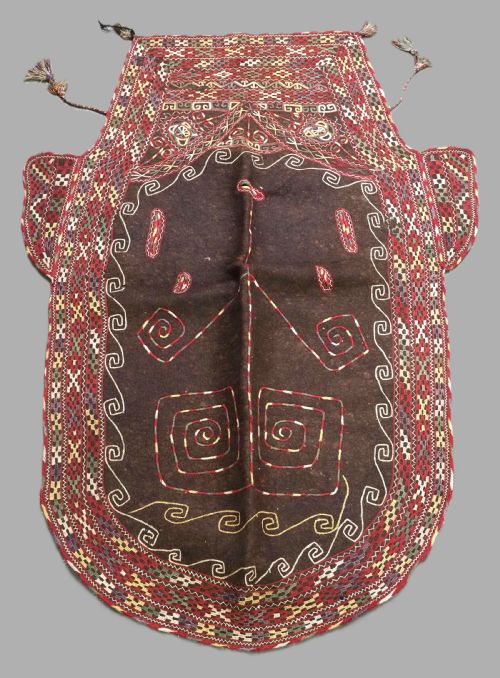
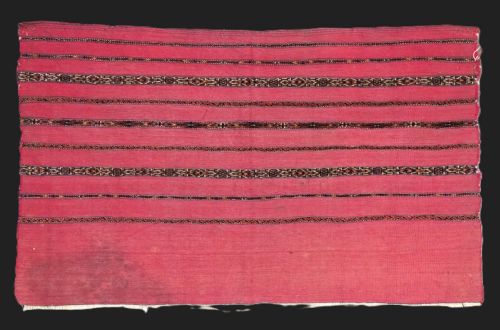
Forms range from large main carpets and tent doorway covers to utilitarian storage bags, saddle rugs, and ceremonial felt horse blankets.
Materials and Construction
Weavers utilised hand-spun wool for the pile and foundation, supplemented by cotton thread, silk thread, and goat hair for structural details and contrasting whites or dark outlines.
Natural dyes provide the characteristic palette, dominated by rich madder reds set against deep browns, ivories, and indigo blues.
Specialised items incorporate felted wool or flatweave techniques, often finished with original tassels and reinforced plain-weave backs.
Nomadic weavers occasionally included spilt-hair tassels and camel-hair accents to ward off the evil eye.
Quality and Execution
Knot density and structural fineness dictate the clarity of complex geometric motifs, separating robust utilitarian storage pieces from finely worked domestic furnishings.
The precision of the drawing and the saturation of the natural dyes determine the visual impact of the repeat gul patterns across the field.
The Nomadic Turkmen Carpet Glossary
- Gul
- A repeated primary medallion or octagonal design element central to tribal identification. Different tribes utilised distinct variations to mark lineage and origin.
- Torba
- A small horizontal wall-hanging storage bag used within the yurt. These face panels display dense primary guls and detailed lower borders.
- Chuval
- A large tent storage bag traditionally used for bedding and household goods. They frequently feature rows of major guls.
- Ensi
- A tribal door rug designed to hang at the entrance of a yurt. They typically feature a quartered field layout with a candelabra or tree motif in the lower panel.
- Elem
- The heavily patterned lower border panel situated beneath the main field of a carpet or ensi. This section often displays tree or shrub designs.
- Kapunuk
- A decorative tent doorway surround woven in a pi-shape to frame the wooden lintel. These pieces combine flatweave and pile techniques.
Nomadic Turkmen Carpet: Frequently Asked Questions
What is a nomadic turkmen carpet?
These are hand-knotted and woven textiles produced by tribal groups in Central Asia, characterised by deep red fields and repeating geometric medallions known as guls. They served practical and decorative roles within traditional nomadic dwellings.
Items range from large floor carpets to functional tent bags and horse covers, reflecting the rich material culture of tribes such as the Tekke and Yomut during the nineteenth and early twentieth centuries.
How do I identify different tribal groups?
Tribal attribution relies on the specific structure of the guls, the secondary ornament motifs, and the choice of border designs. For instance, Tekke weaving often displays orderly rows of octagonal guls, while Yomut pieces frequently utilise thekepse design.
Palette choices also offer clues, as different regions and confederations favoured distinct shades of madder red, brown, and ivory, alongside varying handling of wool and structural warps.
Were these pieces used on the floor?
While main carpets were laid on the felt flooring of the yurt, many smaller formats like torbas and chuvals functioned as storage sacks hung against the lattice walls. Other textiles served as saddle covers, door rugs, or ceremonial blankets.
This diverse range of uses means surviving examples often retain specialised shapes, such as narrow widths for tent doorways or integrated backings for holding household goods.
How do I care for an antique tribal rug?
Protect these textiles by placing them in areas away from direct, harsh sunlight to prevent natural dye fading. Vacuum gently with suction only, avoiding rotating brush bars that can pull at the wool pile.
Use a breathable rug underlay to prevent slipping and to cushion the foundation fibres against hard flooring. Professional cleaning by a specialist in antique oriental textiles is recommended when necessary.