


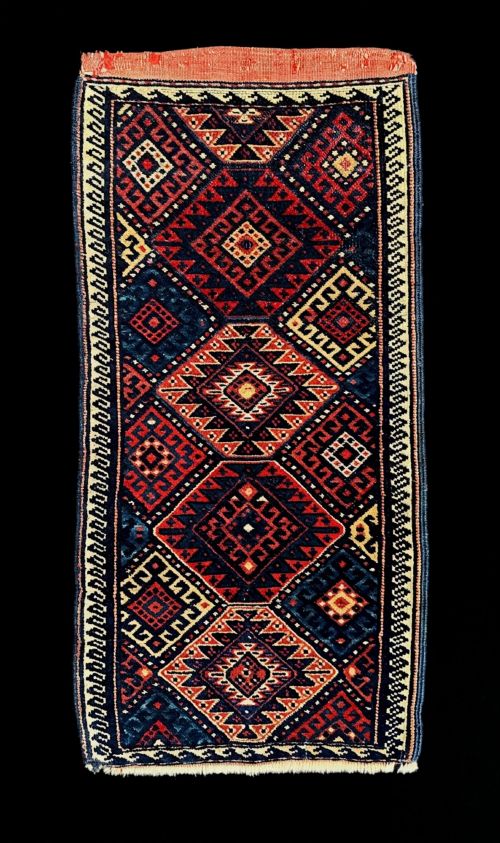


Nomadic Rug Pillow
Nomadic rug pillow pieces are tactile fragments of tribal weaving repurposed for domestic interiors, bringing genuine history and dense texture into a room.
Nomadic Rug Pillow
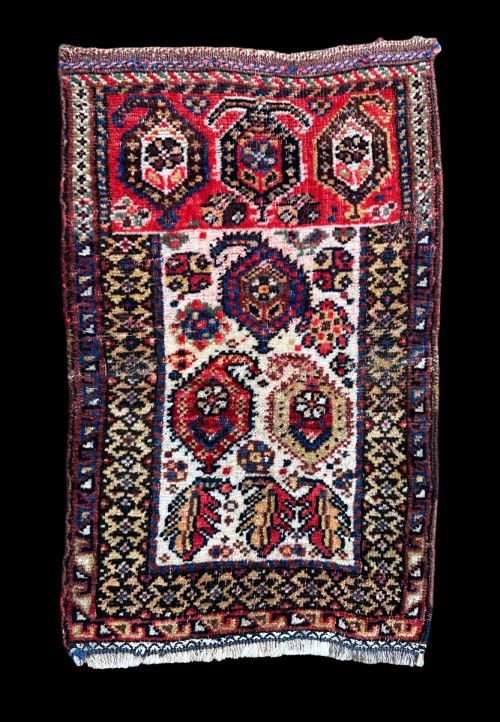
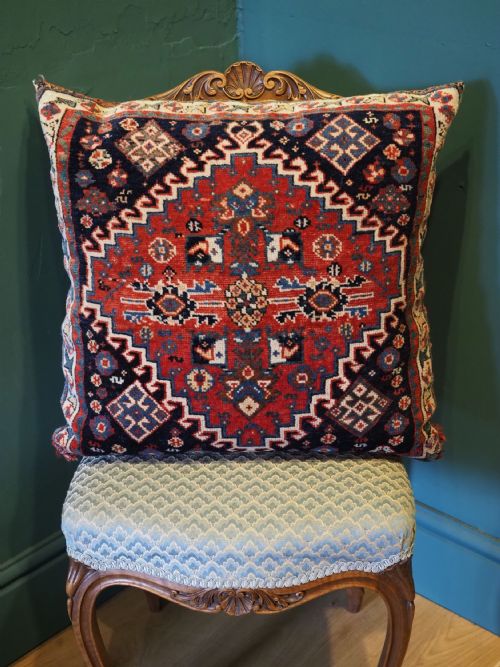
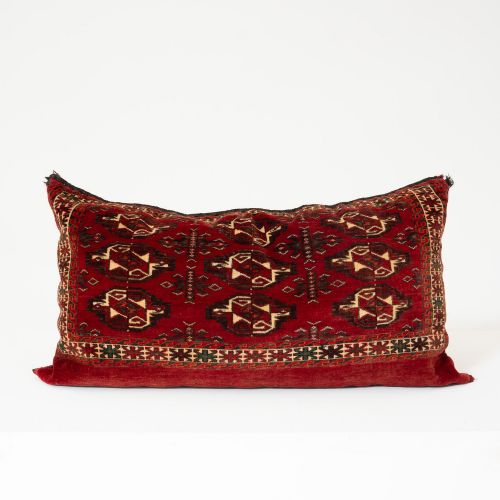
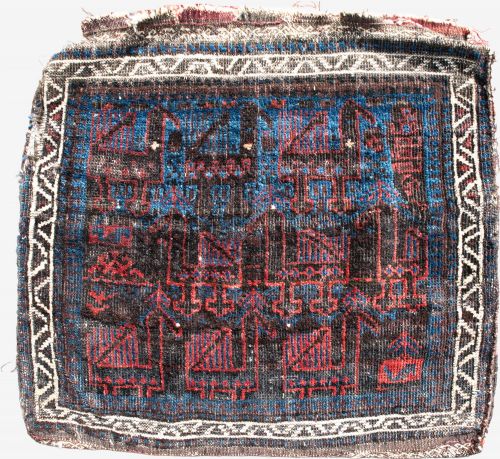
A nomadic rug pillow typically originates from functional tribal carriers such as saddlebags, grain sacks, and storage bags created by weavers across Persia, Central Asia, and the Caucasus. These utilitarian textiles, including pieces from Turkmen, Qashqai, Baluch, and Shahsavan groups, are subsequently adapted into cushions and pillow faces for modern living.
The most common examples encountered on this page date from the nineteenth and early twentieth centuries, spanning the eighteen-fifties to the nineteen-twenties. Buyers frequently find individual bagfaces, complete pairs of saddlebags, and smaller flatwoven or knotted pile textiles transformed into manageable decorative items while retaining their original tribal character.
Materials and construction
These textiles rely on hand-spun wool for the pile and foundation, often combined with cotton for structural support in certain regional styles. Natural dyes provide the enduring palette, yielding deep earthy tones and saturated hues that develop a rich patina over decades of use and ageing.
Weaving techniques vary between dense knotted pile and intricate flatweaves such as kilim or banded structures. Artisans constructed these items on portable vertical or horizontal looms, incorporating traditional tribal motifs like gul patterns, herati designs, and geometric field layouts.
Nomadic Rug Pillow Retail Price Guide 2026
Typical asking prices for nomadic rug pillow among the pieces listed under this phrase on Sellingantiques today, from the lower quarter to the upper quarter. They describe what is for sale here now, not the wider market.
Many of these cushions still bear the quiet evidence of camp life, woven by makers who packed their entire worlds onto the backs of animals.
Evaluating quality and authenticity
Quality rests upon the fineness of the weave, the clarity and complexity of the tribal design, and the integrity of the natural dyes. Superior examples exhibit exceptional wool quality with a soft, lustrous handle and precise execution of traditional motifs.
The preservation of the original format, whether a complete bagface with its plain weave back or a well-matched pair of saddlebags, elevates the standing of a piece. Finer items demonstrate careful adaptation into cushions that respect the historical boundaries of the textile rather than arbitrary trimming.
The Nomadic Rug Pillow Glossary
- Bagface
- The decorated front panel of a nomadic storage bag or saddlebag. This portion usually displays the primary pile or flatweave design while the back remains plain.
- Chuval
- A large Turkmen storage bag traditionally used for household goods and bedding. These pieces often feature multiple guls arranged across the field.
- Torba
- A smaller storage bag made by Turkmen and other nomadic groups, frequently hung inside a tent for personal items. They typically present horizontal proportions and striking geometric borders.
- Mafrash
- A rectangular Caucasian or Persian storage sack, often woven in flatweave or sumak technique. Pairs of these containers served as bedding bags during migration.
- Gul
- A repeating medallion or octagonal motif found in Turkmen and Central Asian weaving. Each tribal group utilised distinct gul variations to signify lineage and origin.
- Balisht
- A traditional tribal term for a small pillow or sleeping bag face. These smaller formats lend themselves naturally to modern cushion conversion.
Nomadic Rug Pillow: Frequently Asked Questions
How were these tribal bags originally used?
Nomadic tribes utilised these woven containers for transporting belongings, storing grain, and organising household goods during seasonal migrations.
Items like torbas and chuvals hung inside tents or rode across pack animals, serving strictly utilitarian purposes before later conversion into cushions.
How do I care for an antique wool cushion?
Protect the hand-spun wool and natural dyes by keeping the cushion out of direct, prolonged sunlight to prevent fading.
Gentle surface vacuuming without a rotating brush roll helps remove dust, and professional textile cleaning should be used for deeper maintenance.
How can I tell different tribal designs apart?
Tribal attribution relies on distinctive motifs, structural techniques, and regional colour palettes unique to specific weaving groups.
For instance, Turkmen pieces often feature repeating octagonal guls, while Qashqai and Baluch textiles display characteristic geometric layouts and animal or bird elements.