




Nomad Weaving
Nomad weaving brings together rugs, salt bags, and horse trappings made by tribal groups across Persia, Central Asia, and Afghanistan.
Nomad Weaving
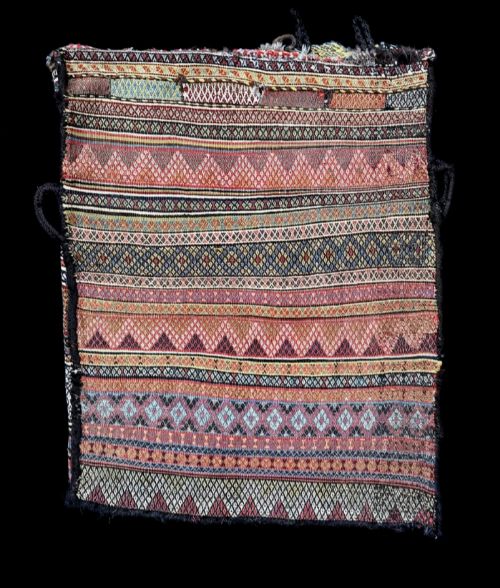
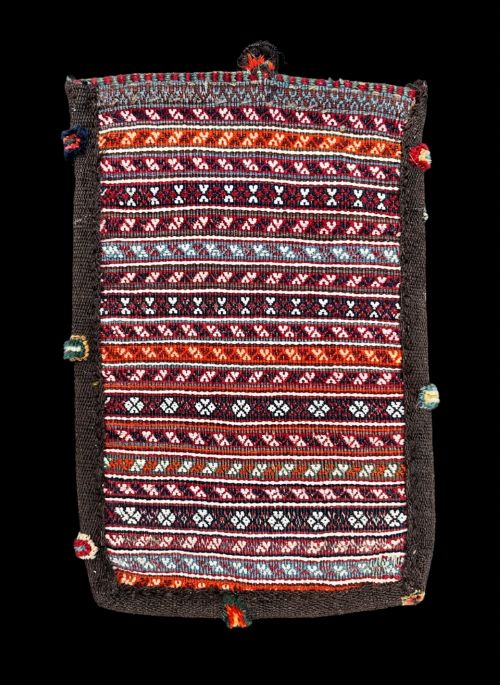
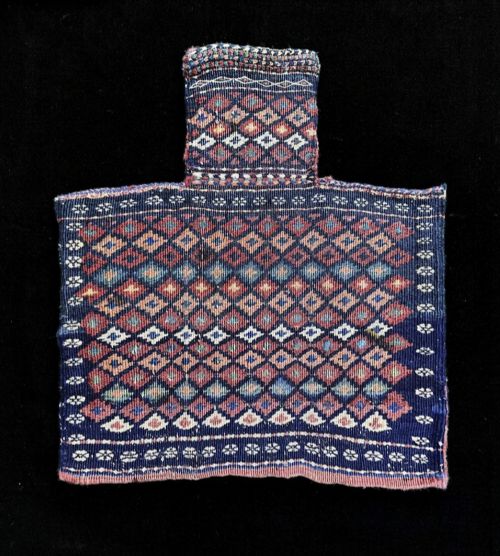
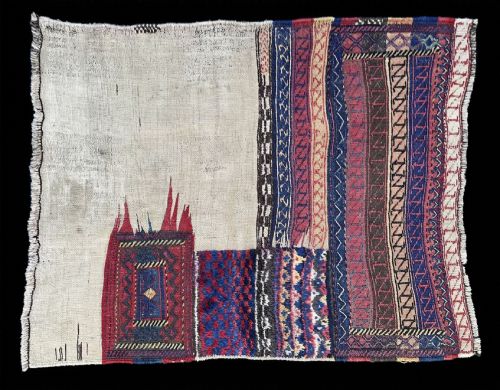
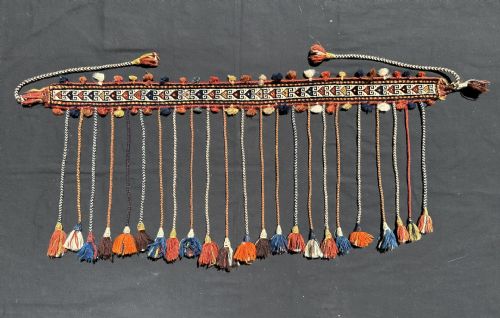
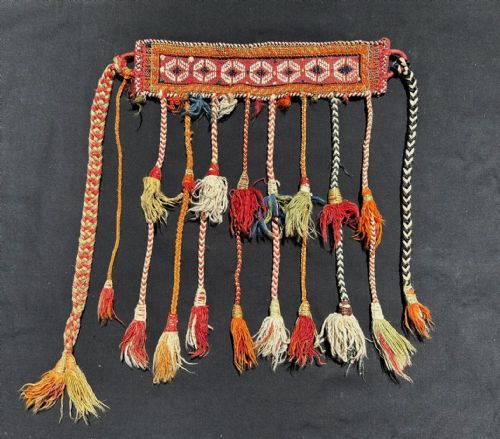
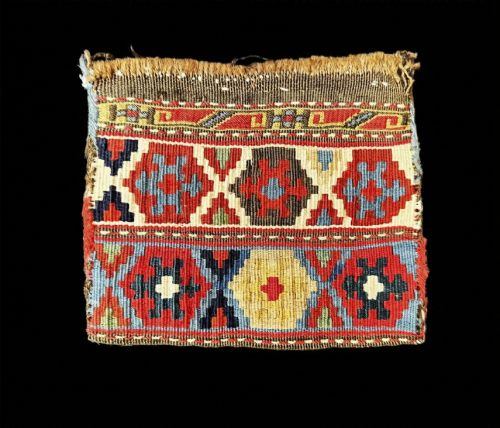
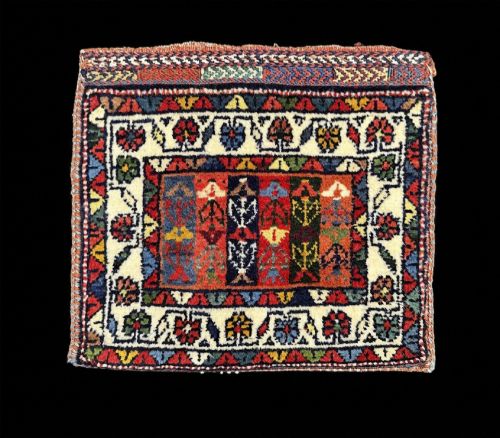
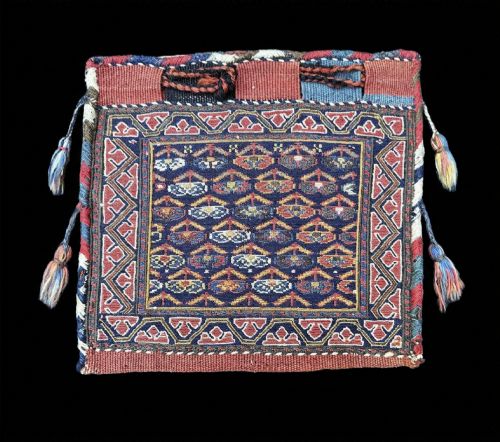
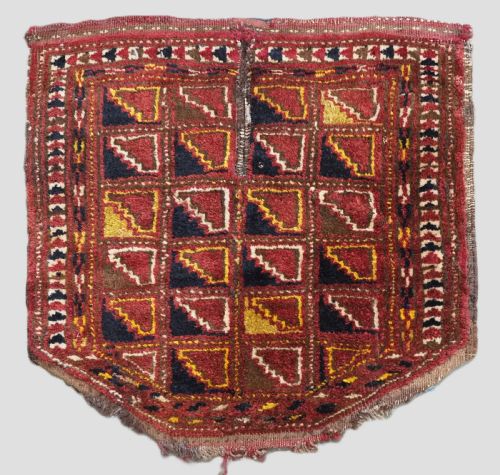
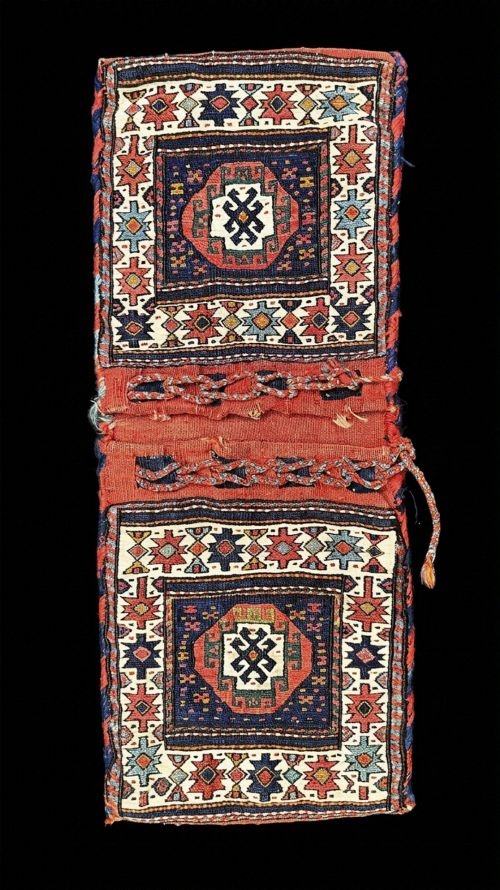
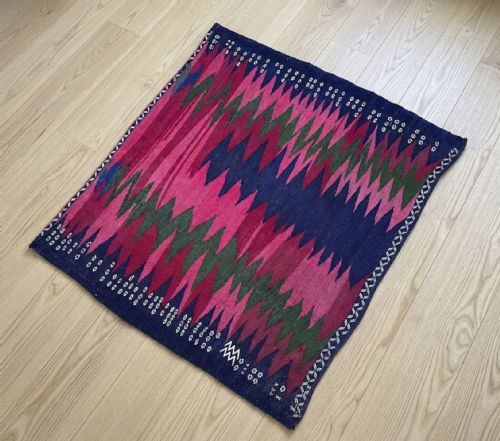
Nomad weaving comprises functional tribal textiles created by nomadic groups, including rugs, bread sofreh, horse blankets, and storage bags. When exploring nomad weaving on this page, the most frequent encounters are with smaller utilitarian items such as vanity bags, salt bags, and saddle bag faces.
These pieces originate from specific tribal confederations and regions spanning the nineteenth and early twentieth centuries. Groups such as the Afshar, Qashqai, Shahsevan, and various Turkmen tribes produced these textiles for daily pastoral life rather than urban commerce.
Materials and Construction
Weavers relied principally on hand-spun wool and goat hair, utilising natural dyes derived from local plants and minerals to colour the fleece. Cotton occasionally appears for foundations, while supplementary materials like cowrie shells decorate specific horse trappings and bags.
Construction techniques include pile knots, flatweave kilim structures, and soumak work. The handling of these materials yields dense, resilient surfaces built to withstand the rigours of camp life and transit.
Nomad Weaving Retail Price Guide 2026
Typical asking prices for nomad weaving among the pieces listed under this phrase on Sellingantiques today, from the lower quarter to the upper quarter. They describe what is for sale here now, not the wider market.
Some horse trappings still retain their original cowrie shells, once added to ward off the evil eye during long desert migrations.
Judging Quality
Quality rests upon the handle of the wool, the precision of the tribal motifs, and the clarity of the natural dyes. Tightly spun fleece and saturated, well-balanced palettes distinguish superior examples from flatter, less vibrant work.
Structural integrity also dictates worth, as intact borders, original selvedges, and complete backs on items like torbas and chuvals preserve the original form and utility of the weaving.
The Nomad Weaving Glossary
- Gul
- A primary octagonal medallion motif frequently found in Turkmen tribal weaving. These repeated primary guls often identify the specific sub-tribe that made the textile.
- Chuval
- A large storage bag made by Turkmen nomads for household goods. They are commonly seen today as separated bag faces.
- Torba
- A smaller storage bag than the chuval, traditionally hung inside a nomad tent. These pieces feature distinct tribal patterns across the face.
- Soumak
- A flatweave technique utilising a wrapping warp method that produces a durable, textured surface. It provides a sturdier alternative to standard plain-weave structures.
- Sofreh
- A flatwoven spread or cloth used for dining or kneading bread within the tent. These textiles display geometric field designs associated with specific pastoral groups.
Nomad Weaving: Frequently Asked Questions
How were these bags used?
Tribal bags served practical storage functions within mobile camps, holding salt, bedding, clothing, or household provisions. Smaller pouches hung inside tents or fastened to pack animals during migration.
Their sturdy construction from wool and goat hair protected contents from moisture and wear on the move.
How do I live with tribal textiles?
Tribal rugs and bag faces suit various interiors, whether displayed flat on the floor, hung on a wall as textile art, or used as cushion covers. Their robust wool construction adapts well to moderate foot traffic when placed correctly.
Keep pieces out of direct sunlight to protect the natural dyes from fading over time.
How do I tell different tribes apart?
Tribal attribution relies on specific structural traits, colour palettes, and repeating motifs such as the guls used by Turkmen weavers. Afshar and Qashqai pieces often display distinct medallion arrangements and animal forms characteristic of southern Persia.
Comparing knotting styles and wool types helps pinpoint the origin of unsigned nineteenth-century work.