
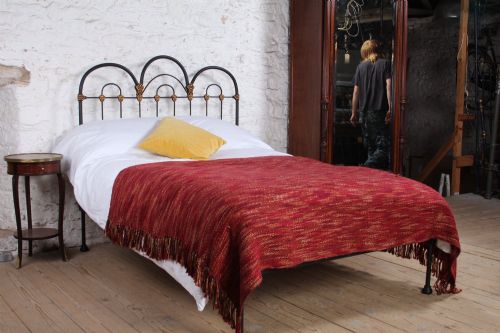


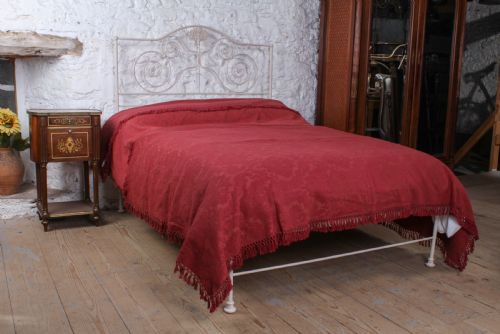
No Footboard Iron Bed
A no footboard iron bed offers an open silhouette that suits compact rooms without sacrificing period character.
No Footboard Iron Bed
When you search for a no footboard iron bed, you encounter sturdy frames designed for double, king, super king, and single sleeping arrangements. These pieces originate across the late nineteenth and early twentieth centuries, specifically spanning the 1890 to 1910 period.
The selection here includes Victorian and French Country styles, alongside French hospital styles and Irish variants. You will find examples featuring ribbon reed motifs, classic straight rails, panel designs, and classic shaping.
The absence of an end rail defines this group, creating an unobstructed view across the mattress and the room. Such frames range from simple forged iron constructions to elaborate combinations of iron and brass.
How they were made
Makers utilised cast iron, wrought iron, and forged iron to build the primary structural framework of these beds. Brass components appear frequently on corner mounts, finials, and top rails, adding metallic contrast to the dark iron structure.
Surface finishes rely primarily on paint applied over the metal base. Metalworking techniques combined rigid casting methods with hand-forged elements to shape the detailed headpieces and side rails.
No Footboard Iron Bed Retail Price Guide 2026
Typical asking prices for no footboard iron bed among the pieces listed under this phrase on Sellingantiques today, from the lower quarter to the upper quarter. They describe what is for sale here now, not the wider market.
Materials recorded across the inventory include cast iron, wrought iron, forged iron, brass, and painted metal surfaces.
What varies in quality
The distinction between standard and finer examples rests upon the intricacy of the shaping and detailing on the headpiece. Ribbon reed work, panel configurations, and ornate brass embellishments demonstrate superior artisan involvement compared to plain straight rails.
The choice of materials also influences the overall character of the piece, with mixed iron and brass construction offering a more decorative appearance than basic cast iron alone.
The No Footboard Iron Bed Glossary
- No End Bed
- A bed frame lacking a footboard, often referred to as a no footboard bed. This open configuration allows the bedding to drape freely over the end.
- Ribbon Reed
- A decorative metallic moulding resembling tied ribbon or slender reeds. This detail often enhances the upper sections of Victorian frames.
- French Hospital Style
- A specific nineteenth-century utilitarian aesthetic adapted for domestic use. These frames typically incorporate clean lines and functional brass and iron joinery.
- Forged Iron
- Metal shaped through heating and hammering rather than pouring into a mould. This technique yields solid, tactile bars with subtle surface variations.
- Straight Rail
- A minimalist linear bar design utilised on headboards and side rails. This configuration provides a stark contrast to heavily scrolled or shaped alternatives.
No Footboard Iron Bed: Frequently Asked Questions
What is a no footboard iron bed?
It is a sleeping frame constructed primarily from metal that lacks a raised foot section. This open layout makes smaller bedrooms feel larger by maintaining uninterrupted sightlines.
Such frames draw on Victorian and early twentieth-century designs, balancing structural durability with decorative metalwork.
How do I choose the right size?
Measure your available floor space carefully, accounting for the mattress dimensions. These pieces are available in single, double, king, and super king formats.
Consider the clearance at the foot of the bed since the missing end rail alters how you approach and move around the furniture.
Are these beds heavy?
Yes, constructions involving cast iron, wrought iron, and brass possess substantial weight. This heaviness ensures the frame remains rigid and stable during daily use.
Most models dismantle into components such as headboards, side rails, and base supports to simplify transport and positioning.
How do I clean an iron bed?
Dust the metal surfaces regularly with a soft, dry cloth to prevent accumulation. Avoid harsh chemical cleaners that might compromise the painted or patinated finish.
Brass elements can be maintained gently according to the specific metal finish, preserving the historic character of the piece.