

Nineteenth Century Study Desk
A nineteenth century study desk is a working writing table built for a library or office, valued for its rich timber and practical drawers.
Nineteenth Century Study Desk
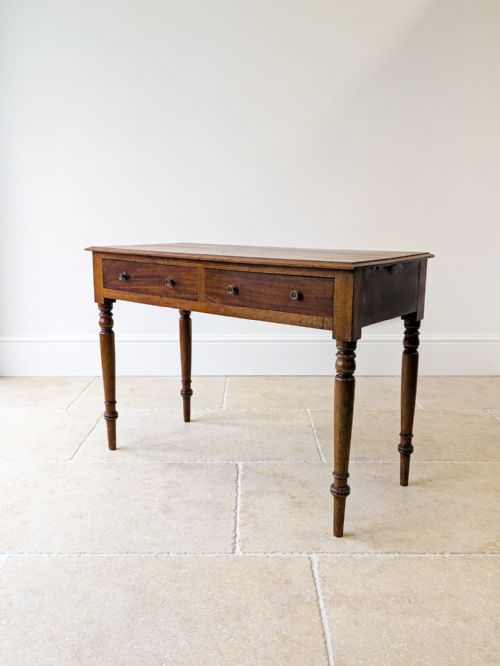
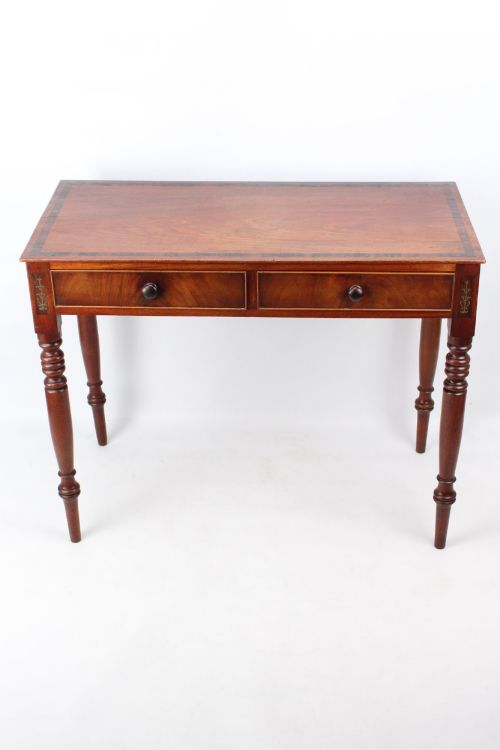
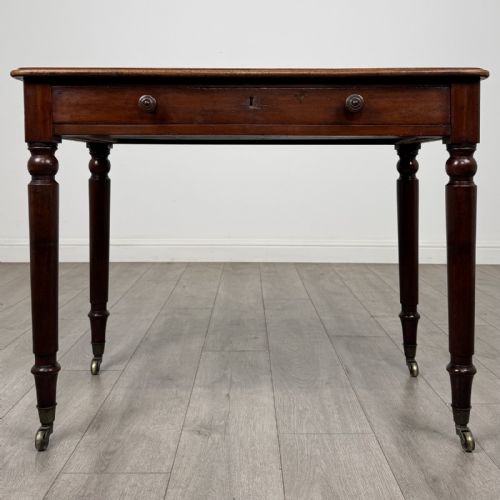
When you search for a nineteenth century study desk, you encounter substantial working furniture designed for writing, correspondence and the management of papers. These pieces span the Victorian and Regency eras, taking forms such as pedestal desks, partners desks, writing tables and compact Davenports.
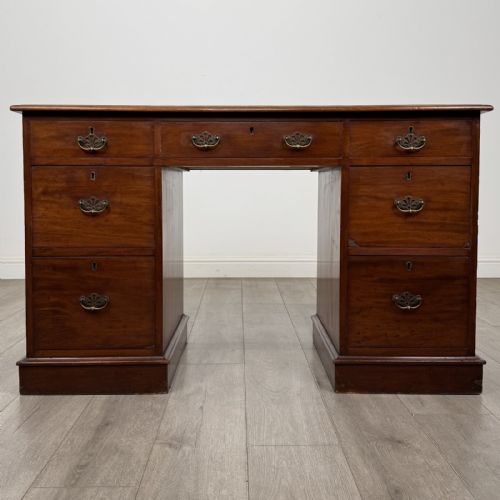
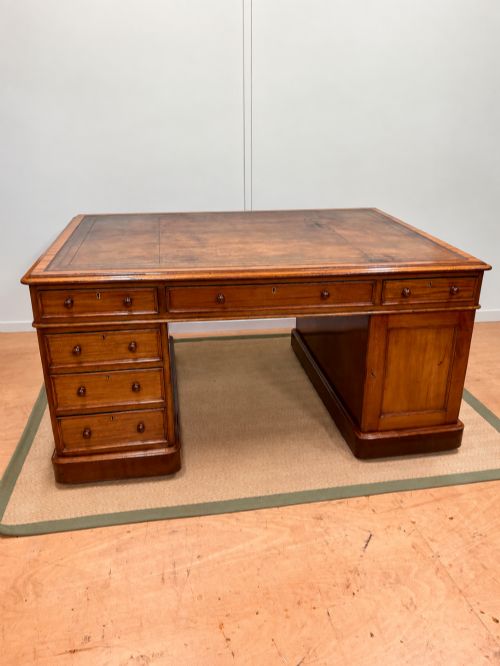
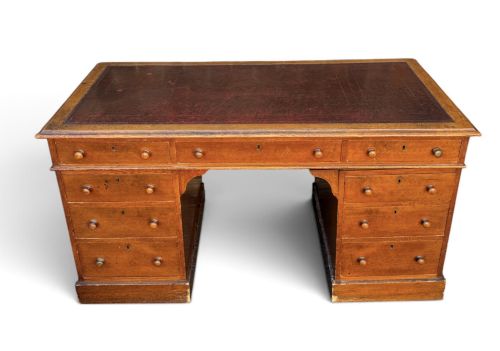
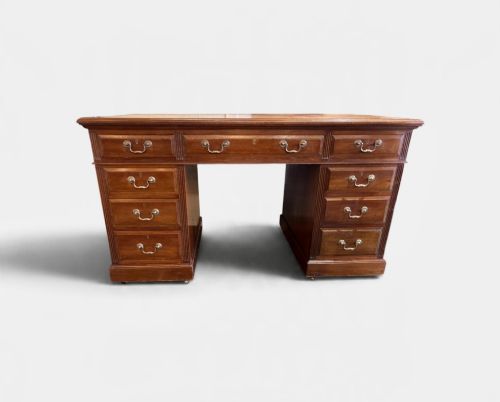
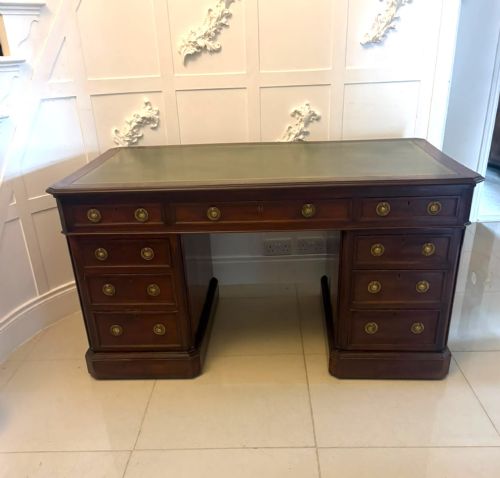
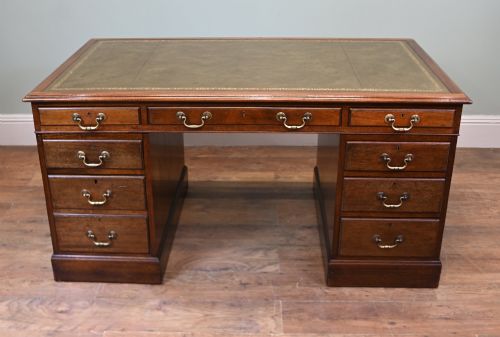
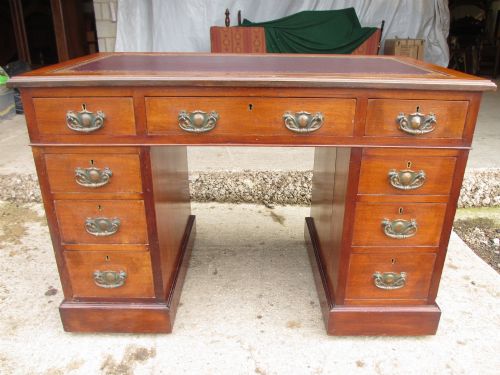
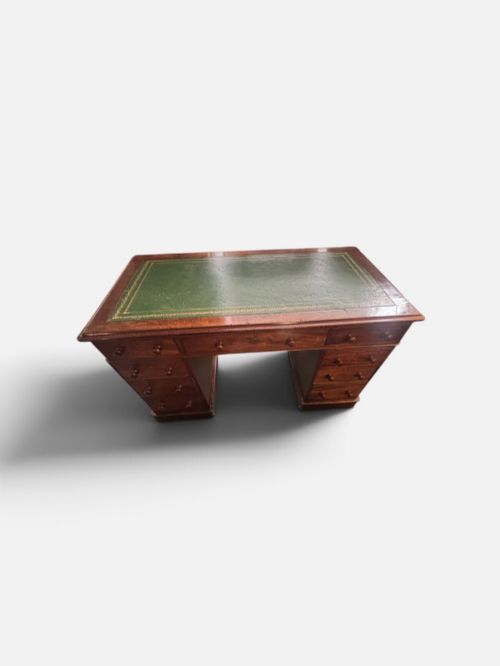
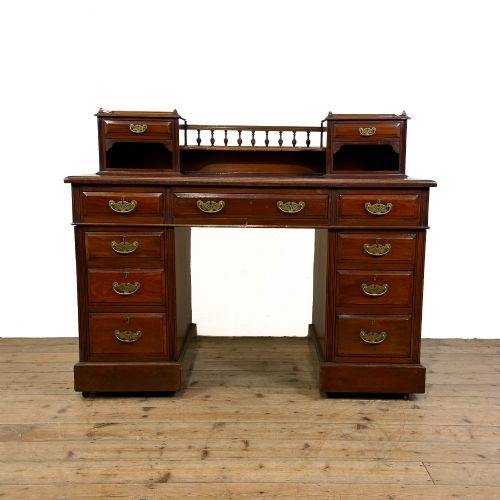
The pedestal desk in mahogany, walnut or oak is the most frequent form on this page. These versions typically comprise two banks of drawers supporting a heavy writing surface inset with leather.
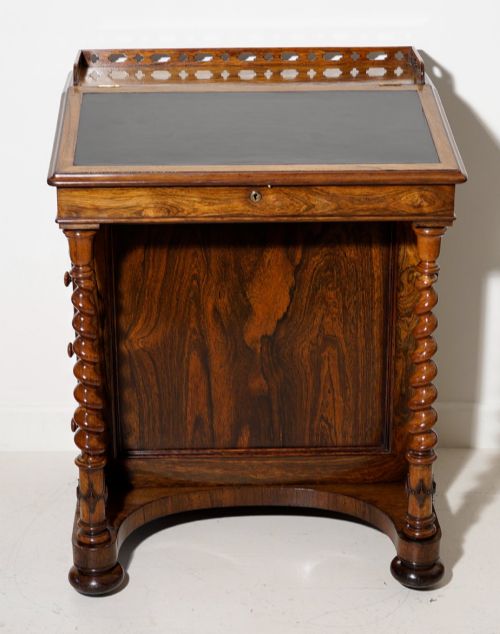
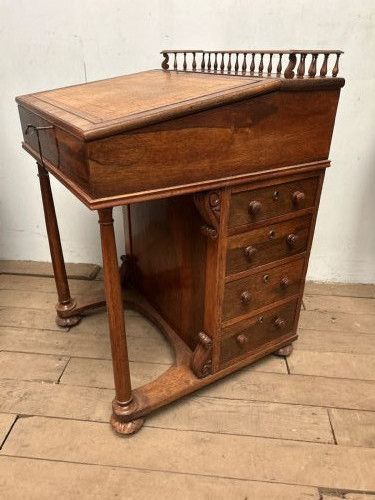
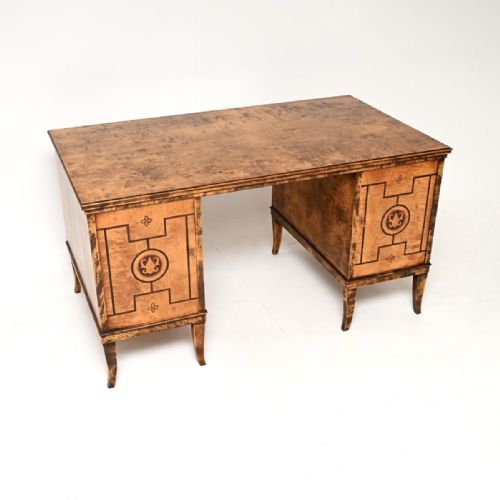
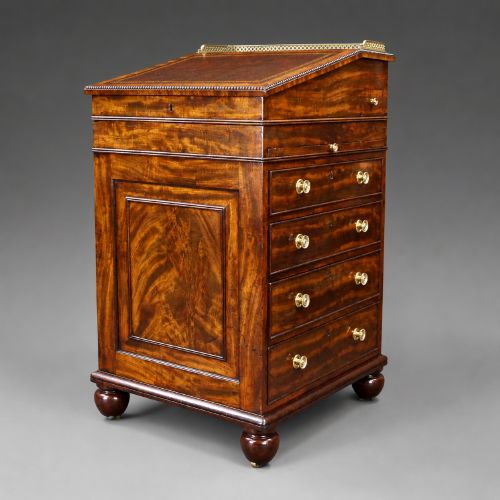
Alternative forms include the larger partners desk for shared use from opposite sides, and the sloped Davenport desk designed for compact spaces.
Materials and Construction
Cabinet makers utilised dense hardwoods such as mahogany, rosewood, walnut and burr walnut, often selecting flame mahogany or figured burr veneers for the primary visible surfaces. Oak served frequently for structural framing and drawer linings, ensuring durability under daily use.
Writing surfaces were routinely lined with leather, frequently tooled in gold leaf around the perimeter. Brass handles, swan neck pulls and brass castors completed the hardware of the period.
Nineteenth Century Study Desk Retail Price Guide 2026
Typical asking prices for nineteenth century study desk among the pieces listed under this phrase on Sellingantiques today, from the lower quarter to the upper quarter. They describe what is for sale here now, not the wider market.
Listings feature woods including mahogany, burr walnut, rosewood, satin birch and oak across Victorian and Regency periods.
Distinctions in Quality
Quality reveals itself in the selection of timbers, such as the rich figuring of burr walnut or flame mahogany veneers matched across the drawer fronts. Finer examples display meticulous attention to secondary timbers like oak drawer linings and precise dovetail joints.
Gillows·Hobbs & Co.·Maple & Co.
The Nineteenth Century Study Desk Glossary
- Pedestal desk
- A heavy desk comprising two pedestals of drawers supporting a single top with a central kneehole.
- Partners desk
- A large double-sided desk designed so two people could work opposite one another with drawers on both sides.
- Davenport
- A small compact writing desk with a sloping top above a bank of drawers opening to one side.
- Kneehole desk
- A desk featuring a central recess for the legs flanked by pedestals of drawers.
- Tooled leather
- Leather inset into the writing surface and decorated with stamped gold leaf patterns.
Nineteenth Century Study Desk: Frequently Asked Questions
What is a partners desk?
A partners desk is an enlarged double-sided study desk designed for two people to work opposite one another.
These pieces feature matching sets of drawers on both long sides, making them suitable to stand freestanding in the middle of a room.
How do I identify a Davenport desk?
A Davenport is a compact writing desk characterised by a sloping, hinged writing surface and a bank of drawers opening to the side.
They emerged during the Regency period and remained popular through the Victorian era for smaller studies or drawing rooms.
What woods were used for these desks?
Cabinet makers relied primarily on mahogany, walnut, burr walnut and oak.
Finer desks utilised decorative veneers like flame mahogany and burr walnut on the drawer fronts, while secondary woods like oak provided structural strength.
Are these desks freestanding?
Many pedestal desks and partners desks are finished on all four sides so they can stand in the centre of a room.
Some simpler models were built to sit flush against a wall, leaving the rear unfinishing.