




Nineteenth Century Spoon
A nineteenth century spoon brings domestic history straight to the table, offering utility shaped by the hands of Georgian, Victorian, and continental makers.
Nineteenth Century Spoon
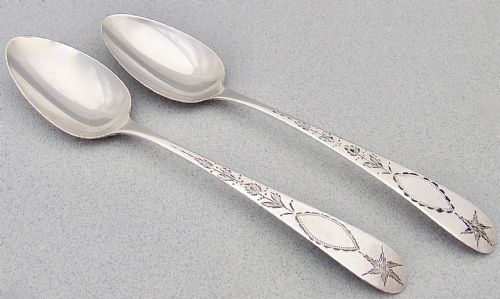
A nineteenth century spoon encompasses domestic cutlery, serving utensils, and folk art lovespoons shaped during the Georgian, Regency, and Victorian eras. These items range from sterling silver table and berry spoons to carved wooden lovespoons originating from Wales and Switzerland.
Buyers are most likely to encounter sterling silver serving pieces and fruit sets alongside wooden treen and fruitwood lovespoons. The selection also includes silver plate and specialist items such as ice cream servers and agate-handled spoons.
Materials and construction
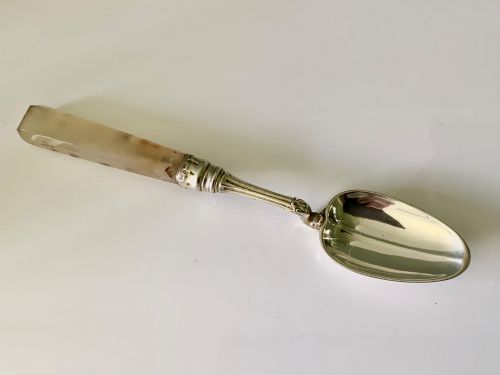
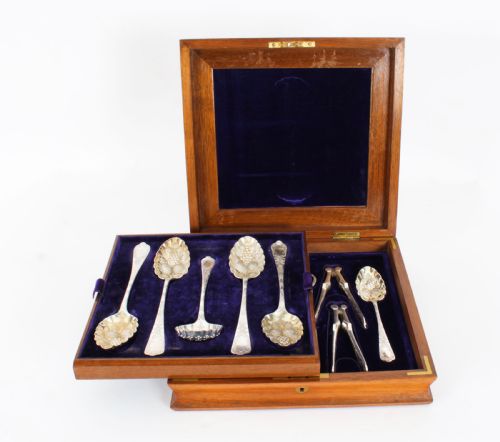
Metal spoons rely on sterling silver or silver plate, often worked with cloisonne enamel or chased details to create berry and serving spoons. Makers shape these through traditional smithing and casting techniques, sometimes incorporating stone handles like agate.
Wooden lovespoons and treen pieces utilise regional timbers including mahogany, sycamore, walnut, and yew-wood. Artisans carve these organic materials by hand, decorating them with motifs such as carved vine leaves and intricate openwork.
Carved from a single piece of fruitwood, nineteenth-century lovespoons hide intricate chain links and dangling rings inside solid stems.
Judging quality
Quality rests upon the crispness of the hand-carved detail in wooden pieces and the clarity of hallmarks and engraving on silver items. Finer examples display balanced proportions, intact enamel work, and skilful execution without excessive wear.
Material choice and maker reputation further distinguish the range, as pieces bearing marks from documented silversmiths or notable firms command greater attention. The preservation of original surface patination on wood and uncompromised metal thickness define the better specimens.
John Pittar·C. Hindley & Sons·Vasily Agafonov·Hukin & Heath·Henri Soufflot
The Nineteenth Century Spoon Glossary
- Berry spoon
- A large serving spoon, often Georgian or Victorian, featuring fruit and foliage embossed or chased onto the bowl long after initial manufacture. This decorative reworking turned standard table spoons into specialised serving pieces.
- Lovespoon
- A traditionally carved wooden spoon given as a token of affection, particularly associated with Welsh and Swiss folk art. These items often feature symbols like hearts, vines, and chain links carved from a single piece of timber.
- Silver plate
- A base metal coated with a thin layer of silver, offering the appearance of solid silver at a different cost. Nineteenth-century examples utilise various plating methods before electroplating became universal.
- Hallmark
- An official stamp applied to precious metals to guarantee purity and origin. These marks identify the maker, assay office, and year of testing on silver spoons.
Nineteenth Century Spoon: Frequently Asked Questions
How are antique silver spoons cleaned?
Silver spoons require minimal intervention using a soft cloth and specialised silver polish only when tarnish obscures detail. Harsh abrasives or modern dips strip the natural patination built up over generations.
Storing silver in anti-tarnish wrappers prevents rapid re-oxidation between uses. Gentle washing in warm soapy water with immediate drying suffices for routine maintenance.
What is a lovespoon used for?
A lovespoon serves as a decorative token of affection and courtship rather than an eating utensil. Suitors carved these wooden pieces to demonstrate woodworking skill and romantic intent.
Passed down or displayed on walls, they celebrate betrothals and marriages in Welsh and Swiss folk traditions. The intricate carvings often carry symbolic meanings personal to the maker and recipient.
Can I use antique spoons for dining?
Solid silver serving spoons and table spoons remain entirely functional for modern dining and food service. Their durable metal construction withstands normal use provided they are washed by hand.
Silver-plated items require care to prevent wearing through the thin precious metal layer over decades of washing. Delicate wooden lovespoons, however, belong on display rather than at the dinner table.