




Nineteenth Century Sewing Box
A nineteenth century sewing box combines fitted interior compartments with decorative woodwork to hold needles, threads and small textile tools.
Nineteenth Century Sewing Box
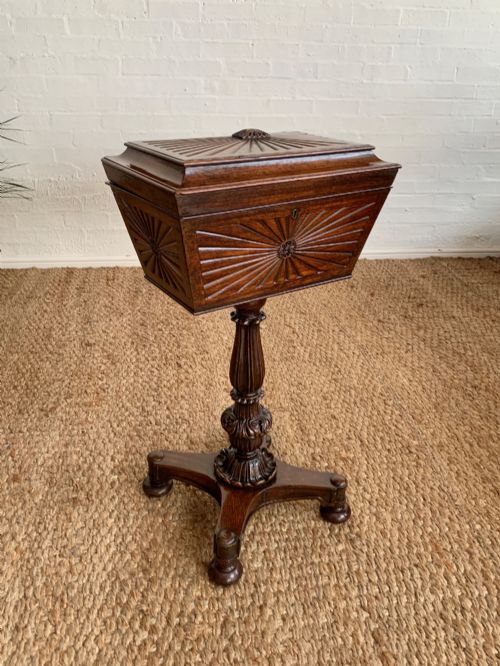
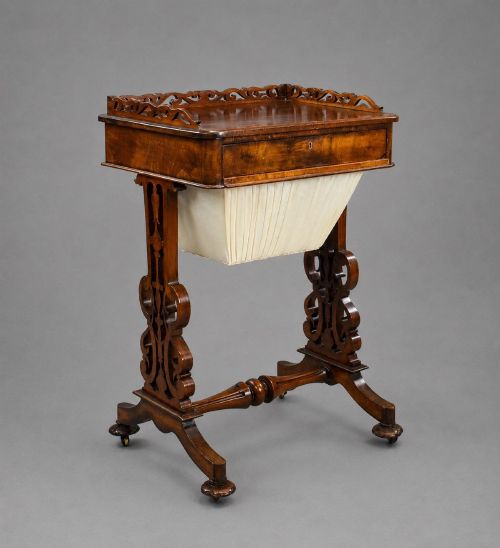
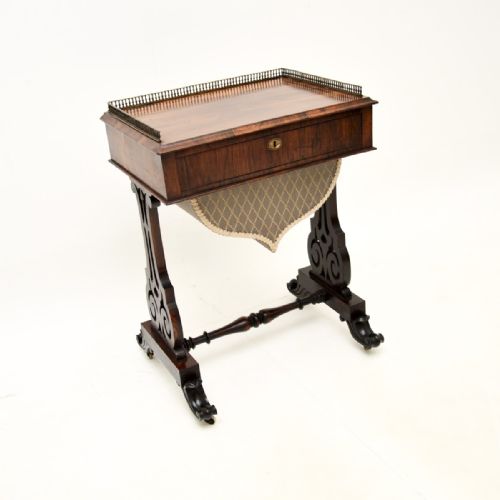
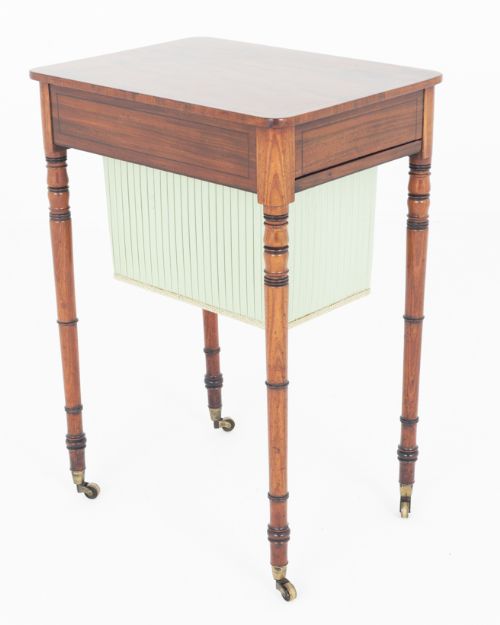
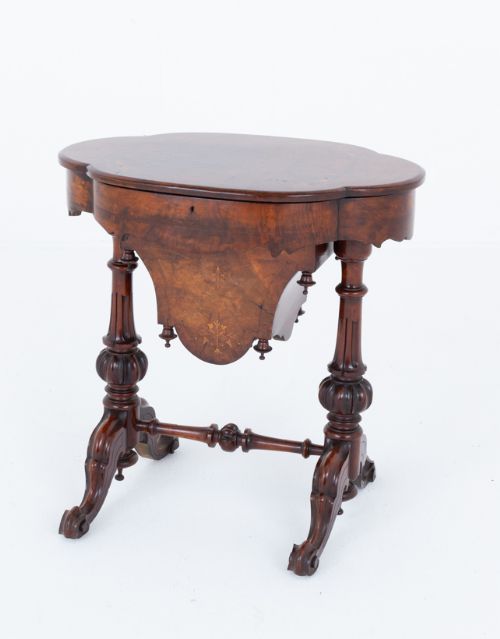
A nineteenth century sewing box encompasses both table-standing work cabinets and portable desktop cases designed for needlework and small crafts. Buyers examining this selection encounter various configurations, from freestanding pedestal tables to compact tabletop boxes and occasional workboxes fitted with interior trays.
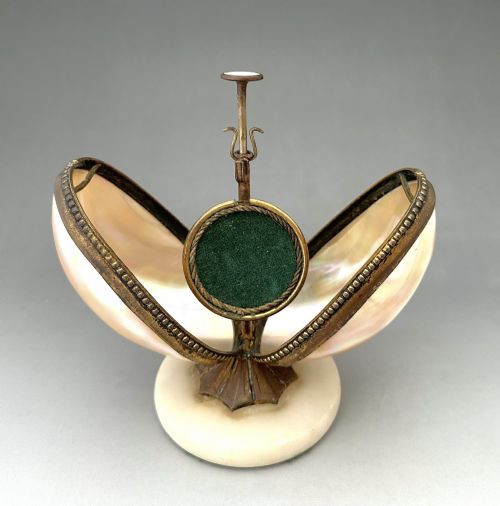
The majority of pieces date from the Victorian and Regency periods, utilising timbers such as rosewood, walnut, mahogany and burr walnut alongside decorative elements like mother-of-pearl inlay. Makers constructed these items for domestic utility, housing sewing accessories, silk linings and compartmentalised trays for organised handiwork.
Materials and construction techniques
Craftsmen utilised dense hardwoods like mahogany, rosewood and walnut as the primary structural foundations for these boxes and tables. They frequently applied figured veneers such as burr walnut and satinwood to exterior surfaces to create rich grain patterns and visual depth.
Decorative embellishments involved precise inlay work using mother-of-pearl, brass and marquetry, alongside specialist techniques like Tunbridge Ware and quill work. Interiors frequently incorporated silk-lined compartments, fitted trays and caddy tops designed to secure delicate sewing tools.
The inventory spans the Regency, William IV, Victorian, French Empire, Aesthetic Movement and Anglo-Indian design traditions.
Factors determining quality and execution
The standard of timber selection and veneer matching establishes the visual baseline of each piece, with burr walnut and figured rosewood commanding attention for their natural grain complexity. Superior examples display meticulous execution in surface inlays, brass stringing and mother-of-pearl details without gaps or misalignment.
Interior organisation and the preservation of original silk linings, fitted compartments and internal lift-out trays dictate functional completeness. The integration of structural supports, such as pedestal bases, drop leaves and caddy tops, reveals the original maker's joinery standards.
The Nineteenth Century Sewing Box Glossary
- Work Table
- A freestanding table incorporating a fabric bag, drawer or compartment beneath the top designed for needlework and sewing supplies. These pieces often doubled as occasional or lamp tables in nineteenth-century interiors.
- Tunbridge Ware
- A form of decorative woodworking originating from Kent involving tiny coloured wood prisms assembled into mosaic patterns. Craftsmen applied these geometric pictorial designs to the lids of boxes and small baskets.
- Caddy Top
- A raised, hinged lid construction featuring moulded edges reminiscent of tea caddies. This profile appears frequently on nineteenth-century workboxes and occasional tables.
- Marquetry
- The art of applying pieces of veneer to a structural structure to form decorative patterns and pictures. Makers utilised contrasting woods to achieve botanical and geometric motifs on box lids.
- Quill Work
- A decorative technique employing flattened bird quills, horn, ivory or sandalwood arranged in intricate surface patterns. This work appears particularly on Anglo-Indian pieces from the period.
Nineteenth Century Sewing Box: Frequently Asked Questions
What is a nineteenth century sewing box used for today?
These boxes function as decorative storage containers for jewellery, letters, craft supplies and small household items on desks or dressing tables.
The compartmentalised interiors and fitted lift-out trays keep modern trinkets and accessories neatly separated and protected.
How do I tell a Regency sewing box from a Victorian one?
Regency pieces often feature clean architectural lines in mahogany or rosewood, sometimes with brass inlay and classical proportions.
Victorian examples frequently display heavier burr walnut veneers, elaborate marquetry, mother-of-pearl embellishments and more rounded, ornate pedestal structures.
Where should I place a sewing table in my home?
Freestanding work tables fit well beside sofas, armchairs or bedsides as functional lamp tables or occasional surfaces.
Smaller tabletop boxes sit comfortably on chests of drawers, console tables or dressing desks where their detailed woodgrains remain visible.
What woods were commonly used for these boxes?
Makers relied heavily on dense tropical hardwoods including mahogany, rosewood and walnut for structural stability and rich natural colour.
Figured veneers such as burr walnut, satinwood and coromandel-wood provided decorative exterior surfaces on higher-grade boxes and tables.