




Nineteenth Century Rosewood Seating
Nineteenth century rosewood seating brings rich dark grain and brass inlay into a room, offering enduring comfort and strong period character.
Nineteenth Century Rosewood Seating
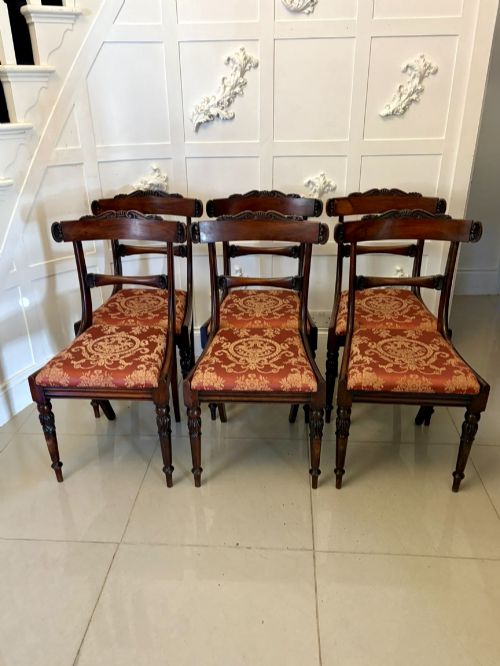
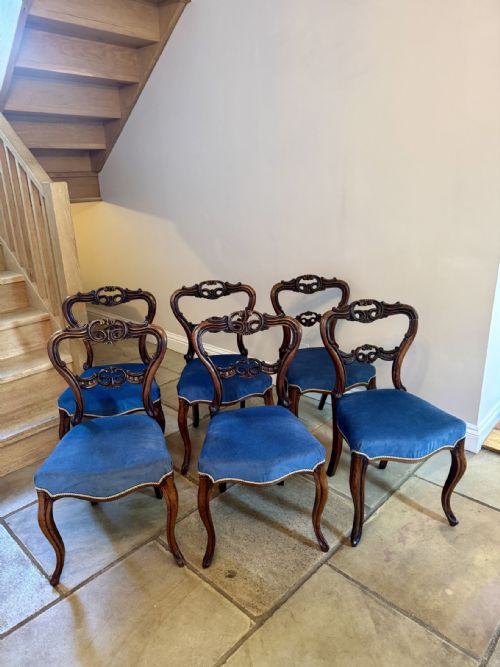
Buyers searching for nineteenth century rosewood seating encounter dining chairs, armchairs, music stools, daybeds, and side chairs from the Regency and Victorian eras. These forms range from single library armchairs and pairs of side chairs to large matching dining sets numbering up to twelve pieces.
The most frequently met examples on this page are dining chairs, often appearing in sets of four, six, or eight. Alongside these seating options, stools and benches appear in smaller numbers, including music stools and footstools.
How they were made
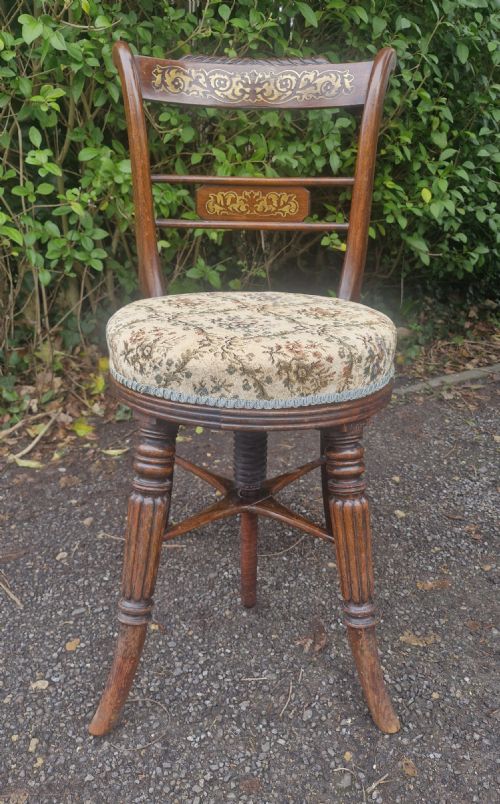
Maker workshops utilised solid rosewood and simulated rosewood, often combining the dark timber with brass inlay to accentuate the classical lines. Certain pieces also incorporate mahogany within their structural frames.
Upholstery forms a major component of these items, utilising various fabrics and velvet. Caning also appears as a seating material on specific armchair variants.
The listings on this site span the Regency, Victorian, and Neoclassical Revival styles, utilising rosewood, mahogany, brass, cane, and velvet.
What varies in quality
The distinction between standard examples and the finest works lies in the precision of the brass inlay and the integrity of the timber figure. Sets that remain intact in larger numbers command particular attention for their uniformity.
Execution of carved details and the sophistication of the revival style shape the standing of individual pieces, separating ordinary utility seating from workshop productions attributed to known makers.
Charles Nosotti·John Gee·Gillows
The Nineteenth Century Rosewood Seating Glossary
- Regency
- A British design period spanning the early nineteenth century, characterised by neoclassical influence and clean architectural lines. This style heavily informs many dining chairs and armchairs found in rosewood.
- Victorian
- A mid-nineteenth century period associated with decorative revival styles, producing balloon back chairs and side chairs in solid rosewood. Pieces from this era often display heavier proportions than their Regency predecessors.
- Bergère
- An enclosed upholstered armchair with wooden framing and typically cane or fabric sides. These library armchairs offer deep seating and refined joinery.
- Simulated rosewood
- Painted or stained grain mimicking the appearance of genuine rosewood timber. Workshops utilised this technique on alternative woods to achieve a uniform dark finish.
- Music stool
- An adjustable seat designed for musicians at the piano or harp. These items frequently feature rotating tops or mechanical height adjustment mechanisms.
Nineteenth Century Rosewood Seating: Frequently Asked Questions
Are these chairs suitable for daily dining?
Nineteenth century rosewood dining chairs were built for domestic use and handle regular sitting well, provided the joints remain sound and stable.
Buyers should treat antique upholstery with appropriate care, as nineteenth century padding materials differ significantly in feel and support from modern equivalents.
How do I distinguish Regency from Victorian pieces?
Regency seating tends to feature classical neoclassical revival motifs, saber legs, and brass wire inlay. The earlier designs often show lighter framing and sharper geometric angles.
Victorian pieces frequently adopt curved balloon backs and heavier turned legs. The timber selection on Victorian examples also shifts toward darker solid rosewood finishes without metal inlay.
What is simulated rosewood?
Simulated rosewood is an applied grain finish on timber, painted by artisans to replicate the dark figuring of genuine rosewood. Makers used this method during the Regency period alongside solid woods.
Close inspection of the grain pattern reveals the hand-painted brushwork rather than natural timber growth. This technique allowed workshops to achieve a cohesive appearance across entire dining sets.
How do I care for rosewood furniture?
Rosewood requires stable indoor humidity levels to prevent the timber from drying out or splitting. Keeping pieces away from direct heat sources protects both the wood and any applied brass inlay.
Routine dusting with a soft dry cloth preserves the polished surface. Polishes containing heavy silicones should be avoided in favour of traditional beeswax applications.