

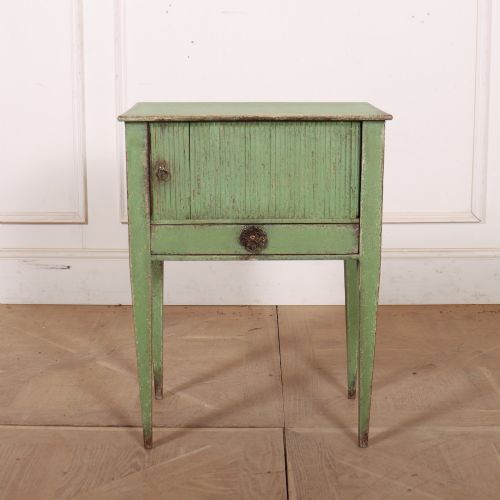
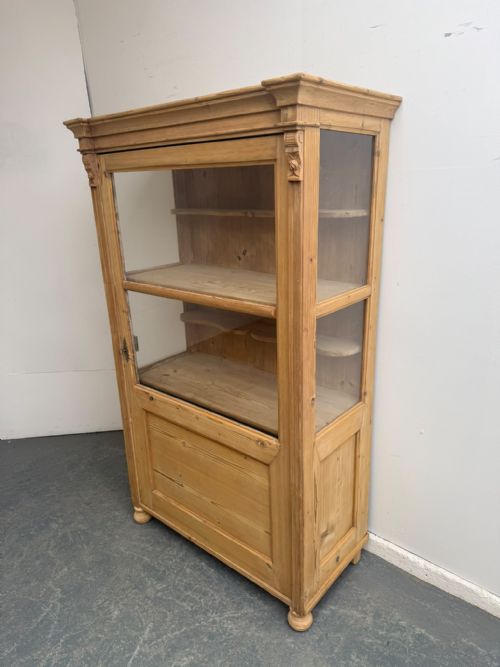


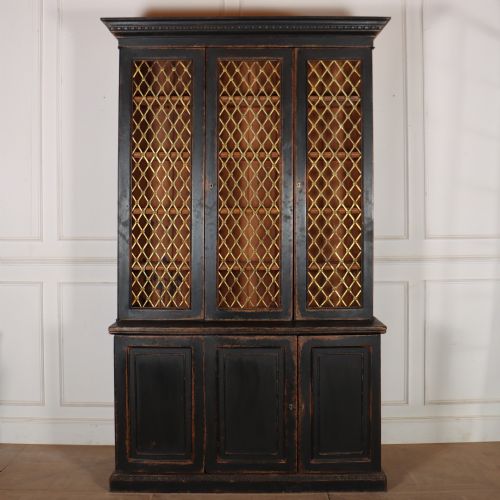

Nineteenth Century Painted Cupboard
A nineteenth century painted cupboard brings a weathered surface and honest utility into a room, offering practical storage disguised in colourful or muted pigment.
Nineteenth Century Painted Cupboard
A nineteenth century painted cupboard encompasses a wide assortment of utilitarian storage furniture from across Britain and continental Europe, ranging from modest provincial bedside tables to tall linen presses and kitchen dressers. When you search for a nineteenth century painted cupboard, you encounter diverse forms built to serve domestic needs in farmhouses, cottages, and townhouses alike.
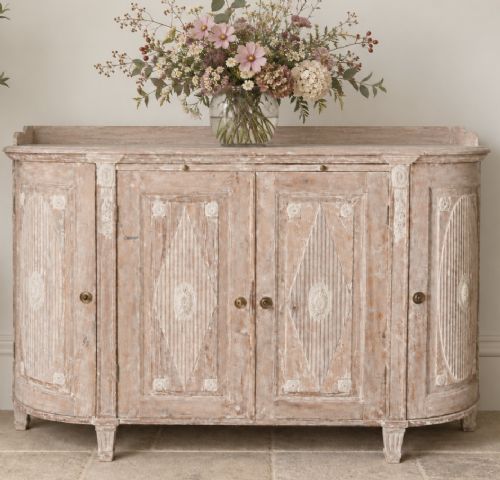
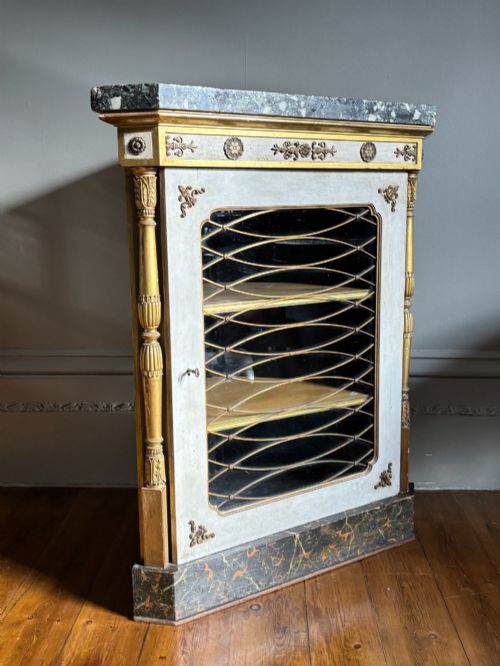
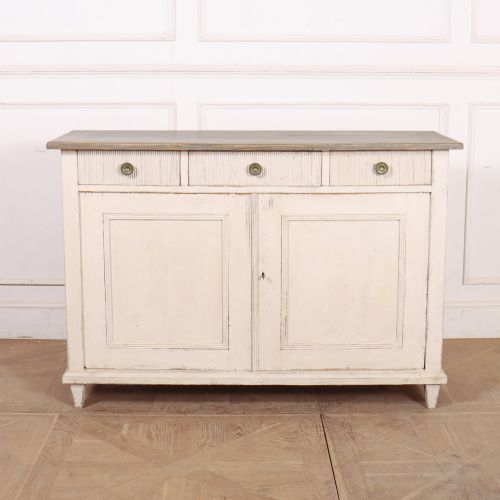
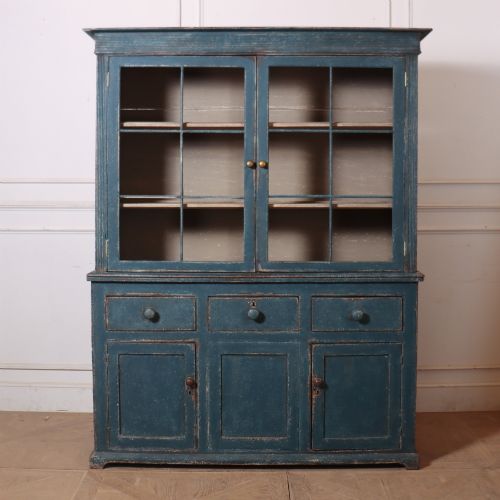
The pieces appearing on this page most frequently take the form of pine kitchen dressers, corner cupboards, and regional storage units. Makers constructed these items from accessible domestic timbers, applying successive layers of paint to protect the wood and brighten functional interiors.
Regional variations dominate the selection, showing distinct construction traits from English, Scottish, Welsh, Dutch, Scandinavian, and Italian workshops. Each area developed characteristic proportions and moulding details that help identify the local origin of a given cabinet.
How they were made
Joiners and country carpenters relied primarily on solid pine and other local woods for the carcases, doors, and internal shelving of these utilitarian cabinets. They joined structural elements using traditional techniques suited to fast-moving workshop production.
Surface treatment defines the character of these pieces, involving coats of oil or water-based paint applied directly to the timber substrate. Over decades, this pigment weathered, chipped, and absorbed patination through everyday domestic use.
Nineteenth Century Painted Cupboard Retail Price Guide 2026
Typical asking prices for nineteenth century painted cupboard among the pieces listed under this phrase on Sellingantiques today, from the lower quarter to the upper quarter. They describe what is for sale here now, not the wider market.
The site listings feature nineteenth century painted cupboards alongside related forms in pine, glass, brass, and iron from English, Scottish, Dutch, and Scandinavian origins.
What varies in quality
Quality in these vernacular pieces rests upon the integrity of the original timber frame and the survival of early or untouched paint surfaces. Cabinets retaining their authentic historical pigment carry greater architectural coherence than those stripped down or heavily reworked in later eras.
Proportion and structural balance distinguish finer regional examples from basic utilitarian boxes, as skilled provincial makers applied thoughtful cornice mouldings and well-balanced panelled doors to elevate simple pine furniture.
The Nineteenth Century Painted Cupboard Glossary
- Pine
- A soft, accessible timber utilised extensively across the nineteenth century for regional domestic furniture and painted carcases.
- Dresser
- A multi-tier storage form combining base cupboards with open upper shelving, traditionally used for displaying and storing kitchenware.
- Corner cupboard
- A triangular cabinet designed to fit snugly into the intersection of two walls, maximising space in smaller rooms.
- Linen cupboard
- A tall cabinet specifically proportioned with internal shelving for storing household textiles, blankets, and folded garments.
- Patination
- The gradual accumulation of surface wear, colour shifts, and softening of edges produced by age and handling.
Nineteenth Century Painted Cupboard: Frequently Asked Questions
What rooms suit a painted cupboard?
These cabinets adapt easily to kitchens, hallways, and living spaces where practical storage and textural surface character are desired. Their vertical proportions allow them to occupy minimal floor space while offering substantial internal capacity.
Placing one in a dining area provides functional storage for tableware, whilst smaller bedside versions fit comfortably into private quarters.
How do I identify regional styles?
Regional attribution relies on noticing specific construction traits, mouldings, and the choice of secondary timbers hidden within the carcase. English and Scottish pieces often display robust joinery, whereas continental European examples from Dutch or Scandinavian workshops show distinct paint colours and panel arrangements.
Examining the hinges, feet, and cornice profiles further clarifies the geographical workshop origin.
Are the paint finishes original?
Paint history varies significantly across these pieces, with some retaining early decorative schemes and others showing layers applied across multiple decades of use. Close inspection reveals whether the pigment has bonded deeply with the pine substrate or sits over modern preparation layers.
Both untouched historic surfaces and mellowed later coats contribute to the visual depth of the furniture.
How should I care for the surface?
Maintaining a painted nineteenth century cabinet involves protecting the historic pigment from excessive moisture and direct sunlight. Gentle dusting with a dry cloth prevents dirt build-up without disturbing the delicate patination.
Avoiding harsh chemical cleaners ensures the soft, weathered finish remains stable for years to come.