


Nineteenth Century Ormolu Candelabrum
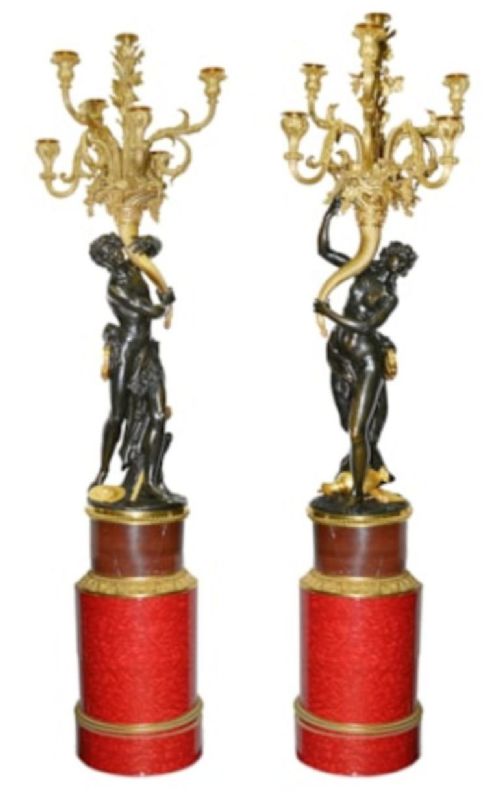
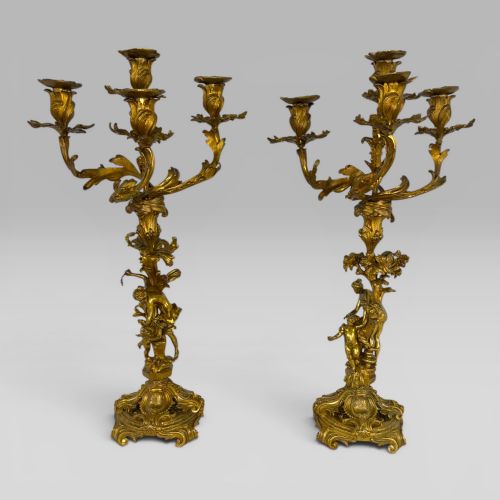
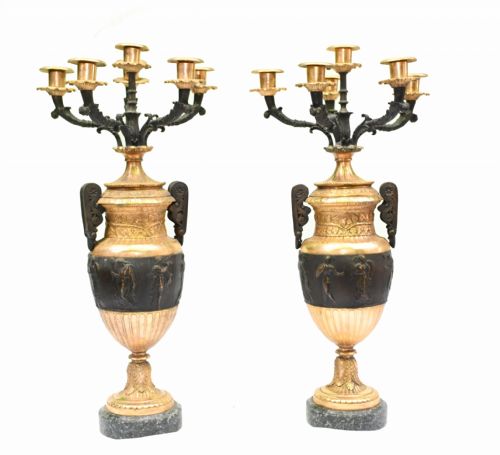
A nineteenth century ormolu candelabrum brings brilliant gilded presence and sculptural weight to a mantelpiece, combining patinated bronze with shimmering cast brass.
Nineteenth Century Ormolu Candelabrum
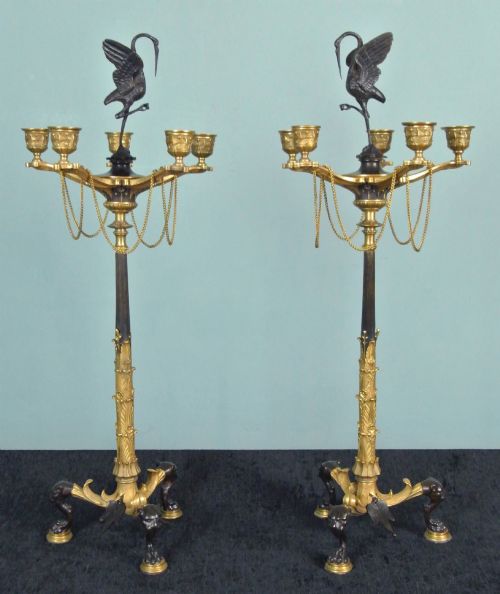
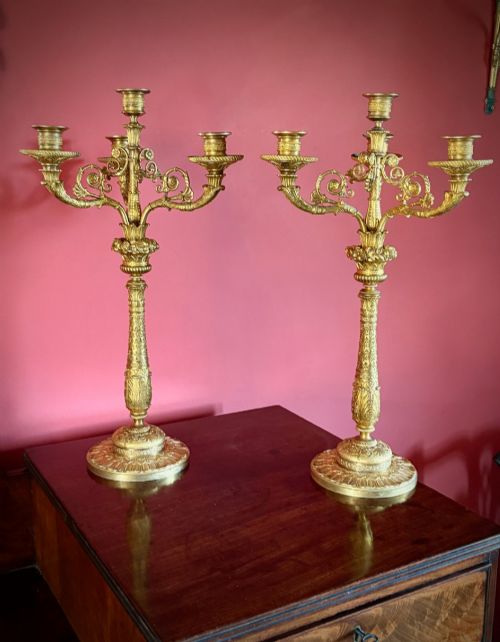
A nineteenth century ormolu candelabrum is a branched lighting fixture designed for domestic splendour, most commonly found here as matched pairs in French styles. These pieces combine cast gilt metal with contrasting patinated bronze or marble to create striking visual focal points. The selection ranges from Regency period designs to elaborate Louis XVI and Rococo revival pieces.
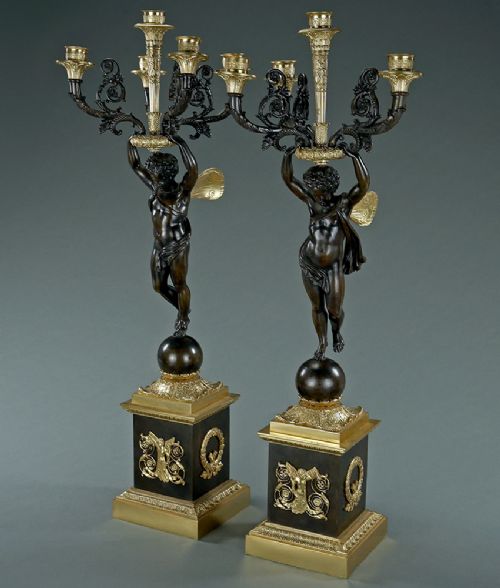
Buyers encounter numerous pairs featuring figural motifs such as cherubs, alongside architectural forms rooted in French Empire and Renaissance revival aesthetics. While the search centres on ormolu, the material palette frequently extends to include slate, white marble, and cut glass elements. Most examples branch into three or more lights, often accompanied by related clock sets and table mirrors.
How they were made
Makers produced these objects by casting bronze into detailed components, which were then chased to sharpen the decorative motifs before receiving a mercury gilding or gold wash. This application of ormolu provided a rich, durable surface that contrasted sharply against patinated dark bronze or polished marble bases. Artisans frequently combined these gilded and patinated elements with slate, white marble, or cut glass drops.
The construction often involved multiple screwed-together sections to support adjustable arms and removable drip pans on multi-light branches. Foundries employed specialist techniques to mount bronze figures onto heavy bases of marble, slate, or gilt bronze. Signed pieces reflect the work of prominent bronze-casters and Parisian foundries who dominated the nineteenth-century market.
Design influences on this page stretch from Regency and Charles X periods through to Renaissance, Rococo, and Louis XVI revivals.
What varies in quality
The integration of mixed materials also dictates overall merit, particularly the selection of unblemished marble and the weight of the cast bronze elements. Pieces produced by noted makers or foundries generally exhibit superior engineering in their multi-branch structures and adjustable arms. Balance, proportion, and the harmonious pairing of patinated bronze with bright ormolu separate standard production from masterworks.
Barbedienne·Thiebaut Freres·H Luppens Paris·Thomas Hope
The Nineteenth Century Ormolu Candelabrum Glossary
- Ormolu
- A gilded bronze technique utilising powdered gold amalgamated with mercury, applied to cast brass or bronze. This process produces a rich, lasting golden sheen characteristic of fine decorative arts.
- Patinated bronze
- Darkened bronze treated with chemical solutions to achieve a rich brown or black surface. This dark finish creates a strong visual contrast against bright ormolu mountings.
- Louis XVI style
- A neoclassical aesthetic defined by symmetrical restraint, straight lines, and classical motifs such as urns and laurel wreaths. It experienced a major revival during the nineteenth century.
- Regency
- An early nineteenth-century British style incorporating classical Greek, Roman, and Egyptian influences. It frequently pairs patinated bronze with gilt metal mounts.
- Candelabra
- A branched candlestick designed to hold multiple tapers simultaneously. Nineteenth-century versions often feature removable central finials and adjustable arms.
Nineteenth Century Ormolu Candelabrum: Frequently Asked Questions
How do I clean nineteenth century ormolu?
Dust gently with a soft brush and avoid all commercial metal polishes, which strip away the delicate gold layer. Water and harsh chemicals will permanently ruin the original fire-gilded surface.
Professional conservation is recommended if heavy grime obscures the detail. Keeping them away from direct sunlight and moisture preserves the original patination.
Were these candelabra wired for electricity?
Almost all surviving nineteenth-century examples were originally manufactured for wax candles and oil. Conversion to electricity often involved drilling through original bronze components.
Unconverted pieces retain their original drip pans and socket depths. Collectors generally prize examples that have not been altered for modern lighting.
How do I identify French Empire style?
French Empire pieces draw heavily on ancient Roman, Greek, and Egyptian motifs. Look for formal symmetry, military trophies, sphinxes, and classical figures.
The bronze work is typically heavy and combines deep patination with bright ormolu highlights. This aesthetic dominated the early nineteenth century before giving way to revival styles.