


Nineteenth Century Ormolu Candelabra
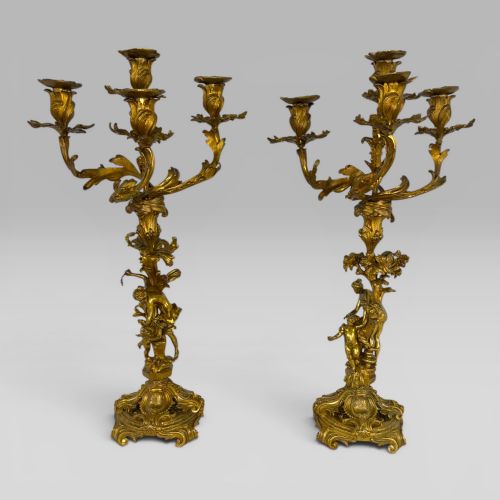
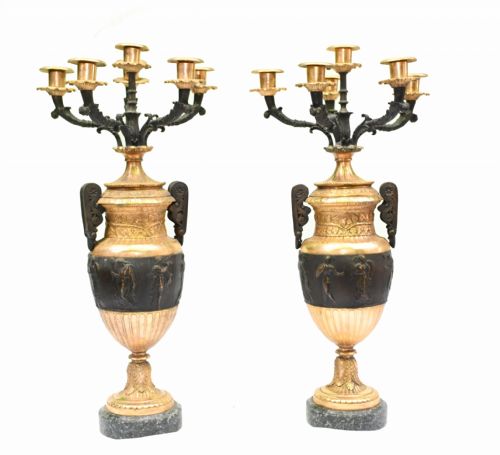
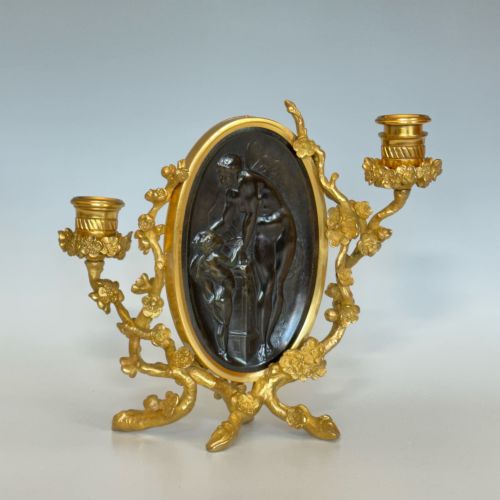
Nineteenth century ormolu candelabra bring striking gilt presence and fine bronze work to a room, offering both decorative splendour and period lighting.
Nineteenth Century Ormolu Candelabra
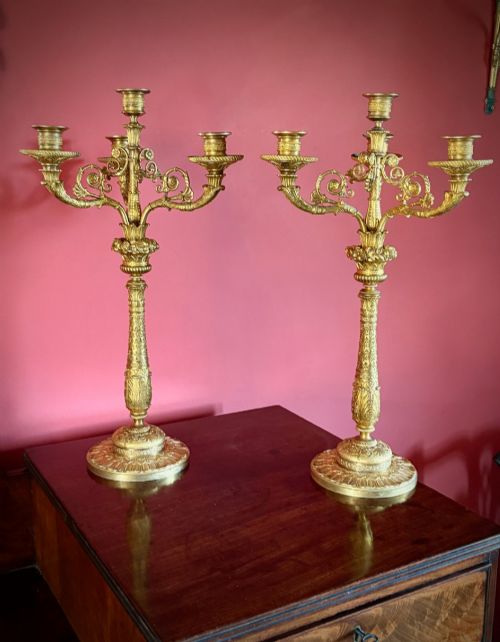
The styles range from French Empire and Louis XVI to Regency and Renaissance Revival, reflecting the historicism popular across the 1800s. Many examples use multi-branch configurations designed to hold several candles simultaneously, combining utility with elaborate metalwork.
The selection on this page centres heavily on French manufacturing workshops, alongside occasional English interpretations following designs by figures such as Thomas Hope. These pieces function equally well as standalone decorative mantel ornaments or as functional lighting for formal dining tables.
How they were made
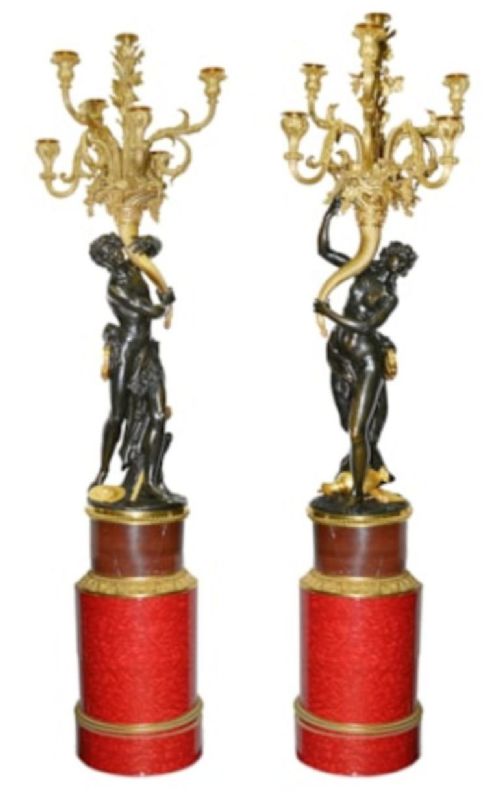
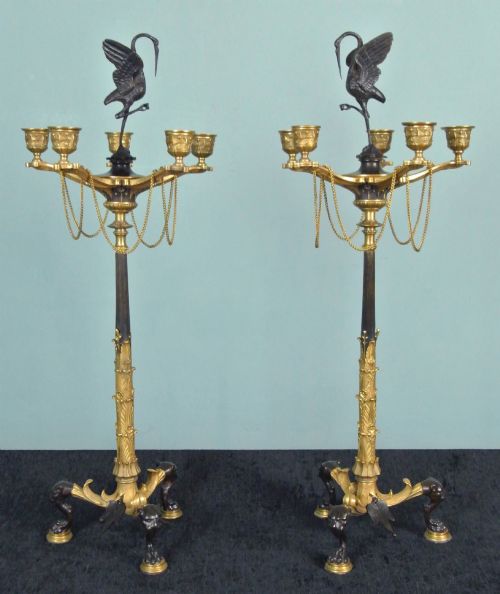
The construction relies on the delicate union of cast bronze that receives a mercury gilt or ormolu finish, paired frequently with contrasting dark patinated bronze elements. Artisans also integrated materials such as white marble, slate, cut glass, and cloisonné to build depth and textural contrast within a single object.
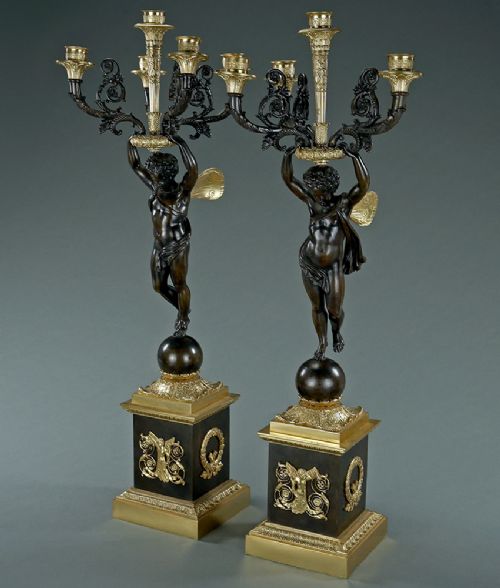
Casting methods of the period allowed for intricate figural work, capturing fine details in cherubs, foliage, and classical drapery before final hand-chasing and gilding took place.
Cherubs appear frequently on these metal arms, holding up lights as if moonlighting from a cloud.
What varies in quality
The choice of secondary materials also dictates the grade of the piece, with dense marbles and heavy patinated bronze bases distinguishing the finer workshop productions from standard commercial output.
Barbedienne·Thiebaut Freres·H Luppens Paris
The Nineteenth Century Ormolu Candelabra Glossary
- Ormolu
- A method of applying finely ground high-carat gold to a bronze object using a mercury amalgamation process. This technique produces a deep, durable golden finish characteristic of high-end nineteenth century metalwork.
- Patinated bronze
- Bronze that has been chemically treated to achieve a dark brown, green, or near-black surface tone. It provides a striking visual contrast against bright gilt or ormolu mounts.
- Louis XVI style
- An aesthetic revival drawing on the neoclassical restraint and symmetry of the late eighteenth century. Pieces in this idiom often feature straight lines, urns, and refined floral garlands.
- French Empire
- A decorative style inspired by the classical antiquity of Greece and Rome during the early nineteenth century. It favours military motifs, heavy proportions, and bold contrasts between polished and matt gilt surfaces.
- Regency
- An English design period spanning the early nineteenth century defined by a distinct borrowing from classical Greek, Roman, and Egyptian forms. Pieces from this era often utilise patinated bronze alongside gilt metal.
Nineteenth Century Ormolu Candelabra: Frequently Asked Questions
How do I clean nineteenth century ormolu candelabra?
Dust the metal gently with a soft, dry brush to prevent the accumulation of grit within the recessed chased details. Avoid harsh commercial metal polishes, as abrasive compounds can strip away the delicate gold layer.
Keep the pieces away from direct moisture and sources of excessive heat to protect both the gilt surfaces and any underlying marble or slate components.
Were these candelabra meant for candles or electricity?
These pieces were originally manufactured strictly for wax candles before the advent of domestic electric lighting. Many surviving examples retain their original sconces and drip pans designed entirely for traditional flame use.
Some owners choose to wire them for electricity later, though original un-drilled examples remain preferred by purists who appreciate their authentic period configuration.
How do I tell French and English pieces apart?
French production often leans towards ornate figural subjects like cherubs and complex Rococo or Empire revival curves. The gilding tends to show high brilliance with meticulous hand-chasing across the bronze surfaces.
English interpretations, such as those inspired by Thomas Hope, frequently incorporate stricter classical lines and heavier architectural bases using slate or distinct marble varieties.