

Nineteenth Century Mahogany Bookcase
A nineteenth century mahogany bookcase brings architectural presence and deep timber grain to a room, offering generous shelving framed by classic styles.
Nineteenth Century Mahogany Bookcase
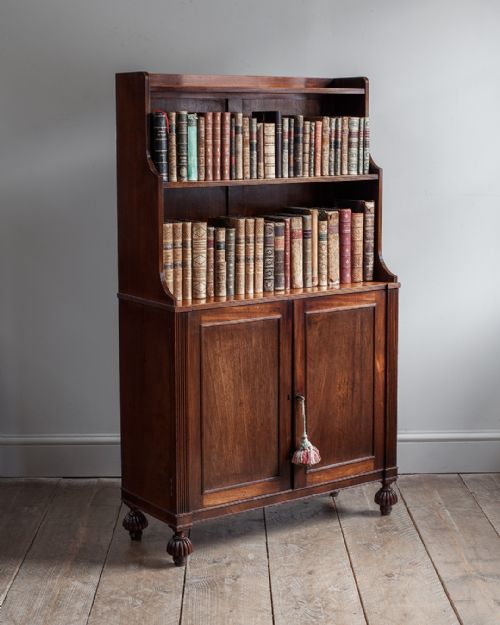
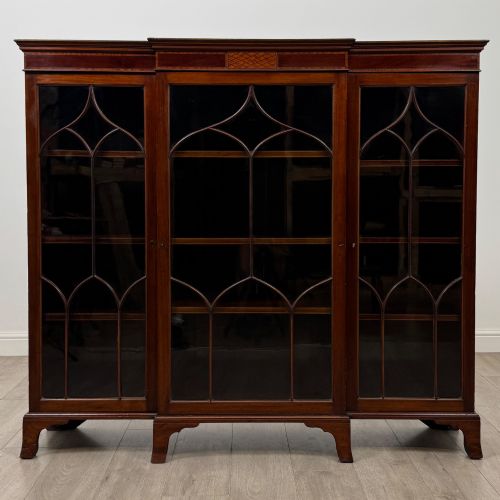
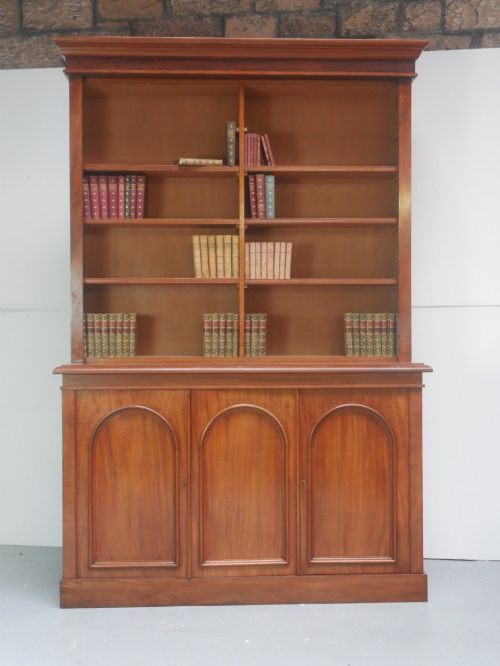
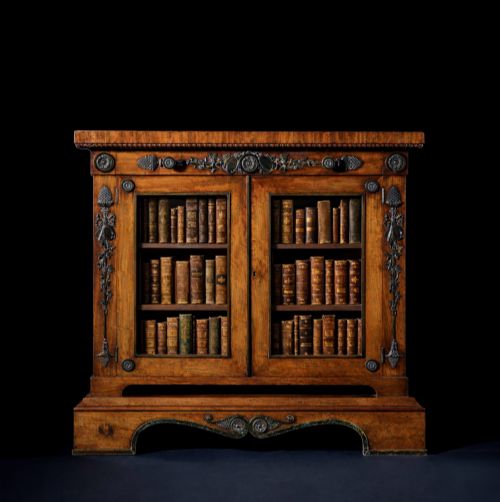
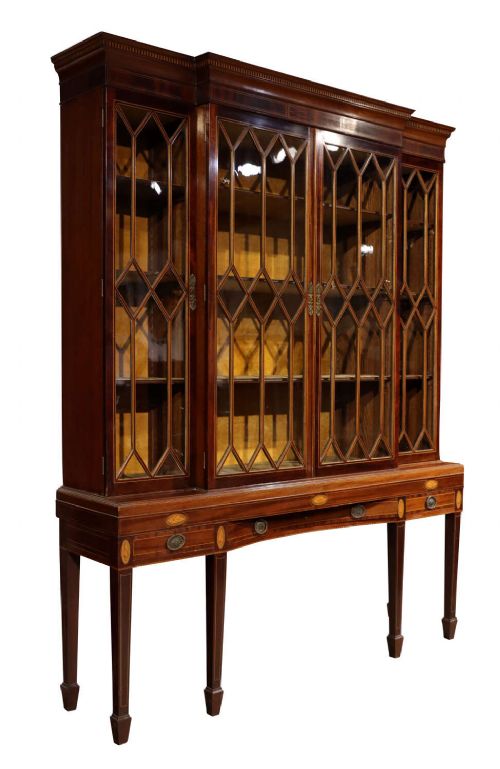
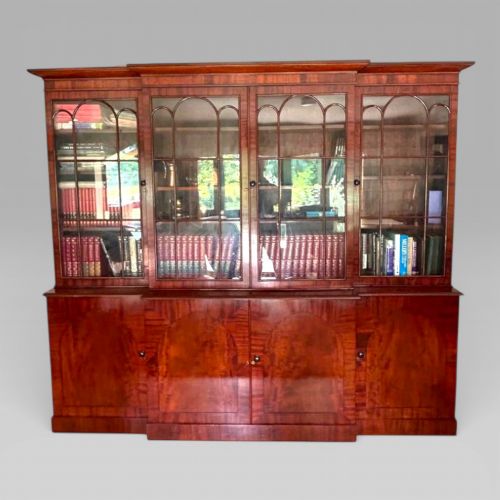
A nineteenth century mahogany bookcase encompasses tall library cupboards, breakfront library pieces, and smaller dwarf or waterfall formats designed for domestic or institutional collections. Pieces span the Regency, Victorian, and William IV periods, alongside Georgian survivals, reflecting shifts from formal classical lines to heavier proportions later in the century.
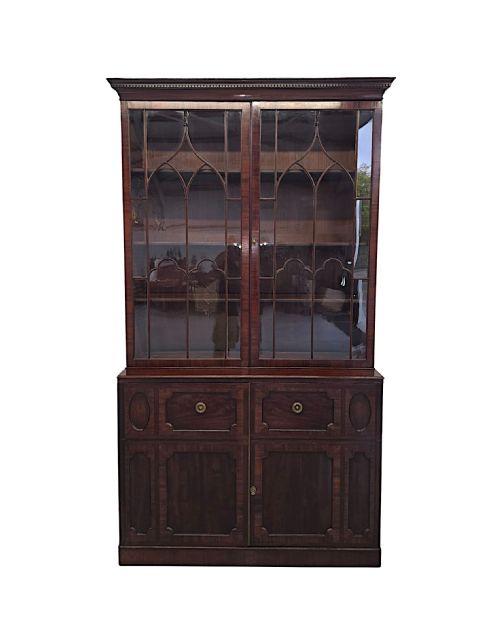
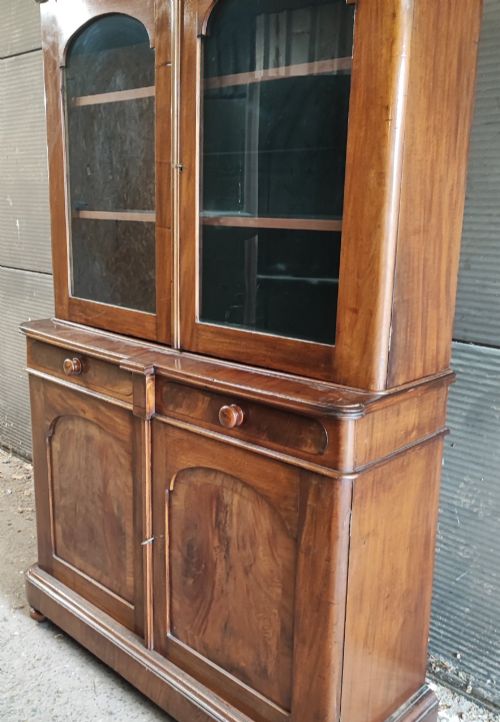
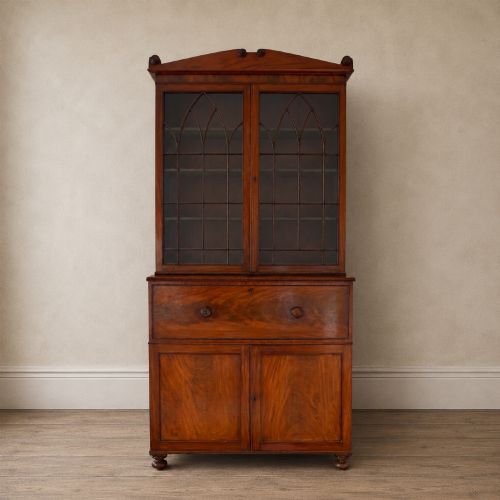
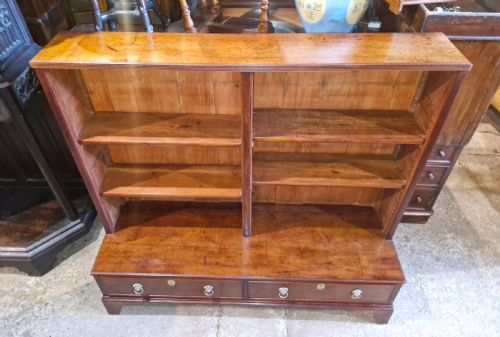
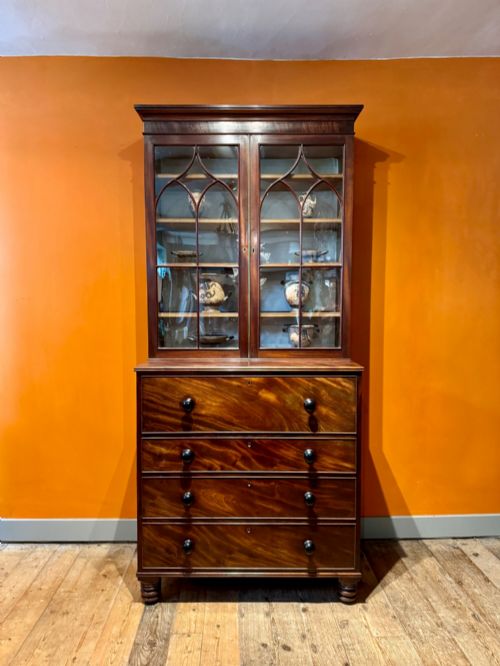
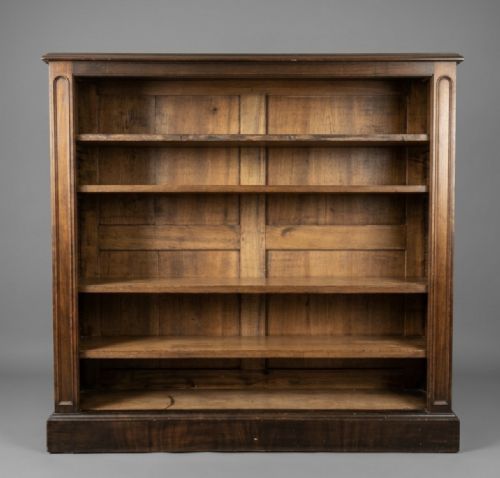
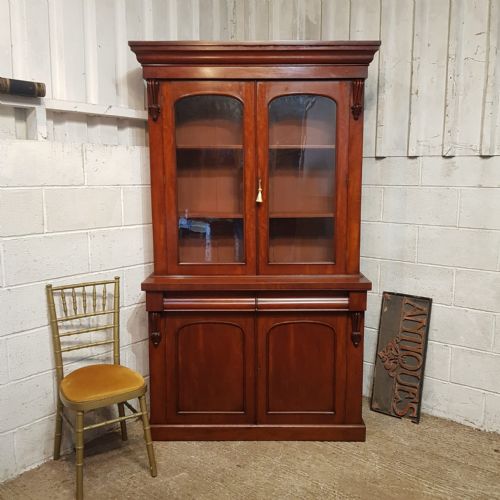
The versions most commonly met on this page are two-door glazed bookcases and secretaire bookcase cabinets that integrate a fitted writing drawer with lower cupboard storage. Open bookcases and dwarf variants also appear frequently, providing accessible shelving for everyday volumes without the physical weight of large library architectural pieces.
How they were made
Makers utilised solid mahogany and flame mahogany veneers over secondary timbers, frequently enhancing surfaces with satinwood crossbanding, boxwood stringing, or intricate inlaid motifs. Structural integrity relied on robust joinery methods within large breakfront and two-door carcasses.
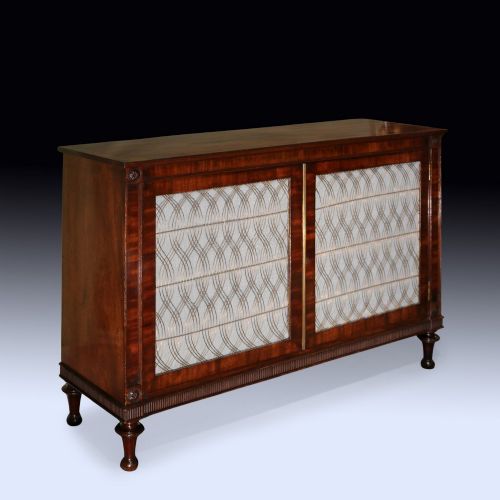
Glazing bars formed geometric or Gothic Revival patterns across door frames, whilst brass grilles, bronze mounts, and leather writing inserts completed the functional and decorative scheme of higher-status examples.
Listings feature extensive examples from the Regency and Victorian periods, alongside earlier George III and Georgian survivals.
What varies in quality
Quality separates through the choice of timber figure, such as richly marked flame mahogany or figured grain, matched against simpler straight-grained stock. The crispness of carved mouldings and the precision of inlaid stringing distinguish standard workshop output from exceptional cabinet-making.
Proportion and scale dictate distinction, as large breakfront library bookcases with well-balanced door configurations and original brass hardware command greater architectural presence than simpler utilitarian cupboards.
Jas Shoolbred·Gillows·Edwards & Roberts
The Nineteenth Century Mahogany Bookcase Glossary
- Secretaire bookcase
- A cabinet featuring a pull-down writing drawer fitted with small internal pigeonholes and drawers above lower cupboard doors. This dual-purpose form allows a writing surface to conceal itself neatly when not in use.
- Breakfront
- A large piece of furniture where the central section projects forward from the flanking wings. This architectural arrangement creates depth and visual rhythm across multi-door library bookcases.
- Flame mahogany
- A veneer cut from timber where the grain creates a distinctive flickering flame pattern. Cabinet-makers reserved this decorative wood for prominent drawer fronts and door panels.
- Waterfall bookcase
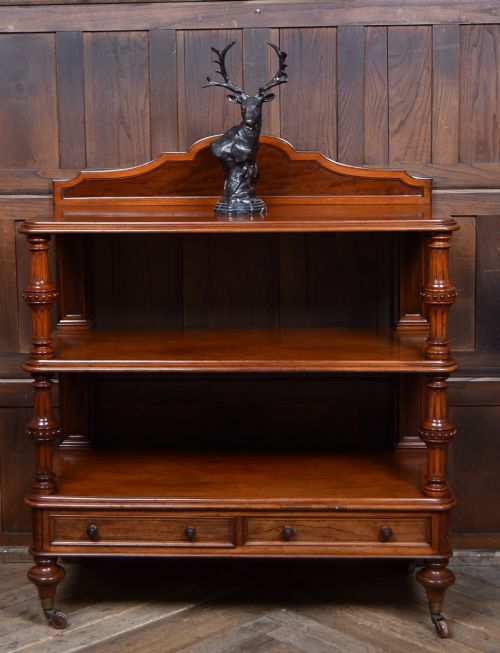
- A tiered open bookcase where each successive shelf steps back from the one below it, creating a cascading profile. These pieces often date from the Regency or William IV eras.
- Glazed door
- A frame fitted with glass panes to protect books from dust while maintaining visibility of the library contents. These doors frequently feature wooden glazing bars dividing the glass into distinct panels.
Nineteenth Century Mahogany Bookcase: Frequently Asked Questions
What is a secretaire bookcase?
A secretaire bookcase combines a shelved upper cabinet for books with a central pull-down drawer that opens to reveal a fitted desk interior. Below this writing section, enclosed wooden cupboards provide storage for larger volumes or papers.
This multi-functional form allowed owners to write letters and read within the same piece of furniture without requiring a separate desk.
How do I identify a Regency bookcase?
Regency bookcases typically display classical architectural influences, including brass grilles, bronze mounts, and clean geometric lines inspired by antiquity. They frequently utilise flame mahogany veneers and delicate inlay work.
Proportions tend to be balanced and refined, distinguishing them from the heavier, more robust forms of the later Victorian period.
Where were these bookcases used?
These bookcases served primarily in domestic libraries, studies, and formal drawing rooms of grand houses and town residences. Large breakfront and library bookcases housed substantial private book collections.
Smaller dwarf, open, and waterfall formats suited parlours and sitting rooms where floor space was more restricted.
What is flame mahogany?
Flame mahogany is a highly figured wood veneer cut from the branch junctions of the mahogany tree, creating a dramatic, undulating pattern that resembles flickering fire. Cabinet-makers used it on prominent surfaces like door panels and drawer fronts.
Its presence usually indicates a piece of finer quality and deliberate aesthetic ambition.