



Nineteenth Century Japanese Painting
Nineteenth century japanese painting brings tactile silk panels and hand painted detail into a room, offering an intimate window into Meiji period artistry.
Nineteenth Century Japanese Painting
When you search for nineteenth century japanese painting, you encounter delicate works executed on silk, capturing traditional subjects from the era. These pieces sit alongside related decorative arts from the same timeline, including hand painted porcelain and lacquered objects.
The selections span distinct cultural periods, notably the Meiji and Edo periods, reflecting the craftsmanship of late nineteenth century makers. You meet portable formats such as silk paintings depicting spirited narrative scenes like frog battles.
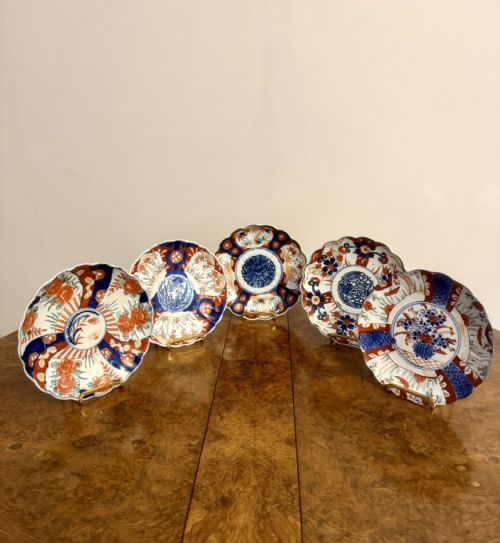
Works on silk represent a specific departure from the ceramic chargers and miniature bowls that otherwise dominate the material record. They bring painterly depth to collections otherwise filled with Imari plates and Kutani ware.
Materials and technique
Makers utilised fine silk as the primary ground for pigments in nineteenth century japanese painting, allowing delicate brushwork to settle into the woven fibres. Pigments were applied by hand to achieve expressive detail and tonal depth.
Complementary items in this category employ porcelain, lacquer, and gold leaf, often finished with hand painted enamel or gilt highlights. Artisans combined mineral colours and metallic accents to create rich visual textures across both flat panels and three dimensional forms.
Nineteenth Century Japanese Painting Retail Price Guide 2026
Typical asking prices for nineteenth century japanese painting among the pieces listed under this phrase on Sellingantiques today, from the lower quarter to the upper quarter. They describe what is for sale here now, not the wider market.
Quality differences
The distinction between standard works and finer examples lies in the precision of the brushwork and the preservation of the silk ground. Superior pieces display confident pigment application and minimal degradation over time.
Integration of detail separates master workshop output from ordinary production, particularly in the rendering of figures and narrative movement. The harmony between the painted surface and any accompanying mounting enhances the overall success of the piece.
Kinkozan Kyoto·Fukagawa
The Nineteenth Century Japanese Painting Glossary
- Silk
- A fine protein fibre woven into a smooth fabric to serve as the foundational ground for traditional paintings. It provides a receptive surface for delicate pigment layering.
- Meiji Period
- The era in Japanese history spanning from 1868 to 1912, characterised by intense artistic production and international export. Much of the recorded material originates from this time.
- Edo Period
- The period preceding the Meiji era, running from 1603 to 1867, noted for distinct aesthetic traditions. Pieces surviving from this time carry earlier stylistic markers.
- Gilt
- A thin layer of gold applied to the surface of an object or painting detail to impart a metallic sheen. It elevates the visual richness of the finished work.
Nineteenth Century Japanese Painting: Frequently Asked Questions
What subjects appear in these paintings?
Silk works from this period frequently depict narrative scenes, including animal subjects such as theatrical battles.
Artists drew upon traditional folklore and observation to animate their compositions with lively character details.
How should silk paintings be displayed?
These delicate panels require protection from direct sunlight to prevent the fading of natural pigments.
Framing behind conservation grade glass helps safeguard the fragile silk fabric from atmospheric moisture and dust.
How do I identify the Meiji period?
Meiji pieces typically date between 1868 and 1912, reflecting the opening of trade and heightened export manufacturing.
Stylistic elements often combine traditional Japanese motifs with precise decorative techniques developed during these decades.
Are these works hand painted?
The surfaces feature direct brushwork executed by hand using traditional mineral pigments and inks.
Close inspection reveals individual brush strokes and subtle variations absent in mass produced prints.