




Nineteenth Century Inkwell
A nineteenth century inkwell brings tangible weight to a desk, holding the character of the period in brass, glass, and carved wood.
Nineteenth Century Inkwell
A nineteenth century inkwell encompasses desk accessories, inkstands, and larger desk sets designed for correspondence during the Victorian, Regency, and Napoleon III eras. Buyers encounter individual vessels alongside elaborate stands housing glass inserts for fluid writing ink.
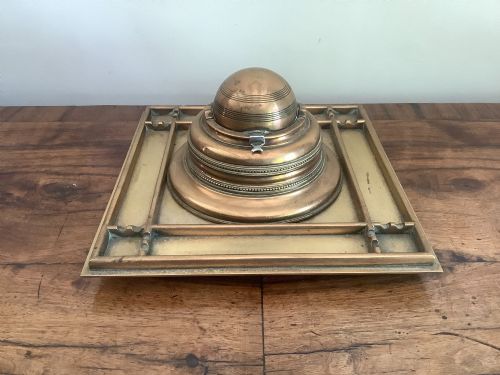
The selection ranges from plain brass and marble stands to ornate French gilt bronze sets and British novelty pieces carved as animals. Formats extend from compact single wells to substantial double inkwells and three-piece desk ensembles.
Makers utilised diverse materials to suit domestic and formal studies, creating functional objects that doubled as decorative desk furnishings. These pieces reflect the varied tastes of nineteenth century design, moving from classical Regency lines to whimsical Victorian novelties.
How they were made
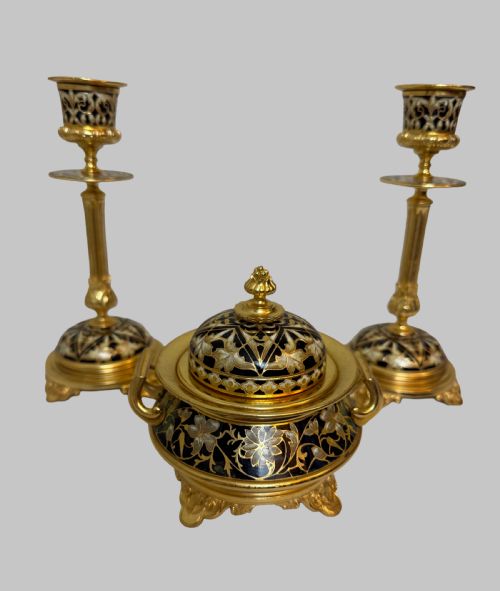
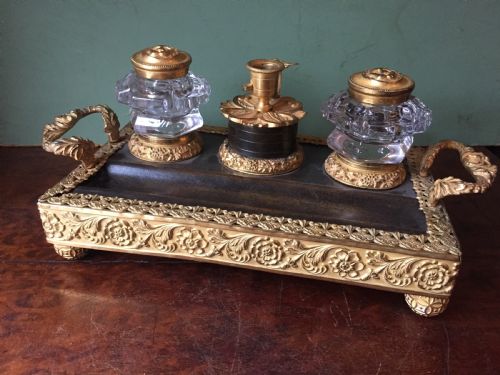
Metalwork forms a significant portion of these pieces, employing cast brass, gilt bronze, and ormolu to create structural stands and decorative mounts. Artisans combined these metals with other media such as champleve enamel and carved marble.
Woodworking traditions are evident in desk tidies and stands shaped from dense coromandel wood or hand-carved oak. Glass inserts provide the functional vessel for ink, while bone china and porcelain components introduce hand-painted detail to French and English sets.
Materials recorded across the selection include brass, gilt bronze, ormolu, coromandel wood, bone china, enamel, and gold leaf.
What varies in quality
The distinction between standard items and exceptional desk accessories lies in the ambition of the casting and the crispness of the detail. Finely chased gilt bronze and carefully hand-carved animal forms demonstrate superior craftsmanship compared to simpler production methods.
Material combination also defines the hierarchy, with complex assemblies incorporating marble bases, champleve enamel, and hand-painted porcelain panels representing the more elaborate end of the range. The integration of matched glass inserts and complete multi-piece desk sets adds substantial presence.
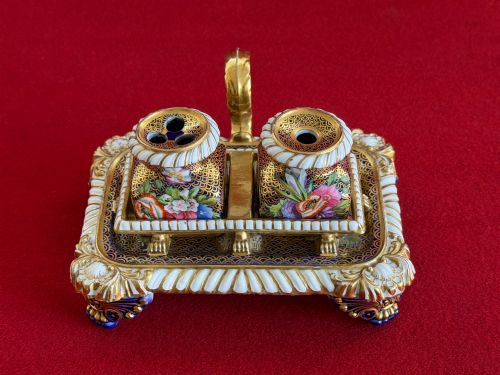
Spode Porcelain
The Nineteenth Century Inkwell Glossary
- Inkstand
- A fitted tray or stand holding one or more inkwells, often with space for pens and sealing wax. These desk accessories formed the central apparatus for writing.
- Ormolu
- Gilt bronze mounted on decorative objects and furniture, popular in French nineteenth century design. The technique involves applying a gold amalgam to bronze.
- Champleve
- An enamelling technique where troughs are dug into metal and filled with vitreous enamel before firing. It frequently appears on nineteenth century decorative metalwork.
- Coromandel
- A dense, heavily grained hardwood from South East Asia used for luxury nineteenth century boxes and desk stands. Its rich colour makes it distinct from walnut or mahogany.
- Novelty inkwell
- An inkwell shaped to resemble an animal, figure, or object rather than a standard vessel. English examples often took the form of birds and dogs.
Nineteenth Century Inkwell: Frequently Asked Questions
What is the difference between an inkstand and an inkwell?
An inkwell is the individual vessel that holds the ink, whereas an inkstand is the complete tray or base designed to hold the inkwell along with pens and accessories.
Desk sets often include matching candlesticks or blotters alongside the main inkstand.
How were novelty inkwells used?
Novelty inkwells served as functional writing implements while adding a decorative or amusing element to a Victorian study or desk. Their hinged heads or wings lifted to reveal the glass ink container tucked inside.
Carved animals such as owls, bulldogs, horses, and parrots were particularly popular subjects for English makers.
What materials are common in French nineteenth century pieces?
French pieces frequently utilise gilt bronze, ormolu, and champleve enamel, often mounted on marble bases or paired with hand-painted porcelain inserts. These materials reflect the decorative styles of the Second Empire and Napoleon III periods.
Maker attention focused on ornate casting and rich surface decoration.
How do I care for antique metal and wood desk pieces?
Wood components such as coromandel and oak benefit from occasional light waxing to maintain the grain, avoiding harsh chemical cleaners. Metal parts require gentle dusting to preserve the original gilding and patina without abrasive polishing.
Glass inserts should be washed carefully by hand if removed from their housings.