



Nineteenth Century Inkstand
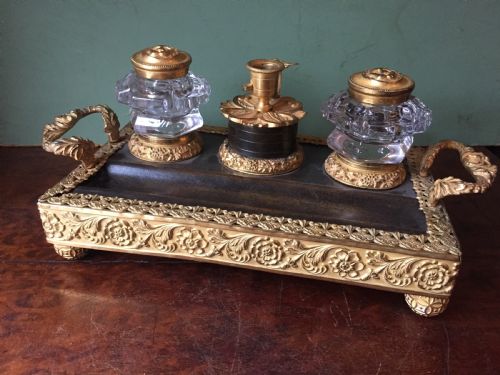
A nineteenth century inkstand brings the tactile weight of a bygone desk into a modern room, offering brass, marble and porcelain to hold your pens.
What a nineteenth century inkstand is
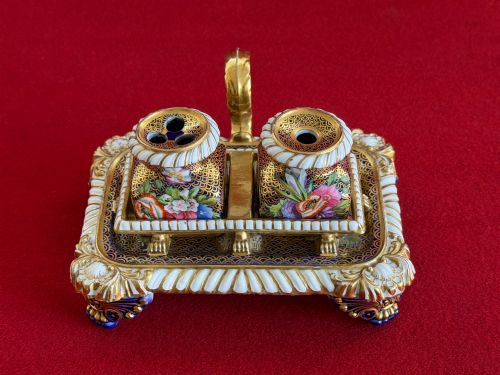
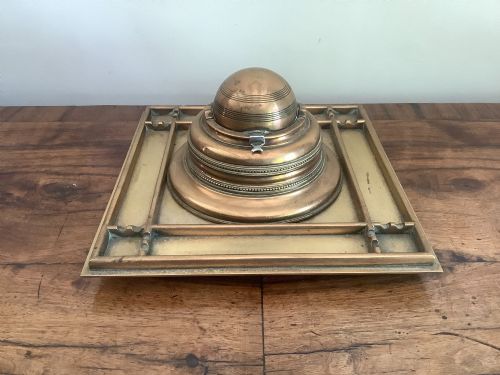
A nineteenth century inkstand gathers the implements of traditional writing onto a single tray or base, holding inkwells, pen rests and sometimes a taper holder. When you search for a nineteenth century inkstand, you encounter pieces intended for the writing desk, combining utility with decorative presence.
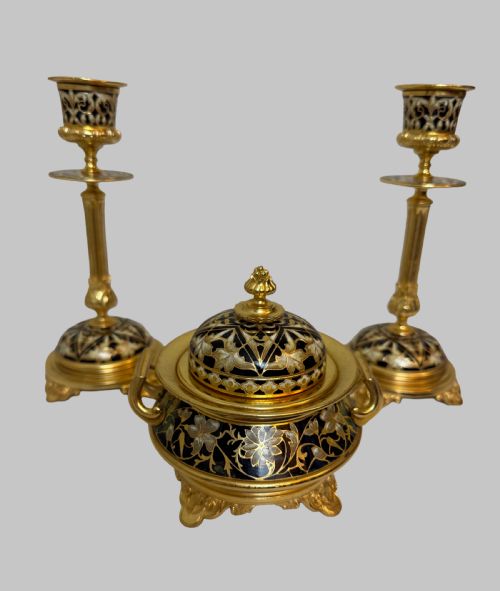
The selections available here span English and French workshops, encompassing Regency, Victorian, and French Second Empire sensibilities. You meet polished brass, cast brass, and gilt bronze alongside marble bases and bone china.
Forms vary from restrained architectural trays to whimsical novelty pieces depicting animals such as English bulldogs and parrots with glass eyes. Earlier examples lean towards Regency crispness or French Empire design, while later Victorian iterations embrace bolder novelty and decorative display.
How they were made
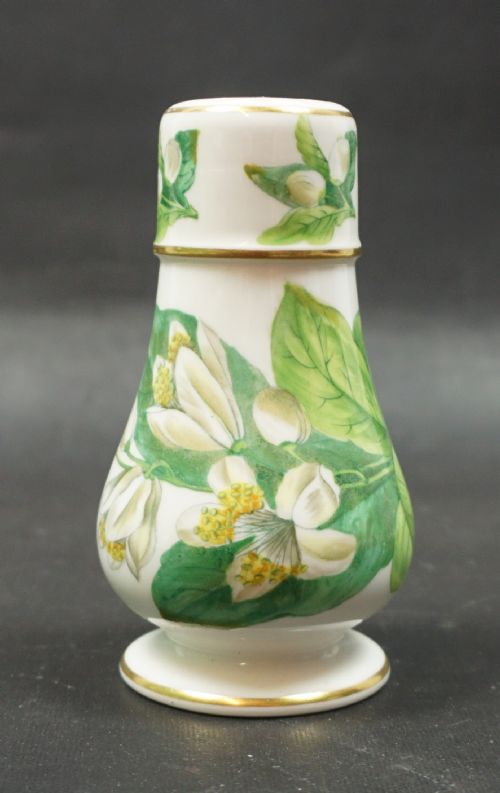
Materials dictate the heft of these pieces, pairing cast brass and gilt bronze with cut glass and natural marble. Spode porcelain and bone china introduce delicate white surfaces and painted pattern work to the desk surface.
Metal components rely on traditional casting and mounting techniques, securing ormolu details and hinged lids over glass ink inserts. Enamel and gold leaf finish decorative borders, while novelty designs shape brass and glass into expressive animal forms.
Retail Price Guide 2026
Typical UK retail prices for nineteenth century inkstand, calculated from the Sellingantiques database of over a million retail prices indexed since 2003. This retail price guide relies exclusively on Sellingantiques data; no external sources or auction records are used, so the figures do not describe the wider market.
Watch for glass eyes peering from brass feathers, as Victorian novelty inkwells turn parrots and bulldogs into silent desk companions.
What varies in quality
Quality rests in the crispness of the metal casting and the weight of the marble or bronze foundations. Finer pieces demonstrate precise chasing in gilt bronze and immaculate detail in novelty forms like feathered parrots or bulldogs with glass eyes.
The integration of materials also defines the tier of a piece, where well-fitted glass inserts and substantial brass mounts elevate an inkstand above standard utility wares. Superior examples maintain balance and proportion even when cast in small proportions.
The Nineteenth Century Inkstand Glossary
- Inkstand
- A desk accessory comprising a tray or stand fitted with one or more inkwells and space for pens. It anchors the writing desk and protects the surface from ink drops.
- Ormolu
- Gilt bronze mounted on decorative objects, created by applying a mercury and gold amalgam to bronze. It provides a rich golden lustre characteristic of French Empire design.
- Novelty inkwell
- An inkstand or inkwell shaped to resemble an animal, figure or object rather than a standard tray. Bulldogs and parrots serve as popular examples of this playful Victorian genre.
- Spode
- A notable English pottery and porcelain manufacturer known for bone china bodies and intricate painted patterns. Pieces from this maker bring refined ceramic artistry to the desk.
Frequently Asked Questions
What is a nineteenth century inkstand?
A nineteenth century inkstand is a desk accessory designed to hold inkwells, pens, and sometimes sealing wax or taper sticks. These items served as central fixtures on writing desks during the Regency and Victorian eras.
They combine practical writing tools with decorative arts, utilising materials such as brass, marble, gilt bronze, and porcelain to reflect the taste of their period.
How do I use an inkstand today?
An antique inkstand functions well on a modern desk to hold pens, small stationery items, or paperclips. The fitted glass inserts can still hold ink if you enjoy writing with fountain pens or dip pens.
Alternatively, they make striking display pieces on a mantelpiece, bookshelf, or side table, where their materials and sculptural forms catch the eye.
How do I tell Regency from Victorian styles?
Regency pieces often display classical restraint, inspired by French Empire design with clean lines, ormolu mounts, and balanced proportions. They reflect early nineteenth-century elegance.
Victorian pieces, particularly those from the later decades, often embrace ornate revival styles or playful novelty forms such as animals with glass eyes, showing a shift towards heavier ornamentation.
What materials were commonly used?
Makers utilised a range of durable and decorative materials, including cast brass, gilt bronze, marble, and glass. Finer examples incorporate bone china or Spode porcelain for the inkwell bodies.
Metal components were frequently polished, chased, or gilded with gold leaf, while novelty pieces introduced painted finishes and glass eyes to create lifelike animal subjects.