


Nineteenth Century Gueridon
A nineteenth century gueridon brings sculptural French elegance to a room, offering a compact round surface supported by a central pillar.
What a nineteenth century gueridon is
When you search for a nineteenth century gueridon, you are looking at round, pillar-supported tables designed as centre pieces, side tables, or occasional tables. These French forms serve both decorative and practical purposes in traditional and modern interiors alike.
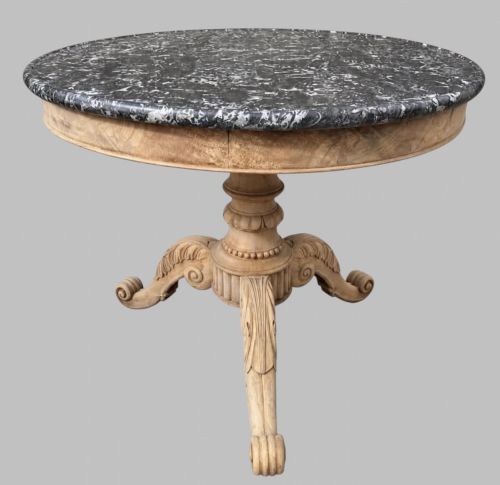
The versions you are most likely to meet on this page originate from the nineteenth century, including specific pieces from around 1850 and 1860. Styles span French Empire, French Restoration, French Restauration, French Rococo Revival, and Regency.
Makers and designers of the period utilised distinct regional aesthetics, producing tables that range from large Empire examples to smaller lamp tables. Each piece reflects the characteristic proportions and silhouettes of its specific decade of manufacture.
Materials and construction
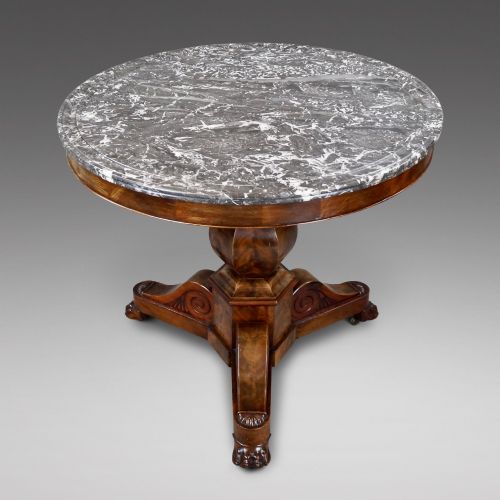
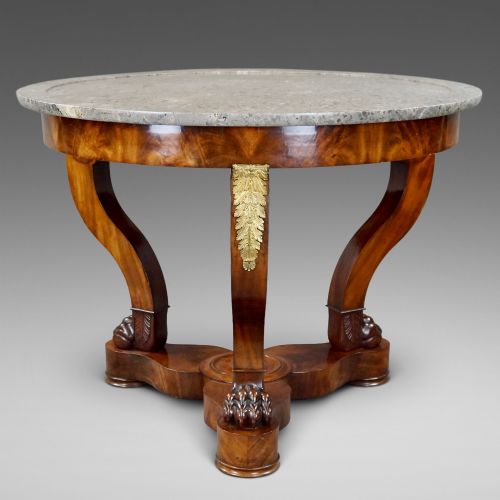
Cabinet makers constructed these tables using a variety of fine timbers, notably mahogany, flame mahogany, bleached walnut, and hardwood. These woods provide the sturdy structural foundation required for a central pillar support.
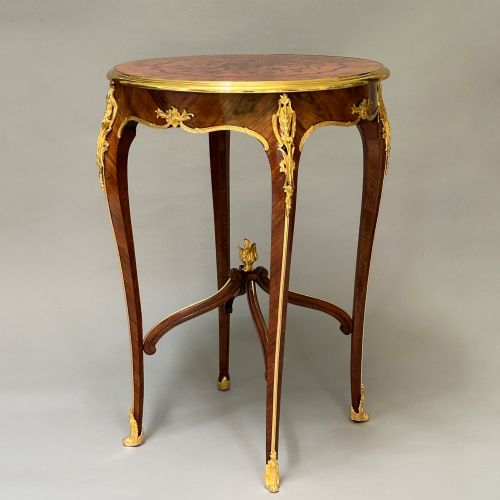
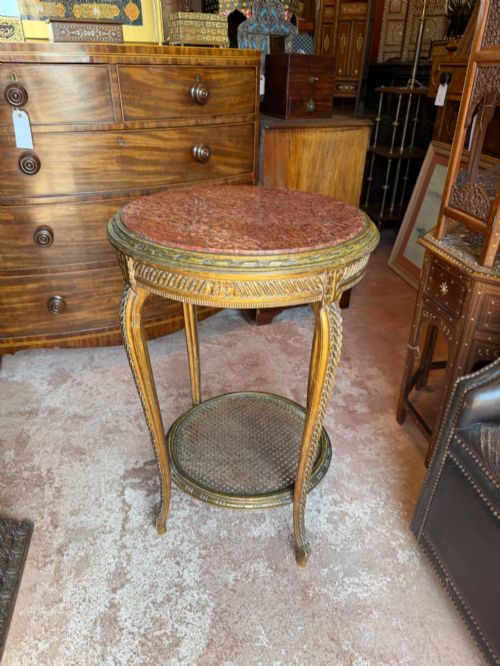
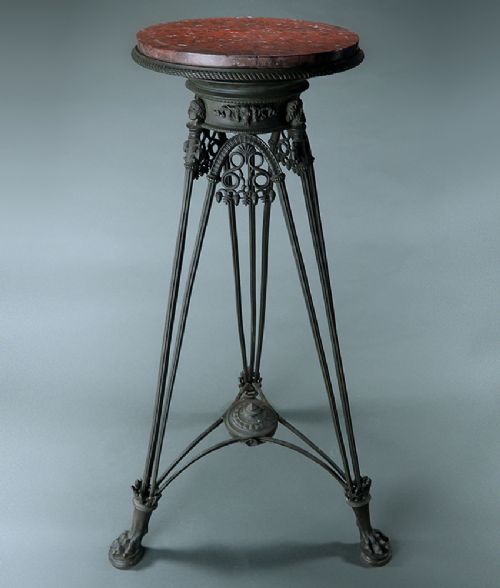
Surfaces frequently feature inset marble or simulated marble tops, paired with metal mounts in gilt bronze, brass, or ormolu. These combined materials create the distinct visual contrast typical of the period.
Retail Price Guide 2026
Typical UK retail prices for nineteenth century gueridon, calculated from the Sellingantiques database of over a million retail prices indexed since 2003. This retail price guide relies exclusively on Sellingantiques data; no external sources or auction records are used, so the figures do not describe the wider market.
Current listings feature nineteenth century gueridon tables in French Empire, Regency, and French Rococo Revival styles.
Separating the ordinary from the exceptional
The distinction between standard examples and top-tier pieces lies in the selection of timber veneers and the precision of the cast metal mounts. Flame mahogany and bleached walnut display superior grain patterns that elevate the visual weight of the furniture.
Mastery of detail in the ormolu and gilt bronze mounts separates workshop output from attribution-grade craftsmanship. Superior casting and chiselling transform functional metal accents into sculptural ornamentation.
Francois Linke
The Nineteenth Century Gueridon Glossary
- Gueridon
- A round occasional or centre table supported by a single central pillar. This French table form became popular in various styles throughout the nineteenth century.
- Ormolu
- Gilded bronze ornamentation applied to furniture mounts. This technique involves an amalgam of mercury and gold applied to a bronze base.
- Flame mahogany
- Mahogany timber exhibiting a distinct, rippled grain pattern resembling flickering flames. Cabinet makers used this veneer on prominent table surfaces.
- French Empire
- A neoclassical design style spanning the early nineteenth century, characterised by classical motifs and rich mahogany veneers. This aesthetic heavily influences many gueridon tables.
Frequently Asked Questions
What is a gueridon table?
A gueridon is a round table supported by a single central pillar rather than standard legs. These pieces function as decorative centre tables or occasional lamp tables.
Originating in France, the form evolved through various nineteenth century stylistic movements while retaining its compact, circular footprint.
Where should I place a gueridon?
These tables suit placement in the centre of a room, a hallway, or beside seating as an occasional surface. Their round tops allow for easy movement around them.
Many examples feature marble tops or decorative timber veneers that anchor a room's interior design scheme.
How do I identify a French Empire gueridon?
French Empire pieces typically showcase rich mahogany or flame mahogany timbers paired with gilt bronze or ormolu mounts. The silhouettes are often bold and classically inspired.
Dates generally centre on the nineteenth century, reflecting the neoclassical tastes prevalent during that era.