
Nineteenth Century French Ormolu
Nineteenth century french ormolu brings together gilded bronze mounts, clocks and furniture that define continental luxury.
Nineteenth Century French Ormolu
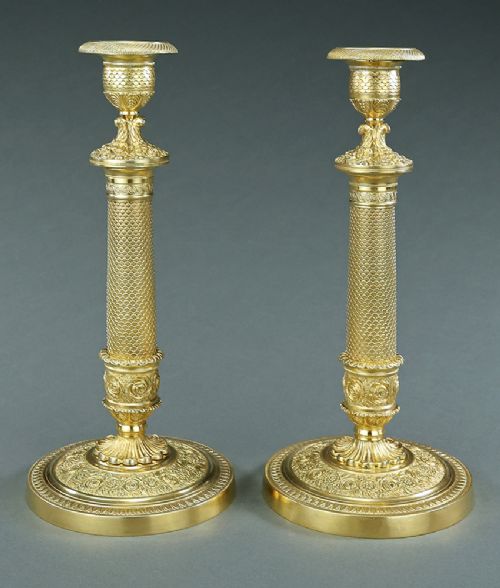
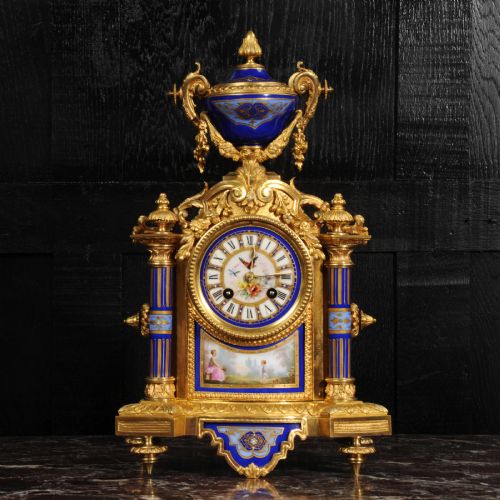
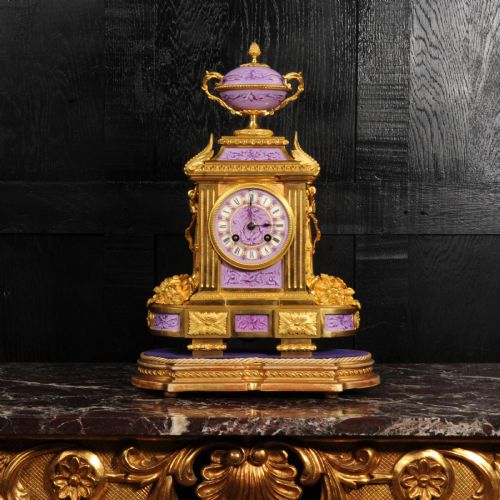
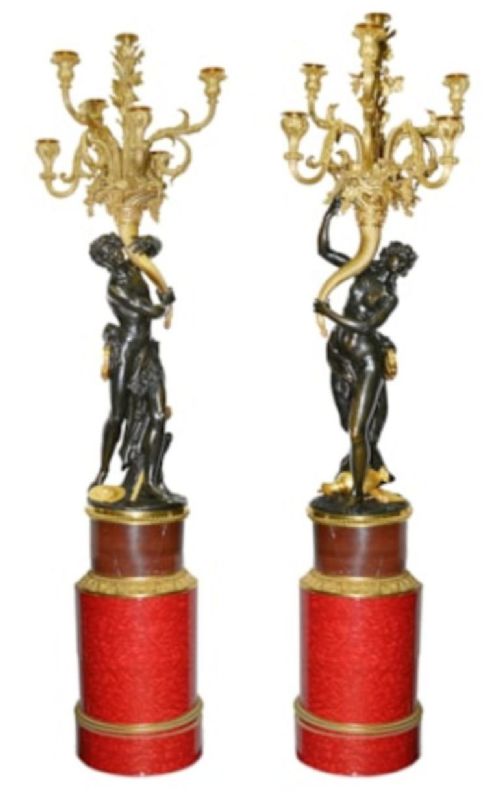
Nineteenth century french ormolu encompasses decorative metalwork, mounted furniture and timepieces produced during the 19th century under various revivals. Buyers looking at this phrase encounter mantel clocks, candelabra, desks and display cabinets decorated with cast bronze. These objects reflect stylistic shifts from Empire rigidity to ornate Rococo and Louis XV revivals.
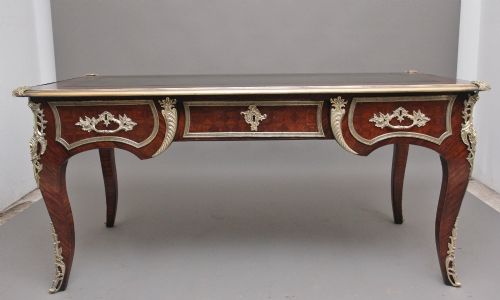
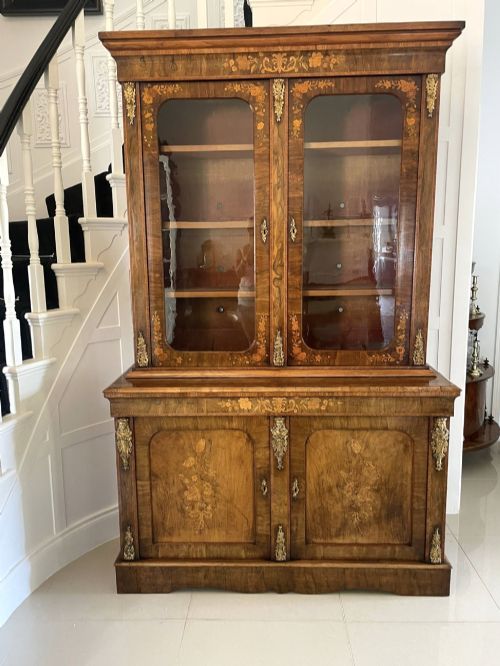
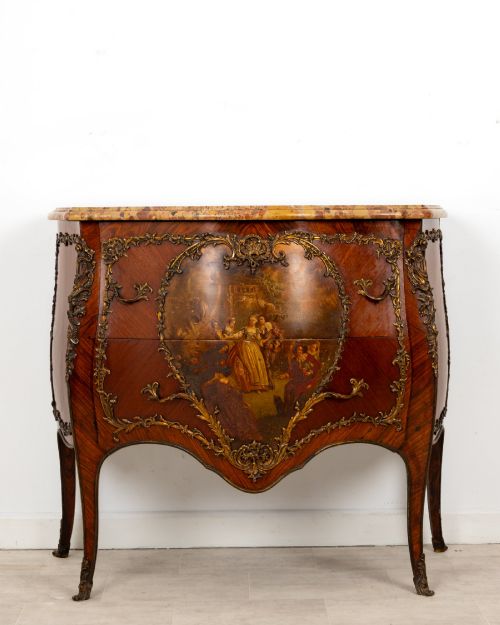
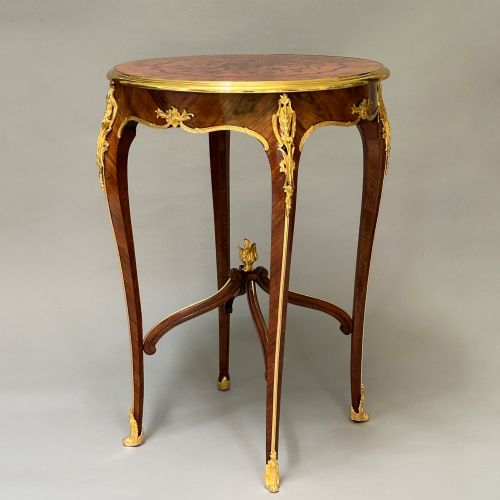
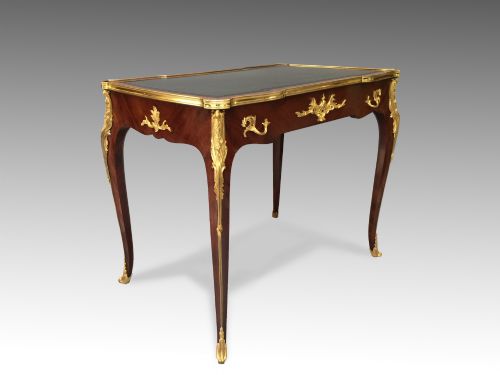
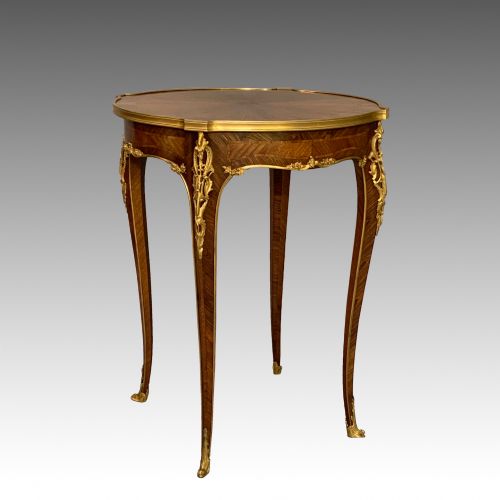
The version most commonly met on this page is the gilt bronze mount applied to timber furniture such as kingwood desks, sideboards and vitrines. Pieces span the 1800s, with many items dated specifically around 1860, 1880 and 1890. Surviving examples often combine metalwork with porcelain, marble or exotic wood veneers.
Materials and construction
Makers utilised bronze, brass and copper alloys cast into complex shapes before receiving a heavy layer of gold leaf or mercury gilding known as ormolu. This surface treatment gives the metal its characteristic warm, bright finish that resists tarnishing over generations. Foundries combined these mounts with structural timbers like kingwood, mahogany, walnut and rosewood.
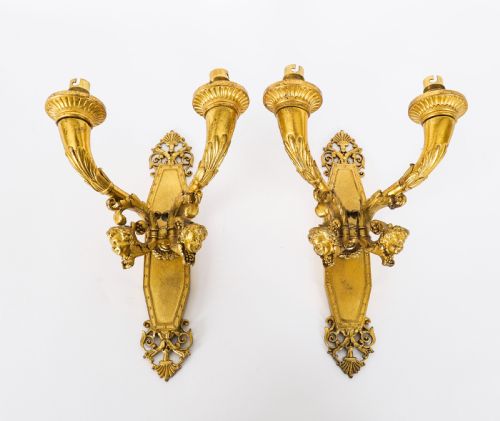
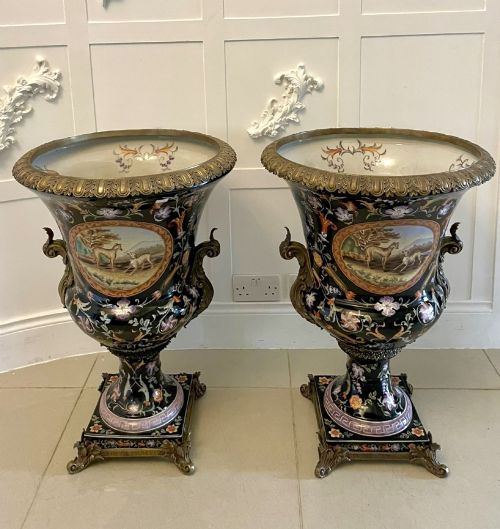
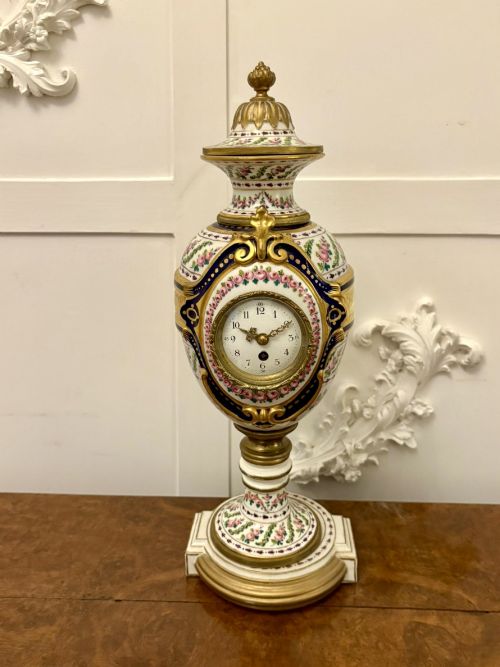
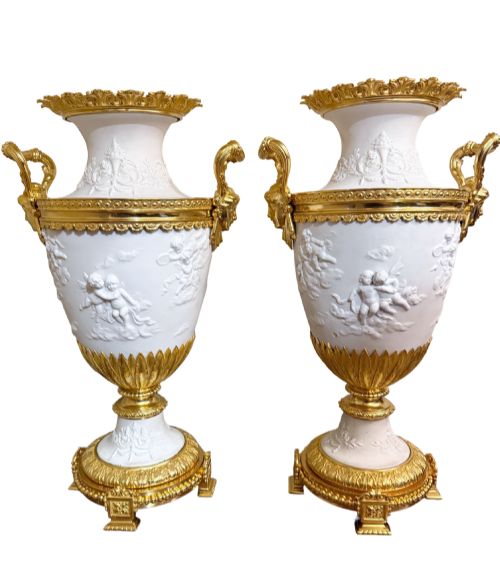
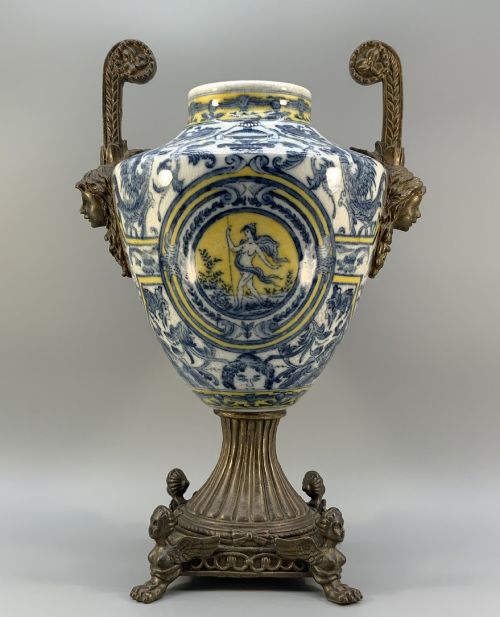
Cabinetmakers integrated the metal decoration into furniture carcasses using marquetry, parquetry and vernis martin painted panels. Stonework such as marble and ceramics including Sèvres porcelain frequently appear alongside the bronze elements in urns, clocks and wall lights.
Listings feature 19th-century periods alongside earlier 18th-century and 1800 transitional pieces.
Evaluating quality and execution
The standard of nineteenth century french ormolu depends heavily on the crispness of the bronze chasing after casting. Superior items display deep, hand-finished detail in the foliage, figures and scrolls, whereas lesser examples rely on flat, unrefined surfaces straight from the mould. The weight and thickness of the bronze deployment also indicate workshop ambition.
Integration between the metal mounts and the underlying wood or porcelain body dictates overall success. Fine pieces show mounts that follow the exact contours of the carcass, secured with original fixings, while inferior work reveals poor alignment or modern replacement screws.
Achille Brocot·François Linke·Edwards and Roberts·Joseph-Emmanuel Zwiener·Barbedienne·Edward Holmes Baldock
The Nineteenth Century French Ormolu Glossary
- Ormolu
- Gilt bronze produced by applying a gold and mercury amalgam to cast bronze before heating to drive off the mercury. This technique created a durable, rich golden surface typical of luxury decorative arts.
- Verre églomisé
- A process of applying gold or silver leaf to glass and engraving a design from the reverse side. It appears on panels within cabinets and mirrors.
- Vernis martin
- A simulated Japanese lacquer developed by the Martin brothers in 18th-century France and revived later. It involved applying multiple layers of varnish to painted surfaces.
- Marquetry
- The art of applying pieces of veneer to a structure to form decorative patterns and pictures. Makers used contrasting exotic timbers to achieve pictorial depth.
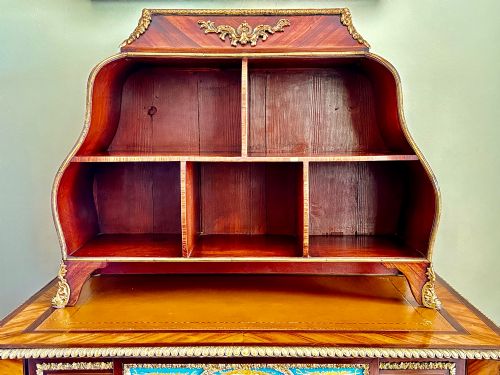
- Cartonnier
- A decorative desk-top cabinet with multiple compartments designed to hold papers and documents. These pieces often feature extensive bronze mounts.
Nineteenth Century French Ormolu: Frequently Asked Questions
How do I clean nineteenth century french ormolu?
Clean nineteenth century french ormolu gently using a soft, dry microfibre cloth to remove dust. Avoid harsh metal polishes, abrasive cloths or chemical cleaners that strip away the original gold gilding.
Water and liquid solutions can seep beneath mounts or damage adjacent timber and porcelain elements. Professional conservation is recommended for pieces showing heavy accumulation of dirt or verdigris.
Were these items made as pairs?
Many nineteenth century french ormolu objects, particularly candelabra, wall lights and vases, were manufactured as symmetrical pairs for mantelpieces or sideboards. Surviving pairs carry higher desirability among collectors.
Single items also appear frequently, including large clocks, desks and cabinets designed as standalone centrepieces for reception rooms.
How do I distinguish revival styles?
Distinguishing revival styles relies on observing the structural lines and decorative motifs used in the bronze and timber. Louis XV and Rococo revivals feature asymmetrical curves, scrolling foliage and shell motifs.
Empire and Neoclassical pieces display strict symmetry, architectural columns, military trophies and classical figures derived from Greek and Roman antiquity.
Can antique clocks be restored to working order?
Many nineteenth century french ormolu mantel clocks retain their original mechanical movements and can be restored to full working order. Professional horologists clean the gear trains and adjust escapements without altering the exterior case.
Buyers should confirm whether a clock has been recently serviced or restored before daily use in the home.