



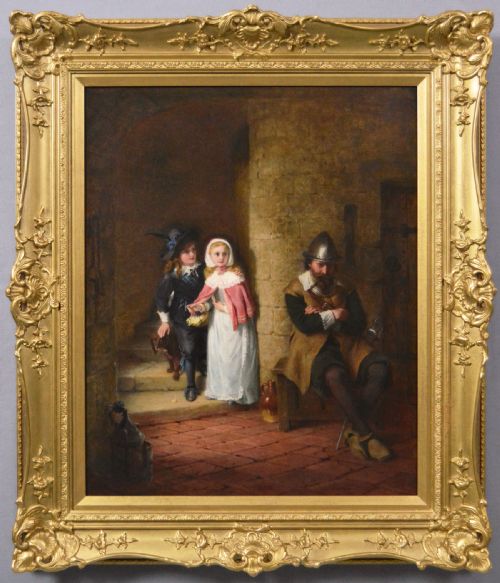


Nineteenth Century English Artwork
Nineteenth century english artwork captures the varied landscape, domestic scenes and sporting life of the period through traditional paintings and watercolours.
Nineteenth Century English Artwork
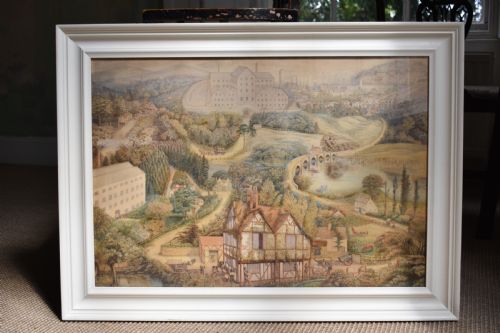
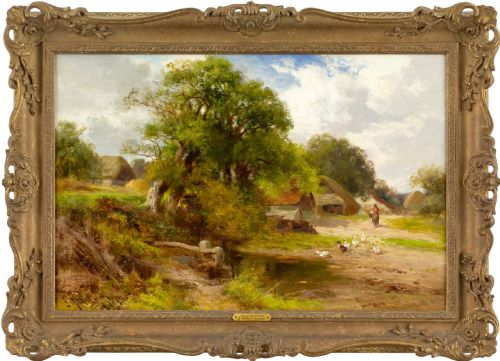
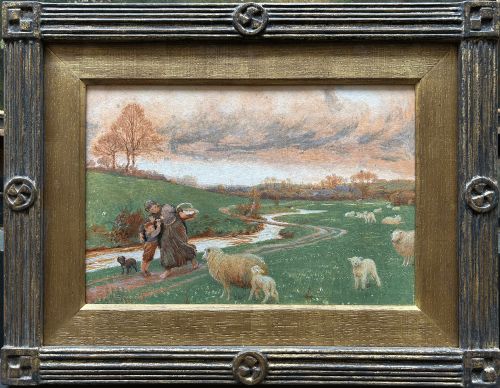
Nineteenth century english artwork covers a broad range of framed paintings, watercolours, and engravings produced during the Victorian era and surrounding decades. The pieces on this page lean heavily towards oil paintings on canvas or panel and detailed watercolours depicting rural landscapes, agricultural scenes, and domestic animal studies.
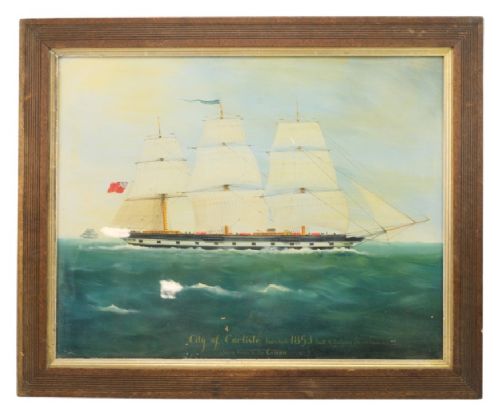
Subjects span from tranquil countryside rivers and coastal views to historical genre scenes and maritime subjects. Buyers encounter both signed works by known artists of the period and pieces attributed to the broader English School.
Framed works often retain period framing in wood and gilt, providing a complete historical package for domestic display.
How they were made
Pigments were applied to stretched canvas, wooden panels, or heavy watercolour paper using traditional binding media for oils and water-soluble binders for watercolours. Engravings and lithographs provided printed foundations that were frequently hand-coloured afterwards to add vibrancy.
Frames were constructed from wood, finished with gesso and gold leaf to house and protect the paper or canvas supports.
Listings feature works across paper, canvas, and wood panels, spanning watercolours, oils, and hand-coloured engravings.
What varies in quality
Quality rests in the fidelity of draftsmanship, the handling of light and atmospheric perspective, and the preservation of the original surface. Works by named, exhibited artists command greater attention through their confident brushwork and established provenance compared to anonymous school pieces.
The integrity of the paper or canvas support, alongside the survival of contemporary framing, influences how well the piece retains its original character.
William Howard Hardy·John Horace Hooper·Frederick Walker·John Arthur Lomax·George Bernard O'Neill·Robert John Hammond·Arthur Longley Vernon·Harry Bright·Walter Follen Bishop·Gilbert Scott Wright·Frederick William Hattersley·George Kilburne·Alfred W Parsons·Arthur Walker Redgate·Henry John Kinnaird·John Syer junior·William Powell Frith·Henry H Parker·H Alken·Arthur Willett·Tom Dudley·Edmund George Warren·Thomas Rose Miles·Frank Saltfleet·William Greaves
The Nineteenth Century English Artwork Glossary
- Watercolour
- A painting method where fine pigment is suspended in a water-based, gum-arabic solution and applied to paper. It allows for translucent washes and delicate detail.
- Oil on canvas
- Pigments mixed with drying oils, such as linseed oil, applied to a woven fabric support stretched across a wooden frame. This medium enabled rich colour depth and textured brushwork.
- Engraving
- A printmaking technique where an image is incised into a metal plate, which then holds ink for transfer under pressure. Hand-coloured examples received pigment additions after printing.
- Panel painting
- A flat piece of prepared wood used as a rigid support for oil paint. It was common in earlier periods and remained in use for smaller cabinet works.
- Gilt wood
- Wood carved and coated with a thin layer of gold leaf or metallic powder. It formed the decorative surface of traditional picture frames.
Nineteenth Century English Artwork: Frequently Asked Questions
How do I hang a heavy oil painting safely?
Heavy oil paintings require picture hooks rated for the specific weight of the frame and fixed directly into wall studs or solid masonry. Avoid hanging them in direct sunlight or above active heat sources to protect the canvas and wood.
Ensure two separate hanging points are used on larger frames to distribute the weight evenly and keep the artwork level.
Should watercolour paintings be kept out of direct sunlight?
Watercolour pigments and paper are sensitive to ultraviolet light and will fade over long periods of exposure. Framing them with UV-filtered glass helps mitigate this risk in brightly lit rooms.
Positioning them on interior walls away from direct windows preserves the integrity of the original pigments.
How do I identify if a painting is an original or a print?
Original watercolours and oil paintings show brush texture, pooling of pigment, and the physical interaction of paint with the paper or canvas fibres. Prints and lithographs reveal a dot pattern or flat ink application under magnification.
Examining the surface under a loupe clarifies whether the medium sits on top of the support as applied paint or rests within a printed matrix.
What is the difference between an oil painting on canvas and on panel?
Canvas offers a flexible, woven support that absorbs brush pressure and can be re-stretched over time if the fabric slackens. Wooden panels provide a rigid, smooth surface that prevents cracking associated with canvas movement.
Panel paintings are frequently smaller in scale, allowing for finer detail work by the artist.