
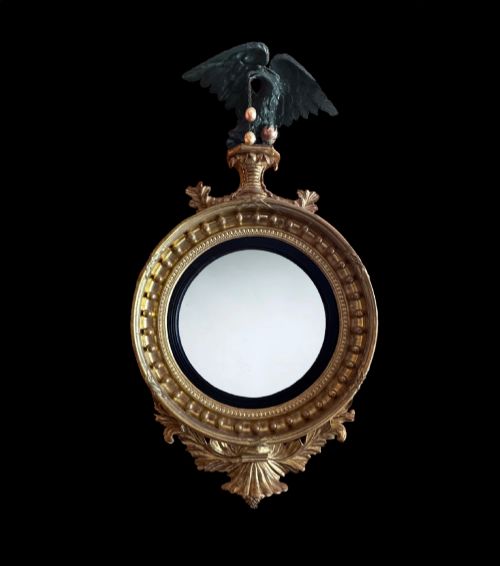
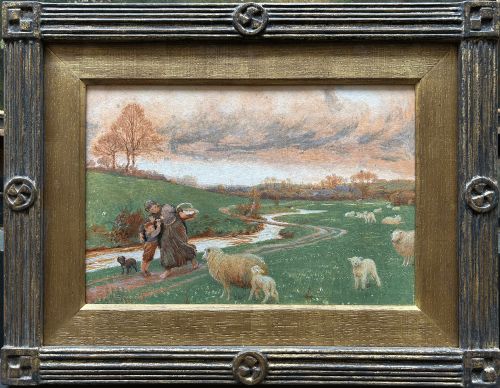


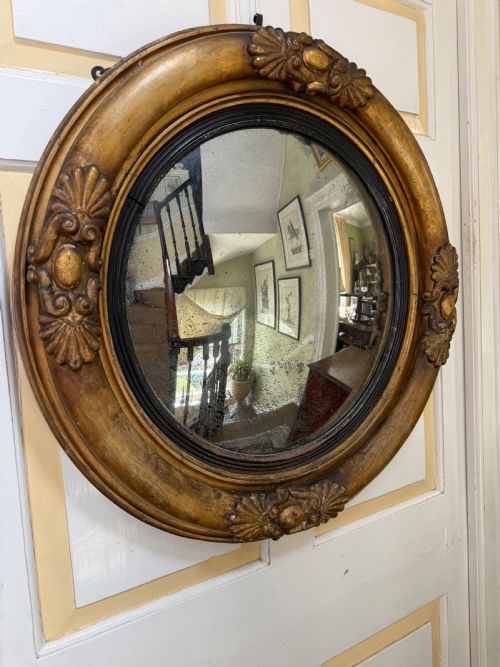


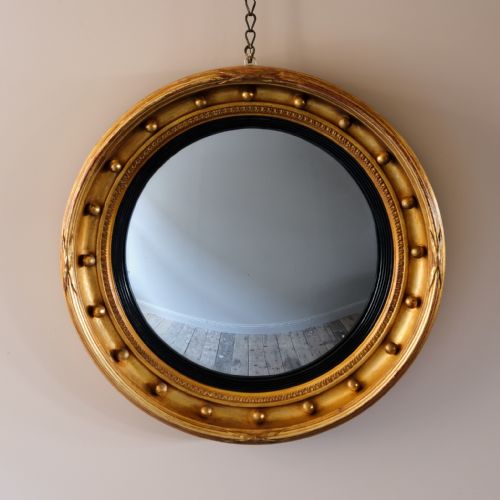


Gold Gilt Slip Frames
Gold gilt slip frames bring warmth and depth to walls, offering the classic finishing touch for period mirrors and oil paintings.
Gold Gilt Slip Frames
Gold gilt slip frames appear in listings alongside convex mirrors, oil paintings, and overmantel mirrors from the nineteenth and early twentieth centuries. These pieces reflect the Regency, Victorian, and Edwardian eras, utilising rich wooden structures and traditional gilded finishes.
Buyers seeking gold gilt slip frames encounter items ranging from large wall mirrors to framed portrait and seascape paintings. The selection spans distinct periods including Regency, Victorian, and later revivals from nineteen hundred to nineteen thirty.
How they were made
Craftsmen used timber and gesso as the foundation for these items, applying fine gold leaf or giltwood finishes to achieve their characteristic metallic sheen. Ebonised wood elements occasionally provide contrast against the bright gilded surfaces.
Makers constructed these frames to house convex glass plates or oil on canvas artworks, building substantial structures designed for domestic display.
Listings feature works from the nineteenth century, Regency period, and Victorian era, utilising materials such as giltwood, gesso, and ebonised wood.
What varies in quality
The standard of carving and the crispness of the gesso moulding define the upper tier of these pieces. Heavier proportions and finer gilding separate superior examples from standard production.
Preservation of the original gold leaf and the integrity of the underlying wood determine the enduring appeal of each item.
Frederick Walker·Gustave De Bréanski·Edwin Hughes·W.A. Clark
The Gold Gilt Slip Frames Glossary
- Giltwood
- Wood carved and then covered with gold leaf or a thin layer of gold. This material defines the luxurious finish seen on numerous nineteenth-century frames and mirrors.
- Gesso
- A plaster-like mixture applied to wood frames to create a smooth surface for gilding. Skilled artisans shaped this compound into intricate decorative details.
- Convex mirror
- A round glass mirror that curves outward to capture a wide-angle reflection of a room. These optical pieces frequently feature prominent gilded frames.
- Overmantel mirror
- A large wall mirror designed to hang above a fireplace mantel. They bring scale and light into period interiors.
Gold Gilt Slip Frames: Frequently Asked Questions
What periods do these pieces date from?
The inventory spans the nineteenth century through to the early decades of the twentieth century. Examples cover Regency, Victorian, and later revival eras.
Specific dates on record range from early nineteenth-century Regency pieces up to nineteen thirty.
How do I hang a heavy gilt mirror?
These substantial items require secure fixings anchored directly into structural wall studs or masonry. Professional hanging ensures the weight of the timber and glass is properly supported.
Due to the heavy construction typical of nineteenth-century frames, standard picture hooks are generally unsuitable.
Are the oil paintings original to the frames?
Listings feature original oil on canvas works alongside decorative frames housing mirrors. Each entry specifies whether the object is a painting or a mirror.
Works by recorded artists such as Edwin Hughes and Gustave De Bréanski maintain their distinct artistic provenance.
How should I clean gilded wood surfaces?
Dusting gently with a soft, dry brush preserves the delicate gold leaf and gesso details. Moisture and chemical cleaners must be avoided to prevent damage to the historic finish.
Maintaining a stable indoor environment protects the underlying timber from warping over time.