



Victorian Rural Genre Painting
Victorian rural genre painting captures the quiet rhythms of nineteenth-century countryside life through domestic scenes, farmyards and cottage gardens.
Victorian Rural Genre Painting
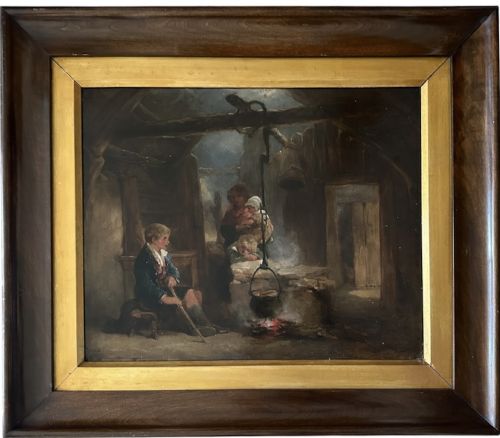
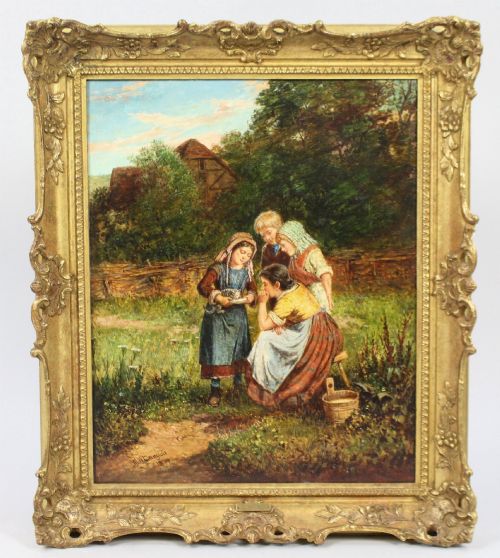
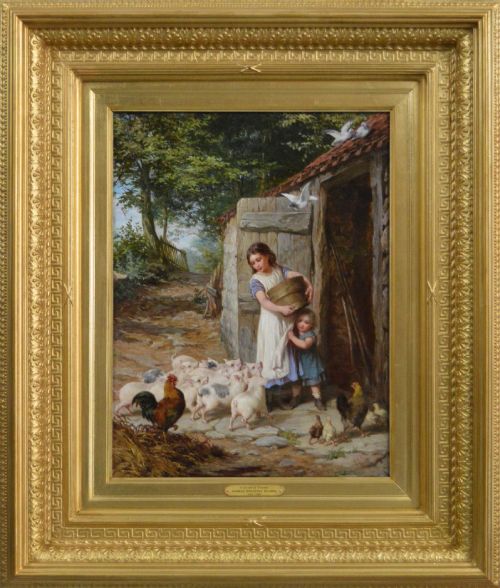
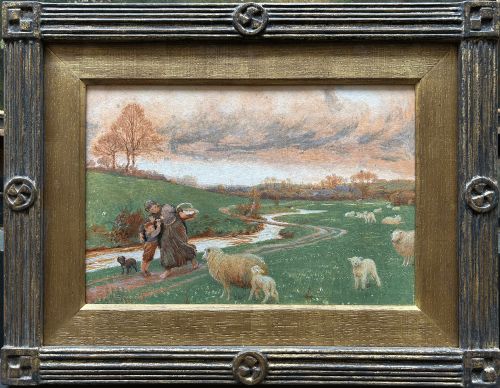
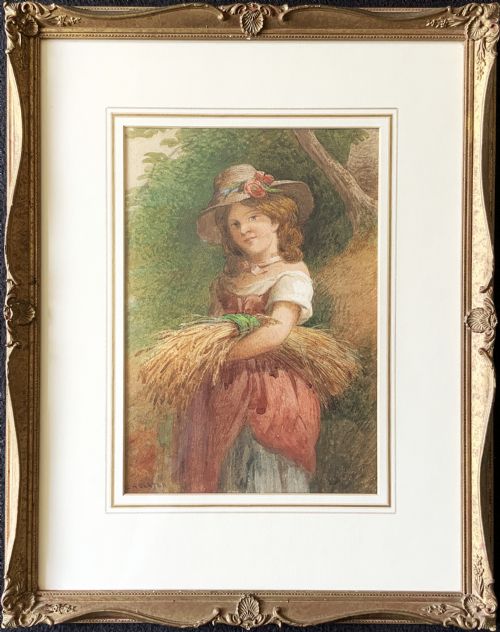
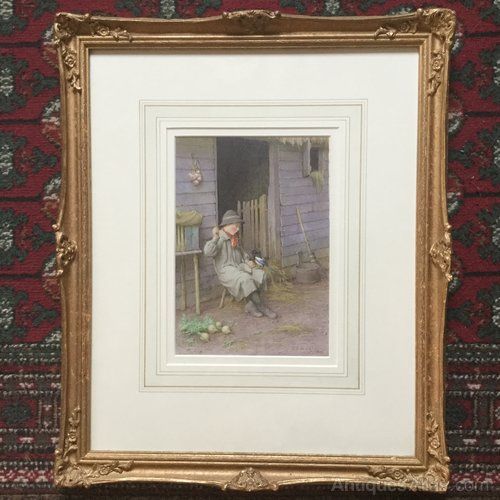
Victorian rural genre painting depicts everyday country life, focusing on cottage interiors, farmyards, children, animals and agricultural labourers. These works reflect a romanticised view of nineteenth-century pastoral existence, celebrating community, domesticity and traditional labour.
The pieces on this page span the nineteenth and early twentieth centuries, incorporating works from the 1850s through to the Edwardian period. Buyers will predominantly encounter framed watercolours and oil paintings on canvas, executed in styles ranging from Victorian realism to the idyllic school.
How They Were Made
Artists created these works primarily using oil on canvas or delicate watercolour on paper, often framing them in wood, gesso and gilt frames finished with gold leaf. The application of oil paint allowed for rich textures in farmyard scenes and landscapes, whilst watercolours captured the bright, translucent light of cottage gardens.
Compositions were carefully constructed to draw the eye towards human figures or animals, balancing intricate domestic details with broader rural backgrounds.
Several canvases manage to squeeze horses, pigs, goats, poultry and cattle into a single bustling farmyard.
What Varies in Quality
Quality rests upon the artist's ability to render animate subjects - whether children, farmworkers or animals - with convincing anatomy, expression and narrative warmth. Superior examples demonstrate a confident handling of light and shadow, particularly in outdoor settings like streams, farmyards and cottage doorways.
The integrity of the original support and framing also plays a part, with works retaining their early gilt wood frames offering greater authenticity.
Mark William Langlois·George Augustus Holmes·Frederick Walker·Miles Birkett Foster·Charles Henry Slater·Charles Edward Wilson·James Kyd·Henry John Yeend King·James Hardy Junior·Arthur Longley Vernon·Edward Brice Stanley Montefiore·Helena Maguire·Linnie Watt·John Henry Dell·Ralph Hedley·Jane Maria Bowkett·George Kilburne·Daniel Pasmore·Ernest Walbourn·Alfred Banner·John Frederick Herring Jnr·Edward Killingworth Johnson·Robert McGregor·Arthur Claude Strachan·George Cole
The Victorian Rural Genre Painting Glossary
- Genre painting
- Art that depicts aspects of everyday life by portraying ordinary people engaged in common activities. These scenes often take place in domestic interiors, village streets or rural farmyards.
- Gesso
- A plaster-like mixture applied to wooden frame surfaces as a base before gilding with gold leaf. It provided a smooth foundation for intricate moulded ornamentation.
- Watercolour
- A painting method in which the paints are made of pigments suspended in a water-based solution. It was widely utilised on paper for luminous rural landscapes and cottage garden studies.
- Pastoral
- A style of art that idealises rural life and agrarian settings. It presents a simplified, peaceful vision of country existence far removed from industrial expansion.
Victorian Rural Genre Painting: Frequently Asked Questions
What subjects appear most often?
These works frequently show children playing, farmyard animals, cottage doors and agricultural workers labouring in fields. Domestic scenes involving pets or everyday chores are also common.
Animals such as horses, pigs, ducks and dogs frequently share the canvas with human figures, grounding the compositions in authentic rural settings.
How do I date these paintings?
Dating relies on stylistic clues, artist signatures and period framing, alongside dates recorded within the nineteenth and early twentieth centuries. Costume details and architectural elements within the scenes provide further temporal markers.
Original gilt wood frames often corroborate the era in which the artwork was produced.
Where were these artists working?
Many painters operated within British rural communities, capturing regional landscapes across England and Scotland. Sussex and various pastoral villages served as popular bases for outdoor sketching.
Artists often travelled between rural idylls to observe local agricultural practices and village life firsthand.
How should I display them?
Display these framed works away from direct sunlight to protect watercolours and oil pigments from fading. Traditional wooden and gilt frames complement period interiors particularly well.
Ensure hanging walls maintain stable humidity levels to preserve both the canvas or paper supports and the original gesso frames.