




Nineteenth Century Elbow Chair
These nineteenth century elbow chair examples span regional Windsor forms and formal Regency mahogany designs.
Nineteenth Century Elbow Chair
A nineteenth century elbow chair encompasses everything from rustic vernacular seating to formal parlour designs. You will encounter country windsor variants alongside regency mahogany armchairs and painted primitive seating.
The selection ranges across several decades, capturing the transition from georgian styles into nineteenth century vernacular and arts and crafts movements. Regional variations surface through scottish, welsh, and yorkshire interpretations.
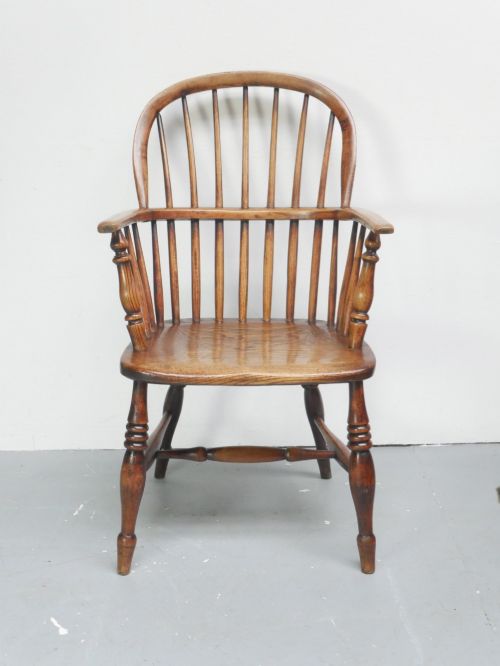
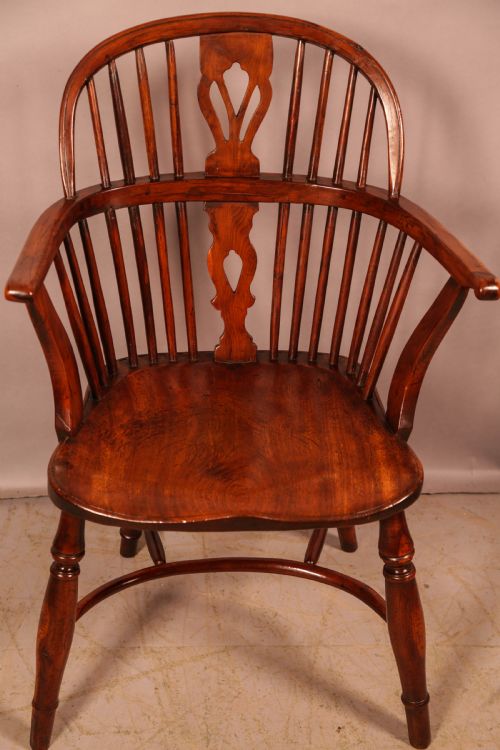
Form follows function closely within this category, dividing between low back windsor chairs, childrens armchairs, and formal morning room seating. Timber selection often dictates whether a piece leans toward rustic elm or polished mahogany.
What varies in quality
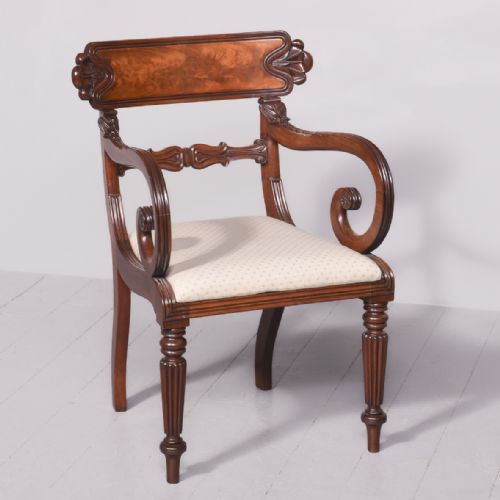
Design ambition separates the simpler primitive vernacular chairs from sophisticated regency and chippendale style pieces. Finer proportions and thoughtful timber matching elevate certain armchairs well above standard utility seating.
The integrity of turned spindles, stick backs, and joint connections defines the structural success of each chair. Patina developed through decades of domestic use adds depth to timbers like yew wood and fruitwood.
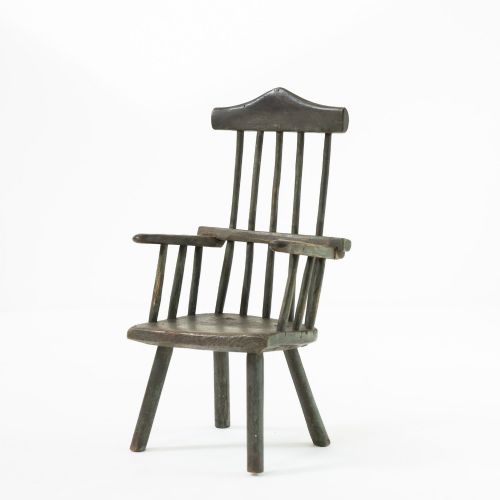
A tiny child's stick back armchair sits waiting for the smallest reader.
E W Godwin
The Nineteenth Century Elbow Chair Glossary
- Windsor chair
- A wooden chair built with a heavy solid wooden seat into which the legs and back sticks are bored directly. This regional form developed numerous local variations across british counties.
- Elbow chair
- A traditional term for an armchair, particularly those used in dining rooms or parlours with low supporting arms. These seats offer comfortable support without occupying the footprint of a large armchair.
- Stick back
- A chair back constructed from multiple turned wooden spindles inserted into a bentwood hoop or solid rail. This technique provides light yet robust structural support.
- Regency
- A style period spanning the early nineteenth century defined by classical restraint and influences from ancient Greece and Rome. Mahogany and faux bamboo frequently appear in these pieces.
Nineteenth Century Elbow Chair: Frequently Asked Questions
What defines a nineteenth century elbow chair?
These chairs combine structural arms with seating designed for domestic parlours, dining rooms, or rural farmhouses. They range from formal mahogany elbow seats to rustic ash and elm windsor chairs.
Regional differences play a major part in their identity, with distinct styles emerging from scottish, welsh, and english workshops during the nineteenth century.
Where were windsor elbow chairs used?
Windsor armchairs served primarily in farmhouses, cottages, and country houses as robust everyday seating. Their sturdy construction made them suitable for kitchens and high-traffic domestic spaces.
More refined examples found places in libraries and morning rooms, pairing utility with understated regional elegance.
How do I identify regency elbow chairs?
Regency examples typically feature polished mahogany, classical proportions, and occasionally painted or faux bamboo finishes. They reflect the neoclassical tastes popular during the early nineteenth century.
Unlike vernacular windsor chairs, these formal armchairs were designed for polite drawing rooms and parlours.
What timbers were used for these chairs?
Makers selected timbers based on availability and the specific structural demands of the chair. Elm, ash, fruitwood, and yew wood commonly formed the bent hoops and turned spindles of country windsor chairs.
Mahogany and rosewood served for formal parlour and morning room elbow chairs where polished aesthetic impact mattered.
How should I live with antique armchairs?
These chairs fit naturally into modern interiors as statement seating in studies, hallways, or living spaces. Their varied timbers and forms complement both traditional and contemporary room schemes.
Regular care involves maintaining stable indoor humidity to preserve dry nineteenth century timbers and traditional rush or fabric seats.