



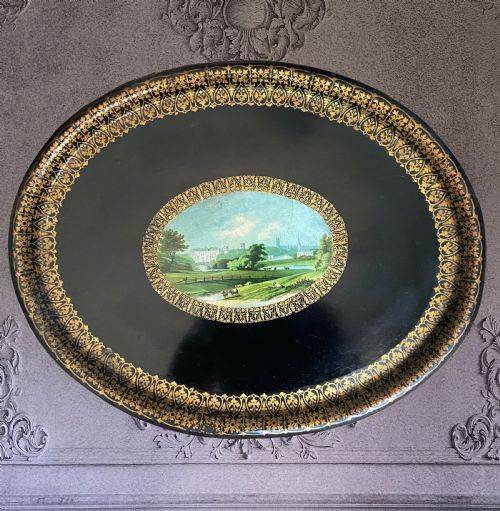


Nineteenth Century Decorative Trays
Nineteenth century decorative trays bring tactile history to a room, offering both practical surface space and enduring visual appeal.
Nineteenth Century Decorative Trays
Beyond standard trays, the category extends to related desk accessories, side tables, and decorative bowls originating from various European and Asian workshops. Each object reflects the ornate aesthetic priorities of the Victorian and Regency eras.
How they were made
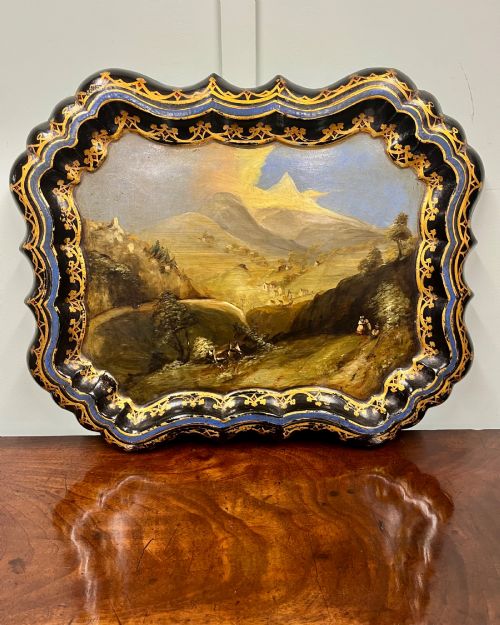
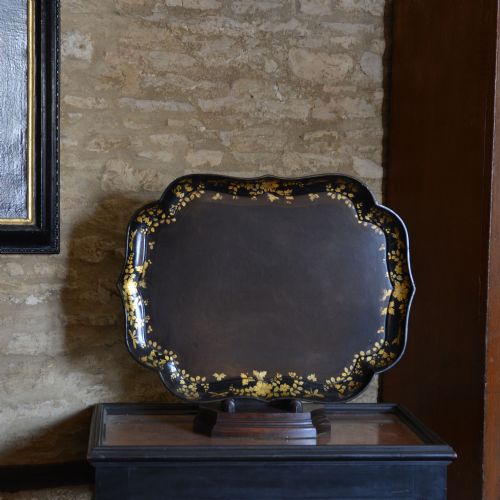
Craftsmen utilised papier-mache as a primary substrate for gilded and painted designs, building lightweight yet durable bodies that accepted intricate surface decoration. Gold leaf application and polychrome painting defined the visual ornamentation on these paper composite bases.
Metalworking techniques involved brass mounting, copper shaping, and cloisonne enamel work where wire compartments held vitreous paste. Sterling silver and toleware production required specialised smithing and lacquering to achieve finished surfaces.
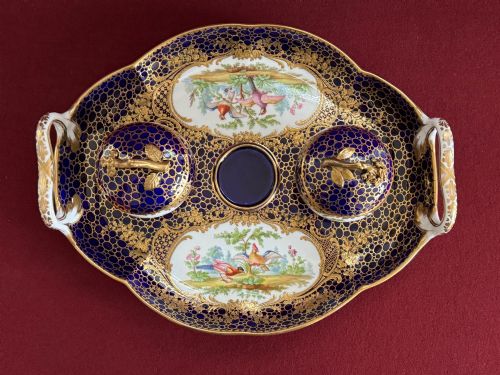
Ceramic pieces relied on porcelain moulding and hand-painting by makers such as Louis Pierre Malpass, while wooden items incorporated coromandel-wood and agate cabochons.
Nineteenth Century Decorative Trays Retail Price Guide 2026
Typical asking prices for nineteenth century decorative trays among the pieces listed under this phrase on Sellingantiques today, from the lower quarter to the upper quarter. They describe what is for sale here now, not the wider market.
Current listings feature items from the 1860 period, Regency era, and 1880, utilising materials such as papier-mache, cloisonne enamel, and coromandel-wood.
What varies in quality
Quality differences stem from the precision of the hand-painted details and the integrity of applied materials like gold leaf and cloisonne enamel. Superior examples maintain crisp pictorial definition and secure mountings for inset stones such as agate cabochons.
The structural stability of papier-mache and the joinery of wooden desk accessories dictate the durability of the piece over time. Finer items exhibit careful finishing on reverse and concealed surfaces, distinguishing standard utility wares from exhibition-grade commissions.
Tiffany and Co·Louis Pierre Malpass
The Nineteenth Century Decorative Trays Glossary
- Papier-mache
- A composite material made from paper pulp or layers of paper reinforced with glue, moulded into trays and finished with lacquer or paint. This technique allowed makers to create sturdy, lightweight objects suitable for heavy gilding.
- Toleware
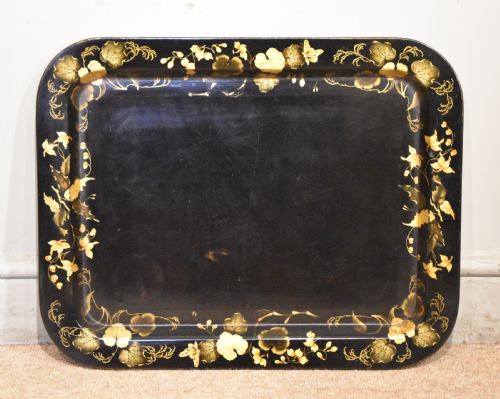
- Painted or lacquered metalware, typically iron or steel, popular in France and England during the nineteenth century. These pieces often feature dark backgrounds adorned with floral or gilt motifs.
- Cloisonne
- An enamelwork technique where metal wire is soldered to a metal base to form cells that are filled with paste enamel and fired. Japanese examples from the period demonstrate exceptional mastery of this method.
- Agate cabochon
- A polished, convex-cut gemstone without facets, frequently mounted in brass or metalwork settings on desk accessories. These stones added natural mineral texture to manufactured metal pieces.
- Coromandel-wood
- A dense, dark brown timber with contrasting light stripes, imported from Asia and utilised for luxury desk stands and boxes. Its heavy grain made it a favoured material for high-end nineteenth century furnishings.
Nineteenth Century Decorative Trays: Frequently Asked Questions
How were nineteenth century decorative trays used?
These trays served multiple domestic functions, from carrying tea and beverages to organising correspondence on a desk. Many were also displayed purely for their decorative qualities on side tables and cabinets.
Larger versions accommodated sets of glassware or silver, while smaller dishes held calling cards, stationery, or personal trinkets.
Where should I place a decorative tray?
Place trays on flat surfaces such as side tables, desks, or mantelpieces where their materials and painted details remain visible. They provide a defined boundary for grouping smaller objects together.
Ensure papier-mache and antique lacquer pieces stay out of direct sunlight and away from excessive moisture to preserve the surface finish.
How do I identify Regency pieces?
Regency items typically date from the early nineteenth century and feature neoclassical motifs, specific gilding patterns, and papier-mache construction. Their design vocabulary draws inspiration from Greek and Roman antiquity.
Comparing the weight, edge profile, and painted borders against dated examples helps confirm the period of manufacture.
What is toleware?
Toleware refers to lacquered or enamelled metal objects produced extensively in Europe during the nineteenth century. The process involved coating sheet metal with layers of varnish and baking it to create a hard, glossy finish.
These pieces often display hand-painted floral borders or gilded accents over dark green, black, or red backgrounds.