
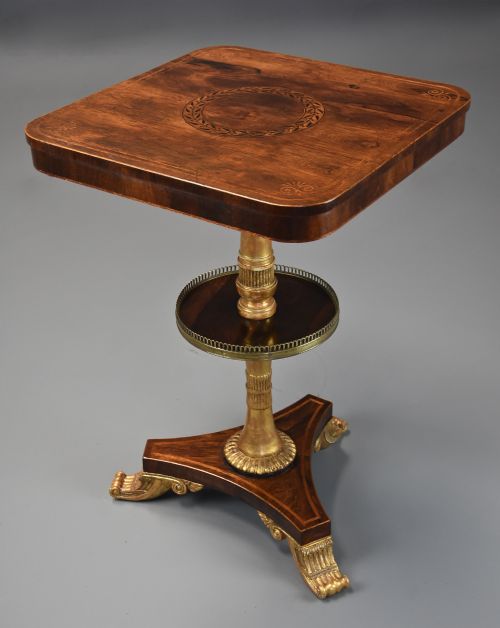


Nineteenth Century Brass Lamp
A nineteenth century brass lamp brings weight and warm metallic reflection to a room, combining period utility with decorative presence.
Nineteenth Century Brass Lamp
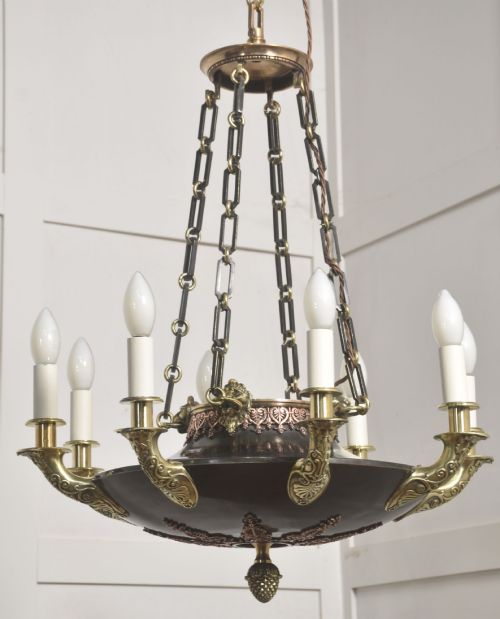
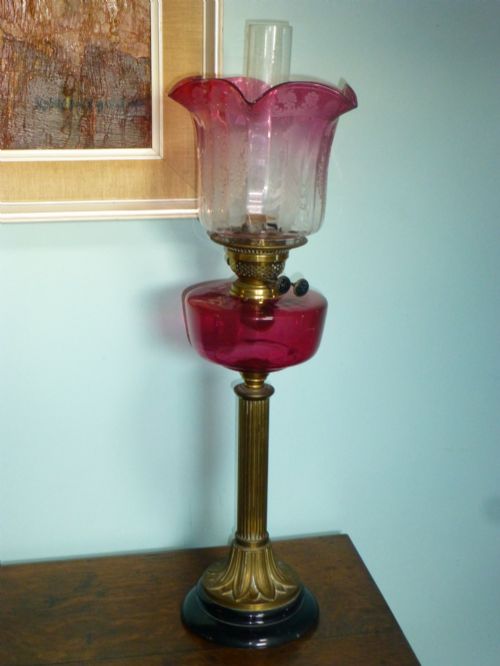
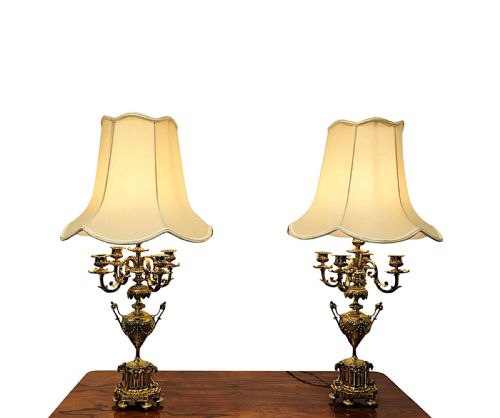
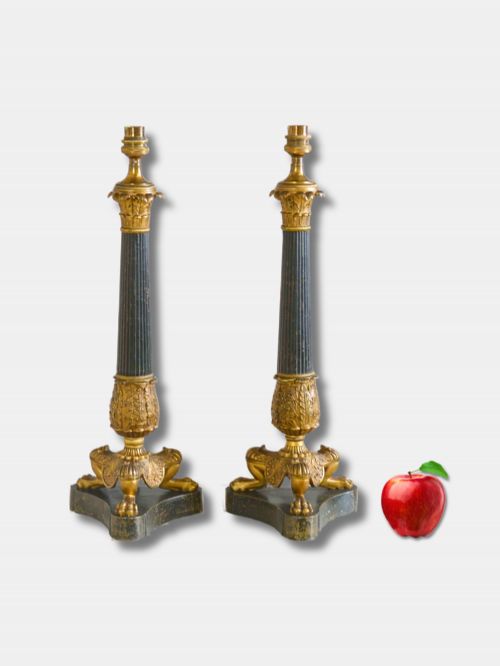
A nineteenth century brass lamp encompasses table lamps, oil lamps, floor standards and converted candelabra spanning the Victorian, Regency and French Empire styles.
Buyers will encounter burnered oil lamps with glass or ceramic reservoirs alongside cast classical columns and heavy metal lanterns.
Origins range from English workshops to French foundries and Asian export porcelain mounted in European metalwork.
Materials and construction
Construction relies heavily on cast brass, ormolu and gilt bronze, often combined with secondary materials like porcelain, glass, marble, rosewood and mahogany.
Components are cast, turned and chased, utilising patinated finishes, pierced metalwork and applied mounts to achieve decorative depth.
Some burners managed to incorporate terrestrial globes, proving that nineteenth century scholars liked to light their rooms with geography.
Assessing quality and craftsmanship
Quality rests in the crispness of the metal chasing, the weight of the casting and the integration of mixed materials such as marble or porcelain.
Superior examples display precise detailing in cast feet, columns and mounts, whereas simpler pieces rely on standard commercial production methods of the period.
Daris·Gaggenau
The Nineteenth Century Brass Lamp Glossary
- Ormolu
- Gilded bronze used extensively for decorative mounts on furniture and lighting. It requires a specific mercury-gilding technique common in French manufacturing.
- Duplex burner
- A double-wick mechanism developed in the nineteenth century to increase the luminosity of oil lamps. It allows for brighter illumination than single-wick designs.
- Cloisonne
- Enamelling technique where metal wires form compartments on a base to hold coloured paste. These decorated vessels are frequently adapted into lamps.
- Girondelle
- A branched wall sconce or mirror fixture featuring reflective metal and candle holders. Examples often incorporate ornate brass work.
- Spelter
- Zinc alloy used as a cost-effective alternative to bronze for sculptural figures and lamp bases. It takes patination well to imitate heavier metals.
Nineteenth Century Brass Lamp: Frequently Asked Questions
How do I wire an old lamp?
Conversion usually involves threading modern flex through the existing central channel without damaging the structural metalwork. Many pieces arrive already adapted for modern electrical standards.
Qualified electricians should handle the rewiring to ensure safety, particularly with antique brass columns and weighted bases.
What is a duplex burner?
A duplex burner uses two flat wicks side by side to produce a significantly brighter flame than older single-wick oil lamps. This mechanism became common during the Victorian era for domestic lighting.
Collectors look for stamped maker marks on the brass turning knobs of these burners to identify the original manufacturer.
Are porcelain vases made into lamps?
Pottery items such as Chinese Famille Rose and Japanese Fukagawa vases are frequently mounted with metal bases and collars to serve as lighting. This practice spans both the nineteenth century and later conversion periods.
Inspect the mounting points to see whether the porcelain was drilled or simply secured with adjustable brass brackets.
How do I clean brass safely?
Dusting with a dry microfiber cloth prevents the accumulation of grime without disturbing the historical surface patina. Avoid abrasive polishes that strip away the aged character of the metal.
Gentle soap and water can address sticky residue on sealed metal surfaces, provided the surrounding fabric or wood components remain dry.