







Nested Wooden Coffee Tables
Nested wooden coffee tables offer clever multi-tiered surface space that tucks away neatly when floor room is tight.
Nested Wooden Coffee Tables
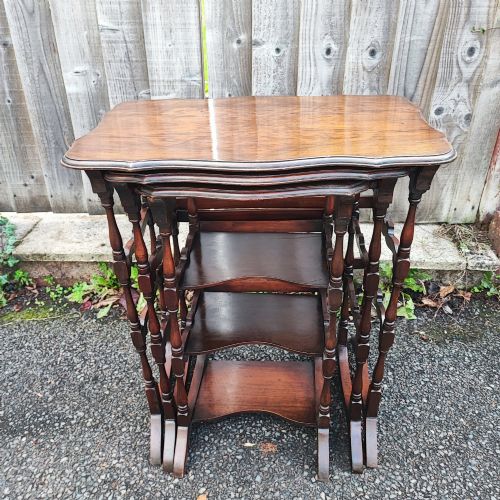
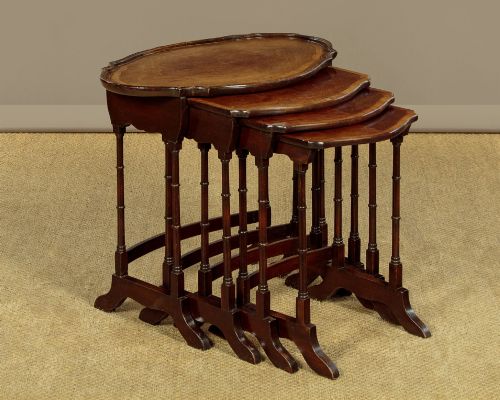
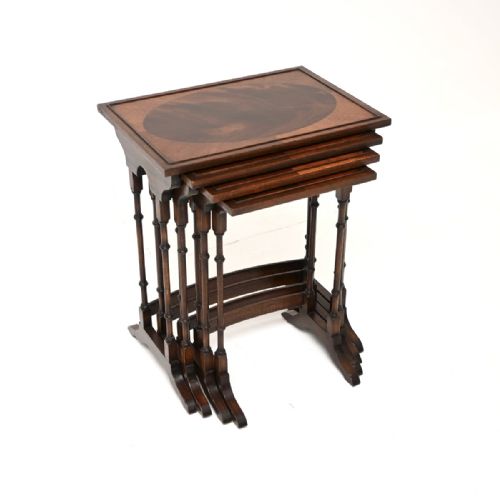
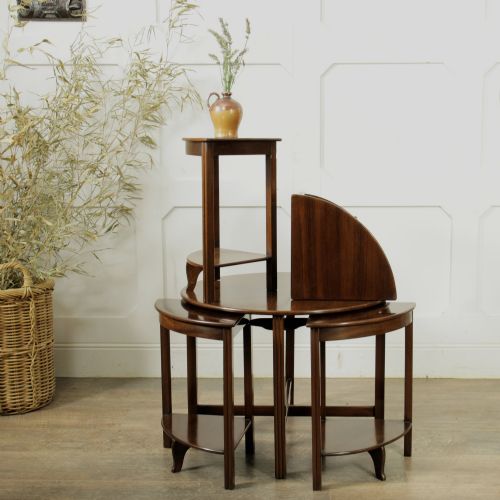
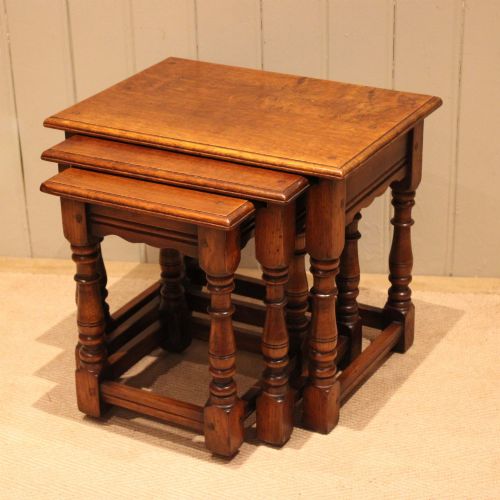
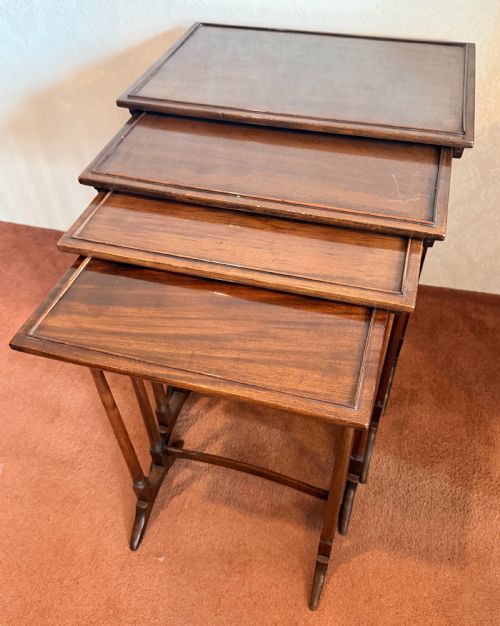
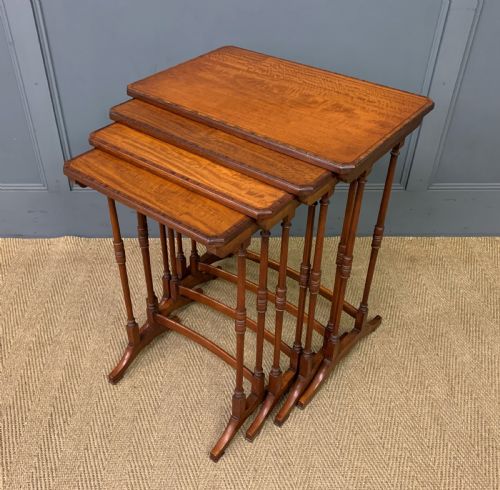
These nested wooden coffee tables comprise sets of graduating surfaces designed to slide inside one another for compact storage. You will frequently encounter sets of three or four pieces, often described historically as quartetto tables, alongside circular and shaped top variations.
The selection spans periods from the nineteenth century through the Edwardian era and into the nineteen-thirties. Victorian and Edwardian examples appear regularly, alongside earlier nineteenth century designs and later Art Deco interpretations.
Forms range from simple three-piece oak and walnut sets to elaborate four-table satinwood and mahogany groupings. Makers incorporated styles including Regency, Chinese Export, Jacobean Revival and Chinoiserie into these practical furniture sets.
Materials and Construction
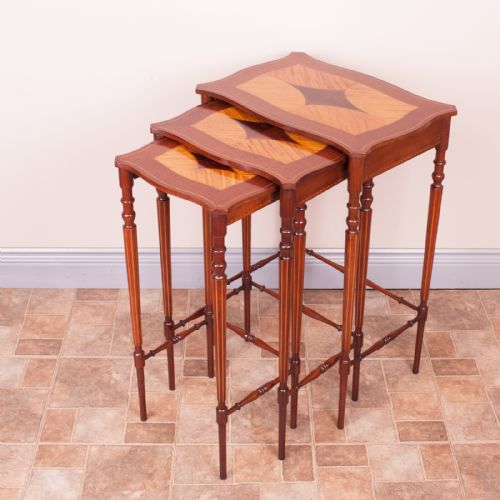
Cabinet makers utilised a range of dense timbers including mahogany, walnut, oak, satinwood and rosewood. Hardwood and timber formed the structural carcasses, often enhanced by decorative boxwood stringing and contrasting marquetry or inlaid veneers.
Construction techniques focused on stability and smooth sliding action between the graduating frames. Tables feature shaped tops, embossed leather inserts, and carved details such as elephant motifs or oriental ornamentation depending on the chosen style.
Nested Wooden Coffee Tables Retail Price Guide 2026
Typical asking prices for nested wooden coffee tables among the pieces listed under this phrase on Sellingantiques today, from the lower quarter to the upper quarter. They describe what is for sale here now, not the wider market.
Listings feature woods including mahogany, satinwood, walnut, hardwood, oak, timber, boxwood and rosewood across multiple historical periods.
Assessing Quality and Craftsmanship
Quality rests upon the selection of timber figures, such as burr walnut or figured mahogany, and the precision of the inlaid satinwood and marquetry work. Finer sets display crisp carving, balanced proportions, and careful timber matching across all graduating tiers.
The integrity of the frame construction dictates longevity, ensuring each smaller table slides smoothly into position without binding. Superior examples maintain structural rigidity and clean joints across every component in the set.
Heal's·Gillows
The Nested Wooden Coffee Tables Glossary
- Quartetto
- A set of four graduating tables designed to slide neatly beneath one another. This term appears frequently in nineteenth century and Edwardian furniture descriptions.
- Inlay
- A decorative technique where contrasting woods or materials are inserted into recesses within the solid timber surface. Satinwood and boxwood frequently provide light contrast against darker mahogany bases.
- Marquetry
- Elaborate veneer patterns arranged to create pictorial or geometric designs across the tabletop. Victorian Killarney ware provides notable examples of this detailed craftsmanship.
- Stringing
- Thin inlaid lines of contrasting timber used to outline the edges of table tops and legs. This linear detail defines the geometry of Edwardian and Georgian style pieces.
- Graduated
- Describing tables built in decreasing sizes so each smaller unit fits inside the next. This sizing allows multiple surfaces to occupy the footprint of a single table.
Nested Wooden Coffee Tables: Frequently Asked Questions
How were nested wooden coffee tables used?
These graduating sets provided flexible surface area for tea, writing or lamps without permanently crowding a room. Servants brought out the smaller tables as needed and stacked them away afterward.
Today they serve a similar purpose in modern reception rooms where floor space fluctuates. Pulling out individual tiers offers guests temporary places for drinks while keeping the main footprint small.
How do I identify a quartetto set?
A quartetto set consists precisely of four tables built in descending proportions to slide together as one unit. The term derives from musical quartets and dates heavily through nineteenth century and Edwardian records.
Examining the underside and frame profiles reveals whether all four pieces share construction characteristics. Matching timber grain and consistent inlay styles confirm a complete original grouping.
Can these tables support everyday coffee table use?
Solid timber construction and sturdy leg frames allow these tables to handle normal daily demands. The smaller graduating tiers are lighter by design but remain stable for books and cups.
Placing the largest table centrally anchors the set while smaller units disperse across the room. Distributing weight evenly across the tiers preserves the joints and historical frame structures.
What periods do these wooden tables represent?
The current selection spans from the nineteenth century through Edwardian production and into nineteen-thirties traditional designs. Victorian and Edwardian iterations frequently feature inlaid satinwood and figured mahogany.
Earlier nineteenth century pieces lean towards plain hardwood or oriental designs, while later twentieth century examples introduce Art Deco influences. Each era brings distinct timber choices and decorative vocabulary to the stacking format.