

Nest of Tables Set
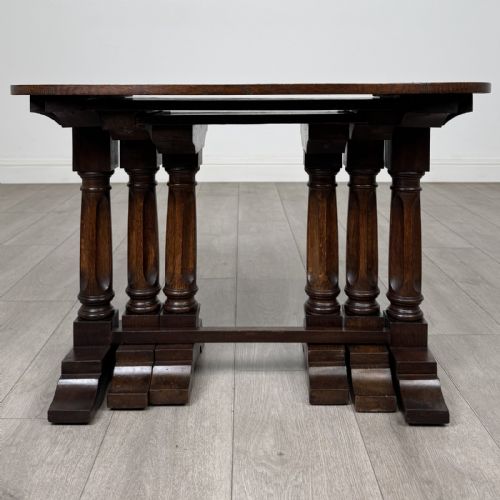
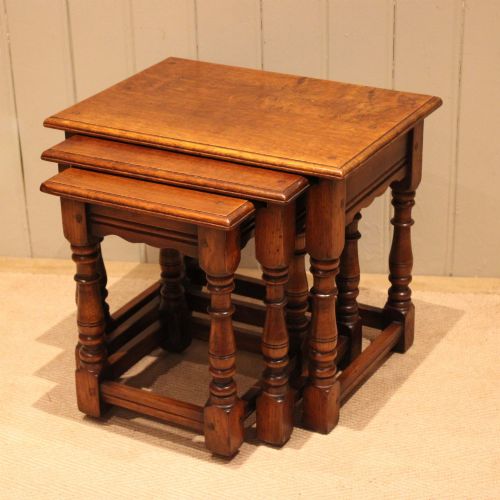
When you need a nest of tables set, you are choosing a practical group of graduating pieces designed to slide one beneath another.
Nest of Tables Set
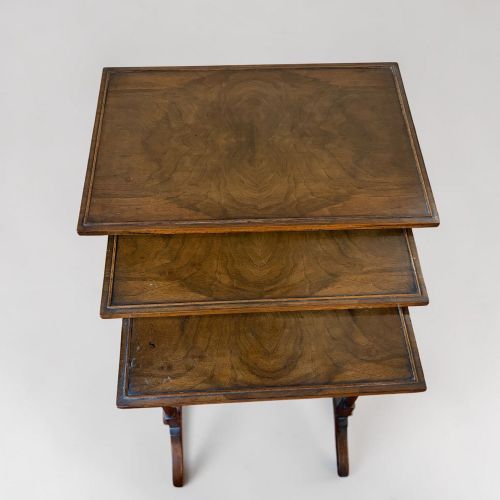
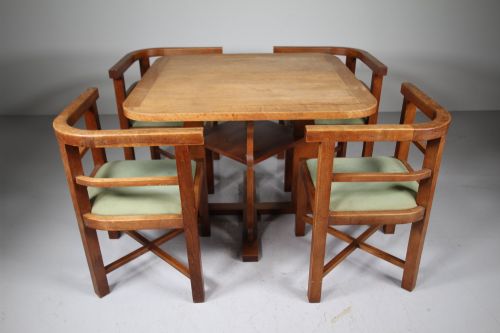
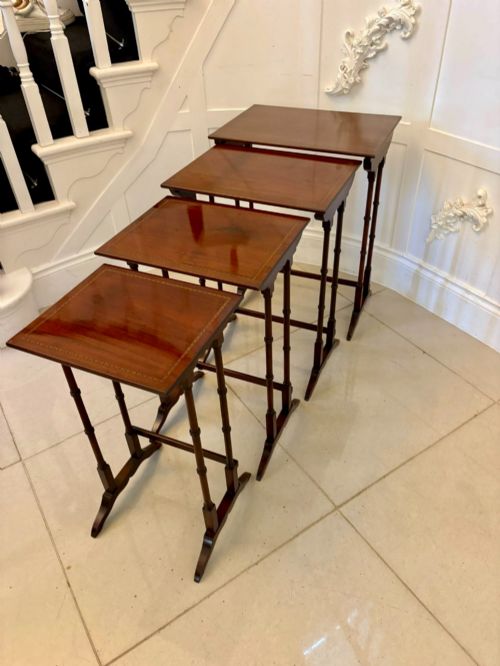
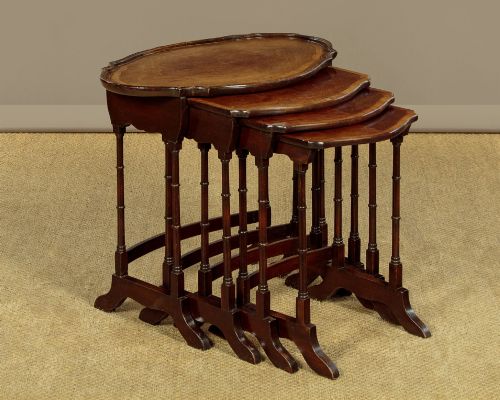
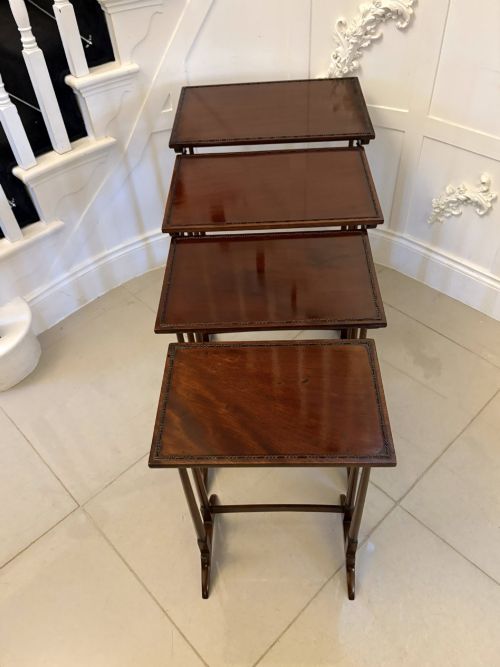
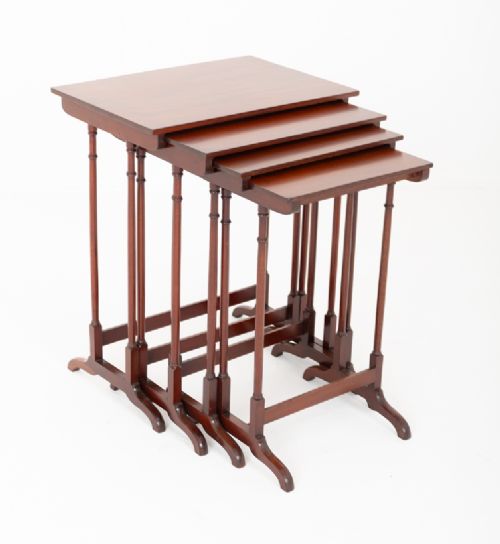
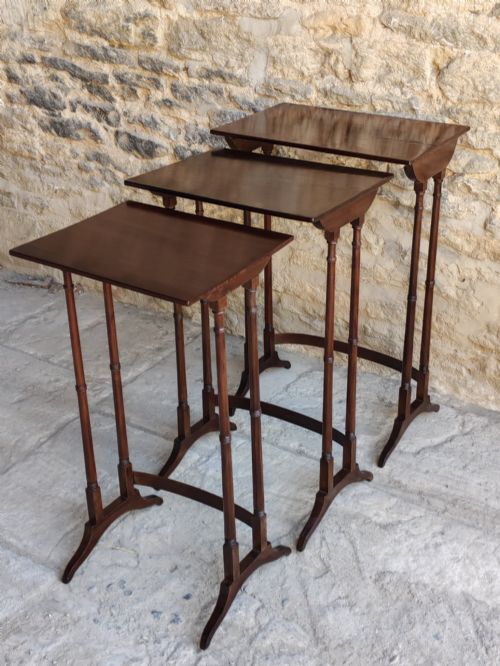
A nest of tables set brings together multiple matching surfaces that occupy the floor space of a single small table until separated for use. You will most frequently encounter Edwardian and nineteenth-century examples alongside Art Deco interpretations, spanning forms from three-piece trios to sets of five or more.
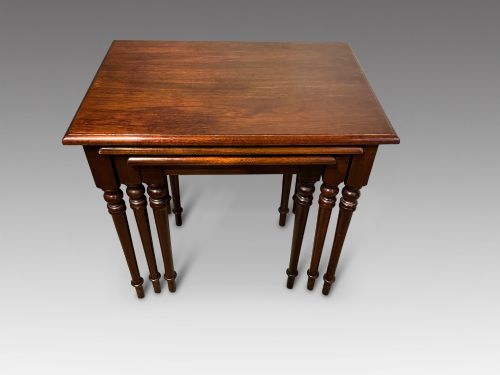
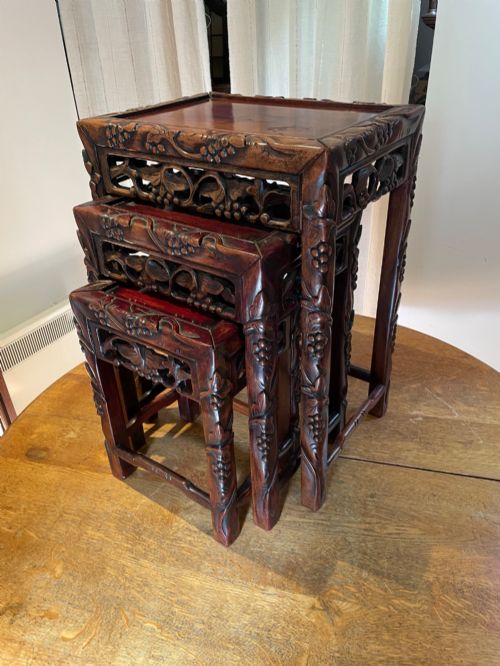
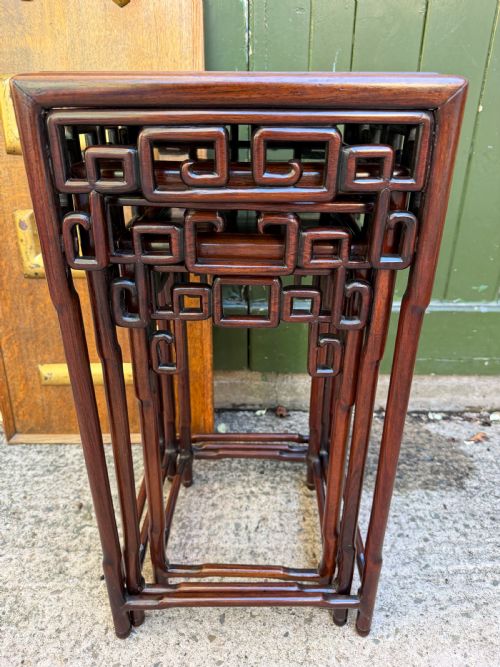
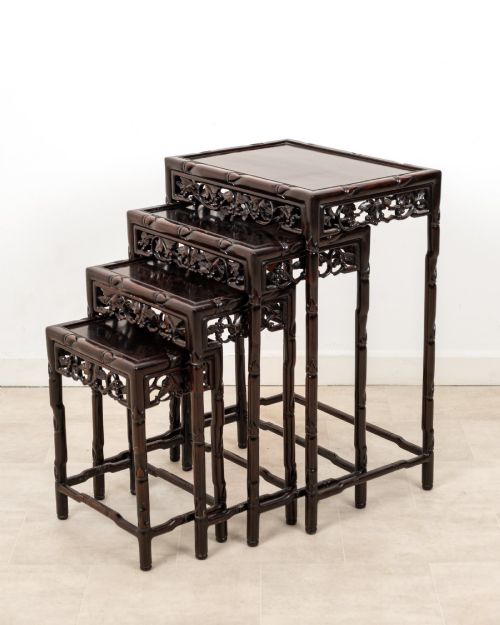
The layout ranges from straightforward mahogany designs to elaborate quartetto sets and carved Chinese hardwood creations. These items serve flexibly across living spaces as occasional, coffee, or side surfaces before sliding compactly back together.
Materials and Construction
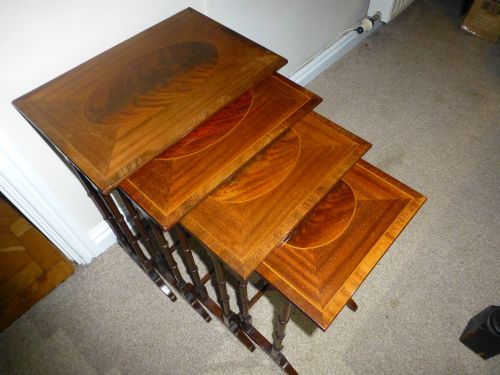
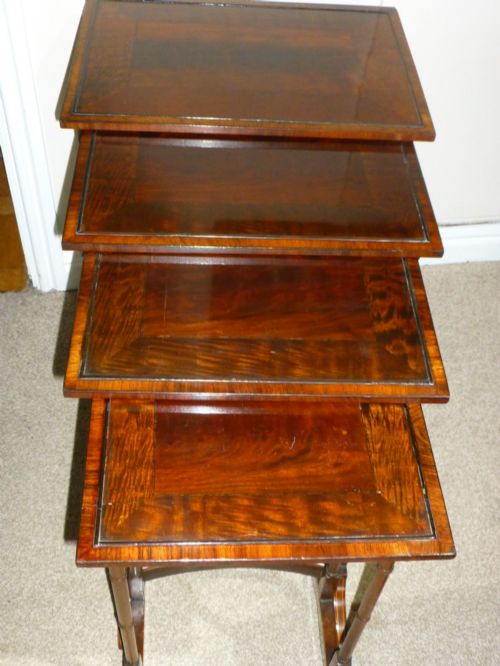
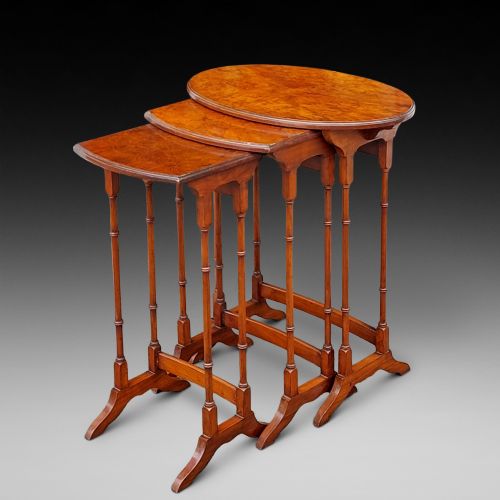
Cabinet makers utilised dense timbers including mahogany, walnut, rosewood, and oak, frequently incorporating contrasting satinwood inlay or burr walnut veneers for decorative enrichment. Hardwoods like these provided the structural stability required for slender legs and thin tops that had to fit precisely within one another.
Joinery methods ensured each table in the set maintained structural integrity despite reduced proportions. Carved elements appear on Chinese hardwood and Japanese lacquer pieces, while European examples rely on clean lines, fine inlays, and precise graduated sizing.
Nest of Tables Set Retail Price Guide 2026
Typical asking prices for nest of tables set among the pieces listed under this phrase on Sellingantiques today, from the lower quarter to the upper quarter. They describe what is for sale here now, not the wider market.
Materials recorded across the selection include dense hardwoods, burr walnut veneers, and glass, spanning forms from traditional tables to lacquer sake cups.
Markers of Quality
The distinction between standard pieces and top-tier models rests upon timber selection and the precision of the graduated fit. Superior examples employ highly figured burr walnut, rich rosewood, or finely matched mahogany alongside meticulous inlay work.
Execution of detail defines the upper range, from crisp hand-carving on hardwood surfaces to the smooth sliding action of a true quartetto set. Lower tiers show simpler construction, plainer wood grains, and less refined proportions.
Edwards and Roberts·Harry and Lou Epstein·Heal's
The Nest of Tables Set Glossary
- Quartetto
- A set of four nesting tables designed to slide neatly into one another. This traditional form gained particular popularity during the Victorian and Edwardian periods.
- Graduated
- Describing tables of decreasing dimensions that allow each smaller piece to fit beneath the preceding one. This scaling ensures the entire group occupies minimal floor space.
- Satinwood
- A durable, lustrous yellow-brown timber native to Ceylon and India. It was frequently used for contrasting stringing and inlay on mahogany tables.
- Chinoiserie
- European decorative style reflecting Chinese artistic motifs and lacquer techniques. It appears on painted and decorated sets from various early twentieth-century periods.
- Burr Walnut
- Wood harvested from walnut tree growths that produces highly decorative, swirling grain patterns. Cabinet makers utilised these veneers on top surfaces to create visual depth.
Nest of Tables Set: Frequently Asked Questions
What is a quartetto nest of tables?
A quartetto set specifically consists of four tables built to graduate in size so they stack together under the largest top.
Cabinet makers developed this format to provide multiple surfaces for tea or writing without cluttering a room.
How do I date an Edwardian nest?
Edwardian tables often feature lighter timbers like mahogany with subtle satinwood stringing, delicate tapered legs, and Edwardian retailer stamps or labels.
Comparing the wood finish and construction style to known pieces from the early twentieth century helps confirm the era.
Were these tables used for tea?
Yes, many nineteenth and early twentieth-century sets served primarily as tea tables that could be pulled out for guests.
Their modular design allowed households to increase surface area temporarily during social gatherings.
How do Art Deco sets differ?
Art Deco versions often favour bolder geometric forms, exotic woods like teak or walnut, and sometimes figurative carvings such as elephants.
They break away from traditional Edwardian delicacy in favour of heavier, streamlined silhouettes typical of the period.