
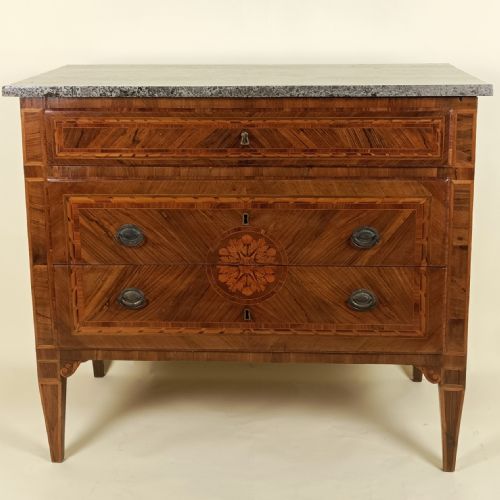


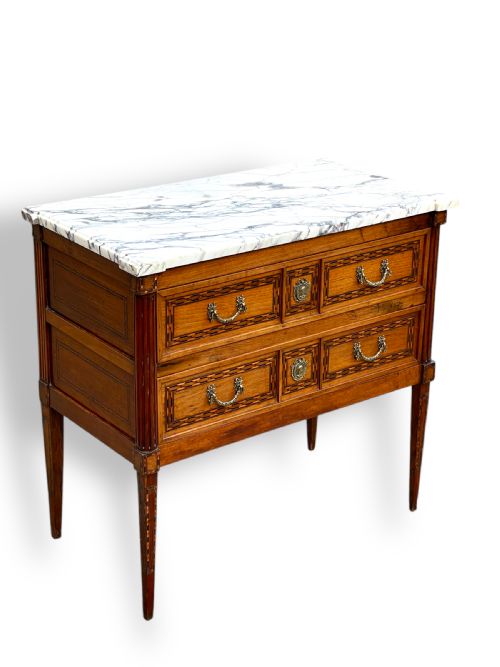


Neoclassical Walnut Commode
A neoclassical walnut commode brings restrained architectural symmetry and rich grain to a room, offering both substantial storage and refined surface display.
Neoclassical Walnut Commode
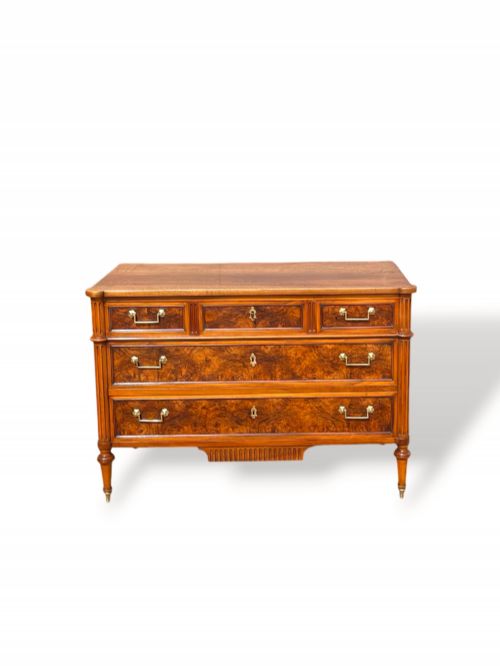
A neoclassical walnut commode provides structured drawer storage whilst showcasing the warm, figured grain of walnut timber. These pieces range from restrained eighteenth-century Continental designs to later revival interpretations.
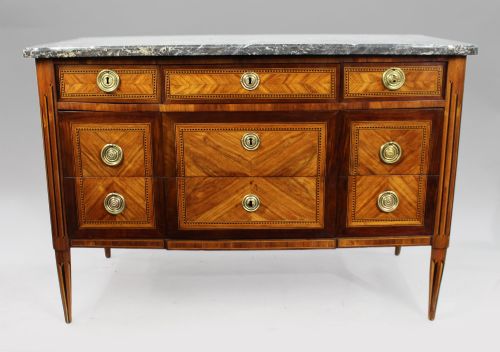
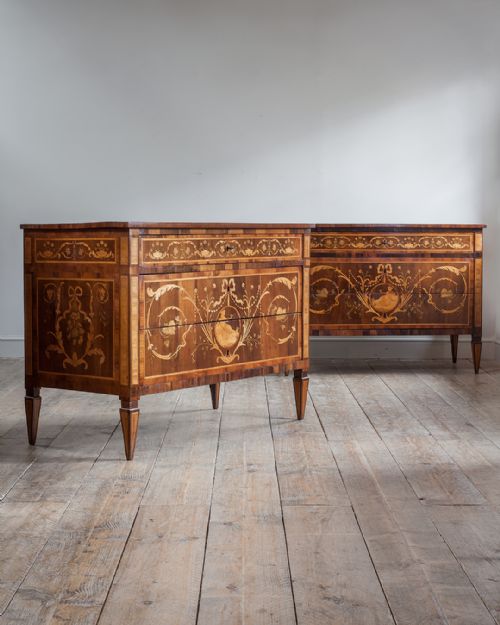
The form typically manifests as a low chest of drawers or side cabinet, often topped with marble and finished with parquetry or marquetry details. Pieces originating from Italy, France, and Austria frequently appear in this selection.
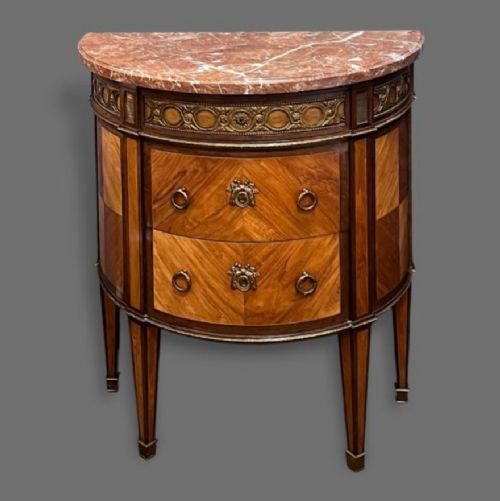
Buyers will encounter both rectilinear chests and demi-lune shapes, with eighteenth-century examples sitting alongside early twentieth-century revival pieces. Each iteration maintains the characteristic balance and proportion associated with the neoclassical style.

Materials and Construction
Walnut serves as the primary timber, complemented by secondary woods such as fruitwood and kingwood for contrasting inlay and geometric patterns. Wood inlay, parquetry, and marquetry define the decorative surfaces of these cabinets.
Marble tops provide a durable and cool contrasting surface, whilst brass and ormolu mounts punctuate the corners, keyhole escutcheons, and drawer pulls. These combined materials reflect sophisticated cabinet-making traditions across Europe.
Neoclassical Walnut Commode Retail Price Guide 2026
Typical asking prices for neoclassical walnut commode among the pieces listed under this phrase on Sellingantiques today, from the lower quarter to the upper quarter. They describe what is for sale here now, not the wider market.
Some commodes spent their lives quietly holding linens before finding a new role as glamorous bedside tables.
Evaluating Quality and Execution
The sophistication of the wood inlay and parquetry work dictates the visual tier of the piece, separating standard cabinet-making from exhibition-quality execution. Crisp geometric precision in the marquetry signals superior workshop skill.
The integration of heavy marble tops and the crispness of cast ormolu mounts further differentiate the range. Superior examples maintain structural harmony between the walnut carcase and the applied decorative elements.
Pietro Ferrario
The Neoclassical Walnut Commode Glossary
- Commode
- A low chest of drawers or cabinet designed for domestic storage. Originating in France, the form became central to neoclassical interior decoration.
- Parquetry
- Geometric wood inlay forming patterned surfaces such as cubes or chequers. This technique decorates the drawer fronts and sides of many pieces.
- Marquetry
- Pictorial or curvilinear wood veneer work using various timber tones. It creates elaborate floral or architectural scenes across the cabinet face.
- Demi-lune
- Half-moon or semicircular in plan. This shape allows commodes to sit flush against a wall whilst occupying minimal floor space.
- Ormolu
- Gilded bronze mounts applied to furniture for decoration and edge protection. High-quality examples exhibit sharp chiselling after casting.
Neoclassical Walnut Commode: Frequently Asked Questions
Where should I place a commode?
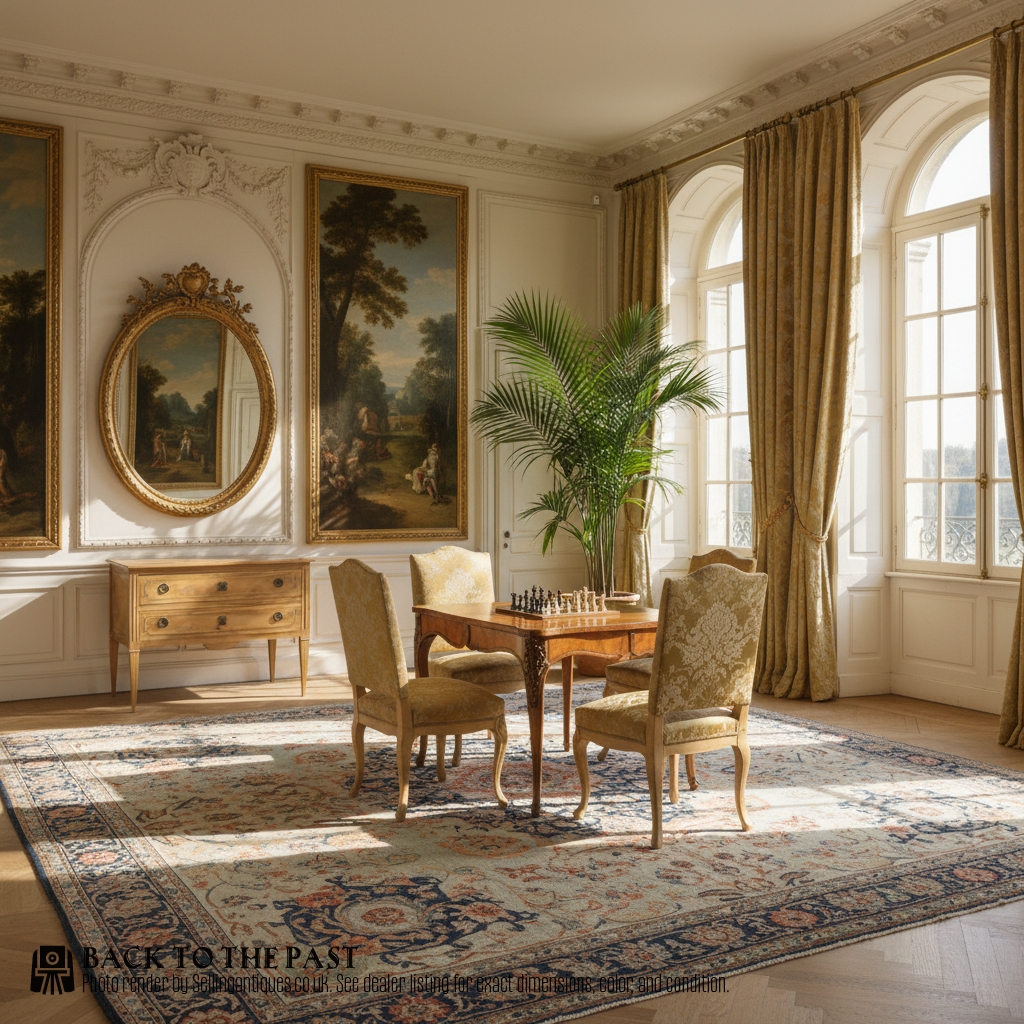
These pieces suit reception rooms, hallways, or bedrooms where their decorative surfaces and storage capacity function effectively. They anchor a room without overwhelming the floor space.
Pair them with a mirror or painting above to create a balanced focal point in a traditional or transitional interior.
How do I care for the marble top?
Wipe the marble surface regularly with a soft, damp cloth and neutral soap to prevent staining from liquids. Avoid acidic cleaners that can etch the polished stone.
Use coasters and protective pads beneath heavy objects placed on the marble to prevent scratching.
How do I distinguish eighteenth-century pieces?
Examine the drawer construction, timber shrinkage, and hand-cut joinery visible on the interior carcase. Eighteenth-century furniture exhibits tool marks and construction methods consistent with period hand-tools.
Styles, patination, and wear patterns on the walnut timber also help confirm the age of the piece.
Can I use modern products on walnut?
Apply traditional beeswax sparingly to nourish the walnut timber and maintain a soft, natural sheen. Avoid modern silicone-based polishes that build up over time.
Buff the surface gently with a clean cloth after waxing to protect the grain and inlay.