

Neoclassical Wall Sconce Pair
A neoclassical wall sconce pair brings balanced symmetry and period illumination to interiors, uniting classical motifs with wall-mounted metalwork.
Neoclassical Wall Sconce Pair
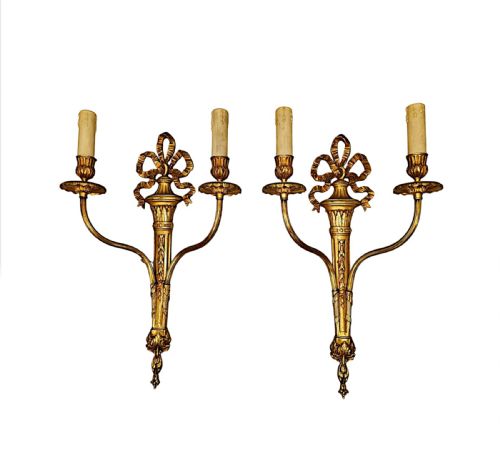
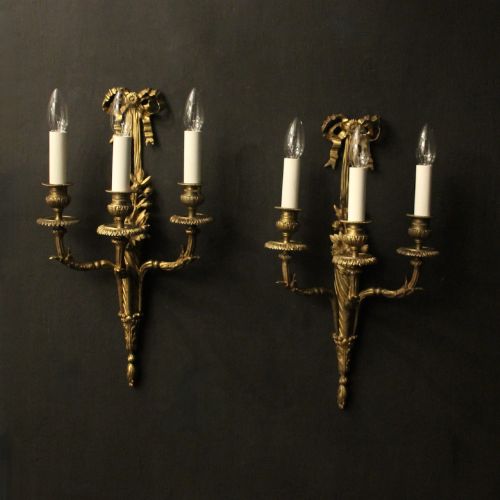
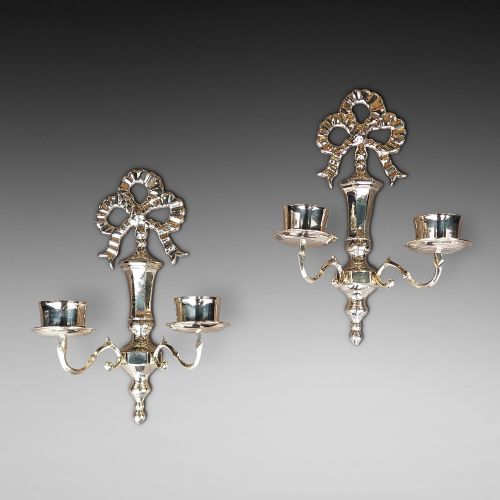
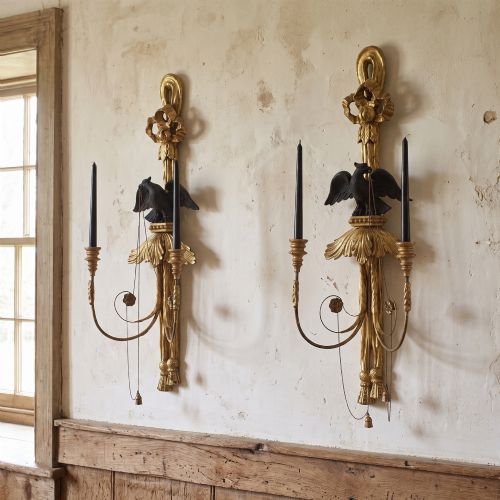
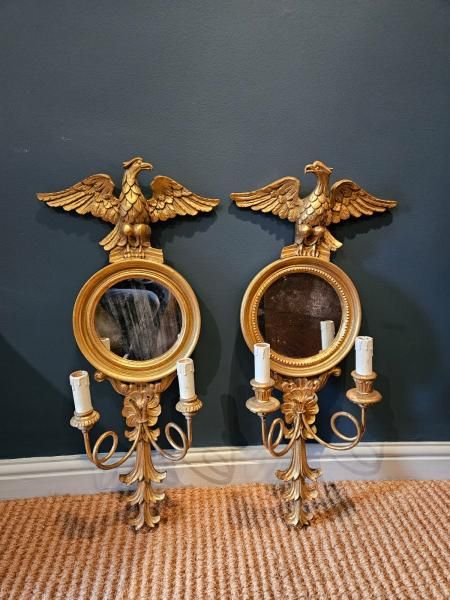
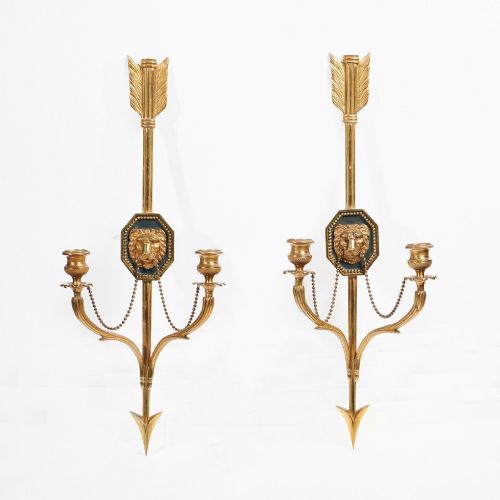
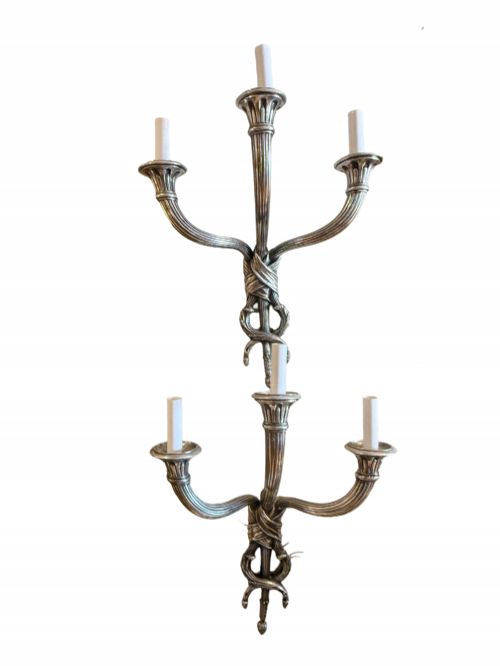
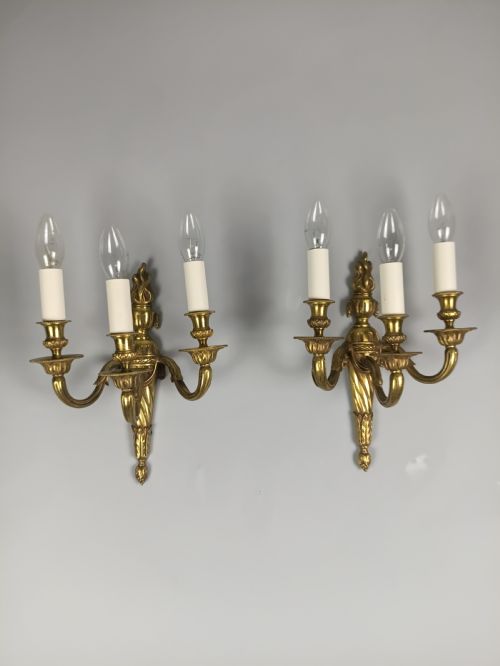
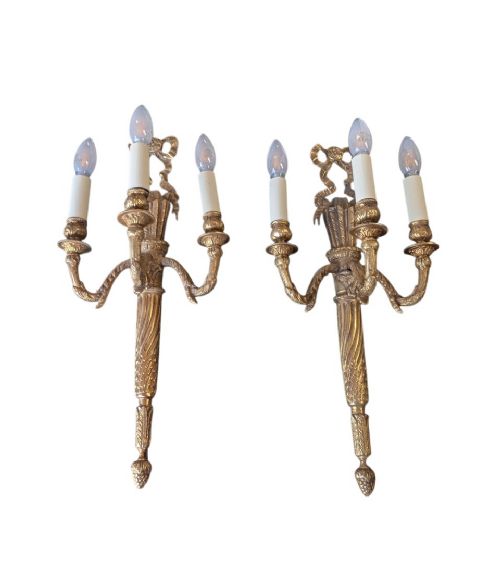
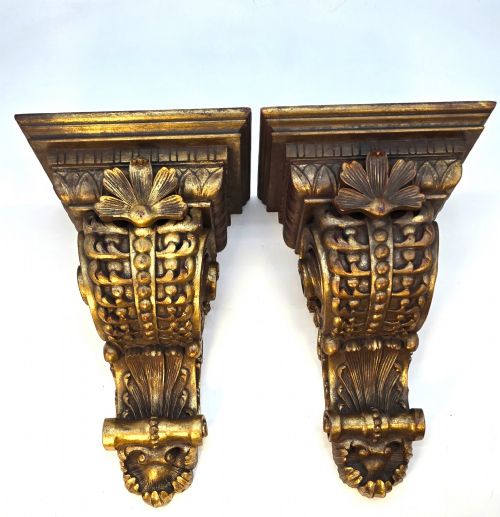
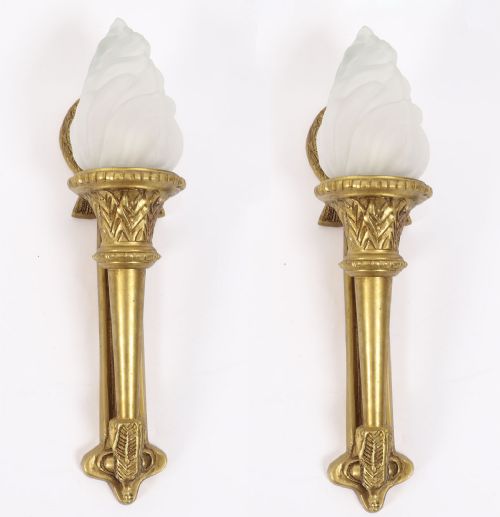
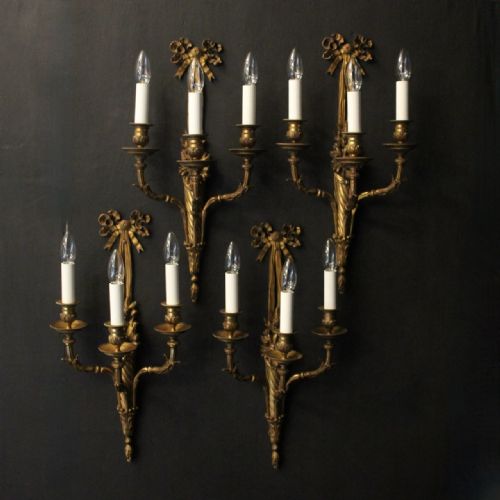
A neoclassical wall sconce pair comprises matching dual or multi-armed light fixtures designed to mount directly onto a wall surface. These pieces draw on classical motifs such as urns, torches, and ram's head masks to create symmetrical elegance.
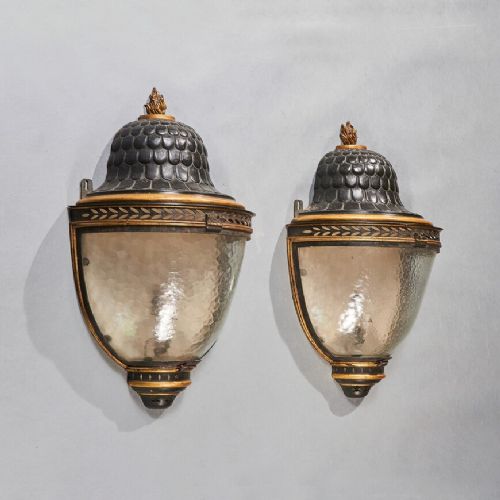
The versions most commonly found here originate from nineteenth-century France and twentieth-century revivals, taking the form of gilded bronze, brass, or carved giltwood brackets. They span diverse forms including girandole mirrors, candle sconces, and coach-house lanterns.
How They Were Made
Artisans utilised cast metals such as bronze, brass, and copper, frequently finishing the surfaces with gold leaf, ormolu, or gilt. These techniques allowed makers to achieve sharp surface definition on decorative mounts and armatures.
Carved wooden elements employ giltwood and ebonised details, while specialised pieces incorporate glass components, mirror backs, and painted metal to enhance reflective qualities in candle or electric light.
Listings feature periods spanning the eighteenth century through the 1930s, utilising brass, gilt bronze, ormolu, and carved giltwood.
What Varies In Quality
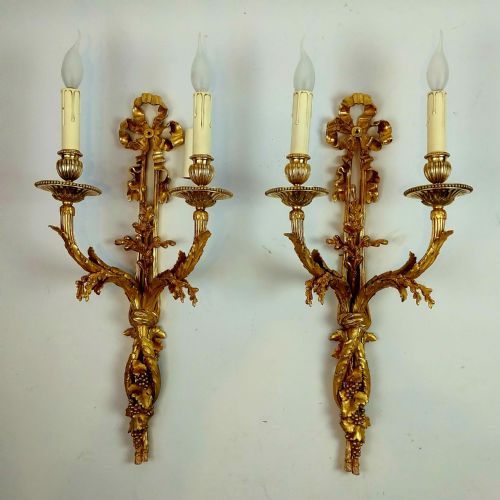
The standard of a neoclassical wall sconce pair is determined by the crispness of the metal casting and the depth of the chasing work on the bronze or brass. Superior examples exhibit finely articulated details on masks, foliage, and classical drapery.
Gilding technique divides standard production from exceptional pieces, with genuine gold leaf and fire-gilt ormolu retaining richer tones than simpler surface coatings. The weight and rigidity of the backplates and arms further distinguish fine workshop output from mass production.
Henri Vian·Maison Baguès
The Neoclassical Wall Sconce Pair Glossary
- Ormolu
- Gilded bronze produced through a mercury-gilding process that leaves a distinctive deep golden lustre. This technique was widely utilised in French workshops during the eighteenth and nineteenth centuries.
- Girandole
- A decorative wall mirror fitted with candle sconces attached to the frame. The reflective glass multiplies the flickering light within the room.
- Applique
- A French term for a wall-mounted light fixture or sconce. Collectors use this interchangeably with wall lights.
- Adam Revival
- An architectural and decorative style inspired by eighteenth-century neoclassical designer Robert Adam. It employs classical urns, swags, and delicate symmetry.
Neoclassical Wall Sconce Pair: Frequently Asked Questions
How do I mount a wall sconce pair safely?
Wall sconces require secure fixing to wall studs or appropriate cavity anchors due to the weight of cast bronze and brass components. Electrical wiring should be checked by a professional to ensure compatibility with modern household circuits.
Position the fixtures at eye level or slightly above to balance room proportions and distribute light evenly across the wall space. Ensure the backplate rests flat against the plaster without putting pressure on decorative arms.
Are these sconces wired for electricity?
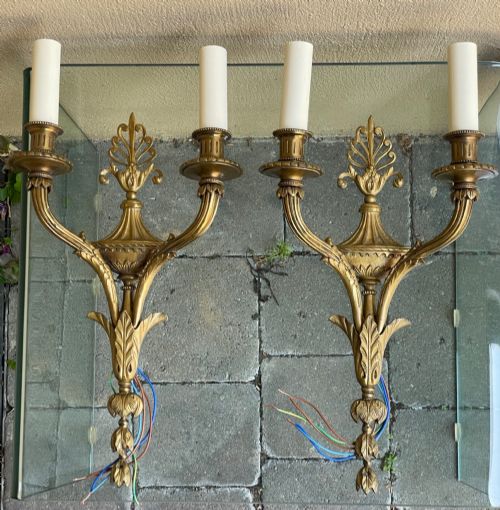
Many examples on this page originated as candle sconces or gas fixtures and have been subsequently adapted for electrical wiring. The conversion methods vary depending on the age and previous restoration history of each piece.
Examine the backplate and candle tubes to see how wiring passes through the structure. Original candle pans are often retained alongside modern lamp holders.
How do I clean gilded bronze and brass?
Dust metal surfaces gently with a soft dry brush to prevent accumulation in recessed cast details. Avoid harsh chemical cleaners or abrasive polishes that can strip the original ormolu or gold leaf finish.
For stubborn grime, use a slightly damp cloth with mild soap, drying the metal immediately afterwards. Preserving the natural patination maintains the historical character of the piece.
How can I tell the period of a sconce?
Dating relies on examining casting techniques, fixing screws, and stylistic markers associated with specific revivals. Nineteenth-century pieces typically feature heavy cast bronze construction, whilst twentieth-century reproductions adopt earlier Louis XVI or Empire vocabulary.
Compare the backplate construction and patination of the metal against known period examples. Stamps or signatures, when present, provide direct attribution to specific workshops.