



Neoclassical Wall Frieze
A neoclassical wall frieze brings architectural dignity and classical myth into a room, fashioned from plaster, terracotta and paper.
Neoclassical Wall Frieze
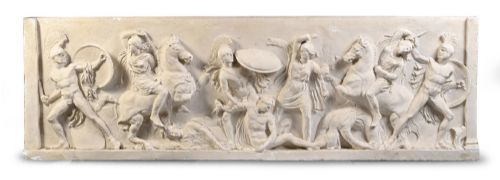
A neoclassical wall frieze captures the austere and graceful lines of antiquity, drawn from eighteenth-century engravings, plaster casts and terracotta reliefs. These pieces draw heavily on classical motifs, depicting mythic scenes, processions of figures and architectural ornament.
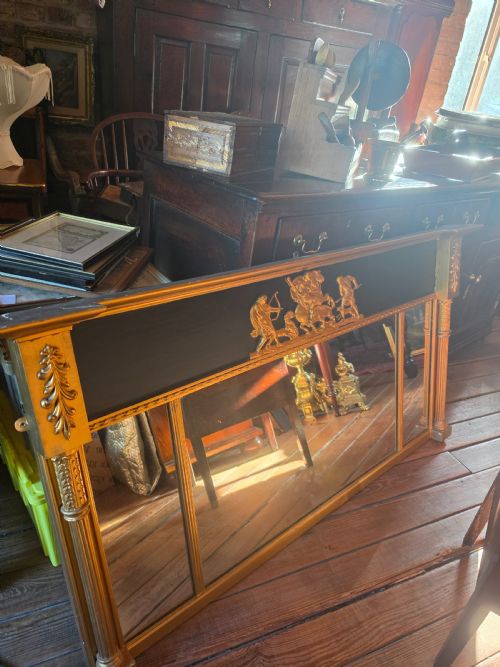
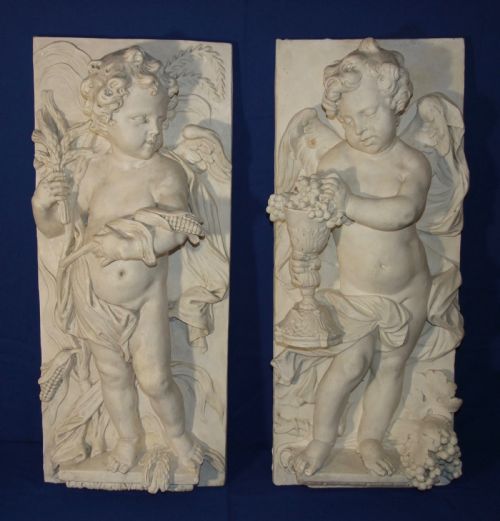
The selection here ranges across the eighteenth and nineteenth centuries, including items from the Victorian and Regency periods as well as later revivals. Buyers encounter framed engravings, plaster cherubs, and moulded terracotta panels alongside mirrors and console tables that incorporate classical frieze work.
Plaster and terracotta wall friezes provide direct relief sculpture for interior spaces, while engravings from the Antiquities of Athens record classical architecture and sculpture in fine detail. Each form reflects the enduring British and European fascination with Greek and Roman design across successive centuries.
Materials and construction methods
Plaster and terracotta form the basis of the sculptural reliefs, moulded or cast to capture sharp classical detail in three dimensions. Artisans employed plaster for interior wall plaques and winged cherubs, whilst terracotta suited durable exterior or interior architectural panels.
Paper and ink appear in the engraved plates, capturing architectural surveys and classical figures with fine linear precision. These prints are often framed behind glass, preserving ink on paper from environmental degradation.
Giltwood, gesso and composition feature in the frames and mirrors associated with the neoclassical style, building up relief ornament before gilding. Mahogany provides a dark, solid timber base for console tables carrying classical lines.
Dances on terracotta walls have survived two centuries of domestic interior life.
Assessing quality in neoclassical design
The precision of the engraving work dictates the value of paper pieces, where sharp ink lines and clean margins show the standard of the printmaker. Hand-applied gilding and the density of the underlying timber or composition determine the weight and finish of mirror frames and console tables.
The Neoclassical Wall Frieze Glossary
- Terracotta
- Fired clay used for sculptural reliefs and architectural friezes. It ranges in colour from pale buff to deep reddish-brown.
- Plaster
- A workable mixture used for casting wall friezes and relief sculptures. It allows intricate classical details to be captured cleanly.
- Engraving
- A printmaking technique where an image is incised into a metal plate using a sharp tool. This process produces fine, permanent lines on paper.
- Gesso
- A plaster-like material applied to wood before gilding. It provides a smooth surface for carving and moulding classical ornamentation.
- Intaglio
- A gem or print with a design incised into the surface so that the impression sits below the flat plane.
Neoclassical Wall Frieze: Frequently Asked Questions
How are plaster wall friezes mounted?
Plaster wall friezes require secure fixings into structural walls due to their weight. Metal brackets or integrated hanging loops distribute the load safely.
Larger panels need professional installation to prevent cracking along the plaster body during hanging.
What periods do these pieces come from?
The items span the eighteenth and nineteenth centuries, alongside later revivals from the twentieth century. Eighteenth-century pieces often derive from major architectural surveys and direct plaster casting.
Nineteenth-century examples reflect Victorian and Regency interpretations of classical Greek and Roman motifs.
How should paper engravings be protected?
Engravings on paper require protection from direct sunlight to prevent fading of the ink and yellowing of the sheet. Acid-free framing materials maintain the condition of the paper over time.
Keeping them in stable humidity prevents foxing and mould growth on antique paper.
What is the difference between plaster and terracotta friezes?
Plaster offers a bright white surface suited to interior wall mounting and detailed cast work. Terracotta uses fired clay, providing a denser, heavier medium with a natural earthy tone.
Terracotta pieces withstand handling well and carry a warm reddish hue distinct from painted plaster.