
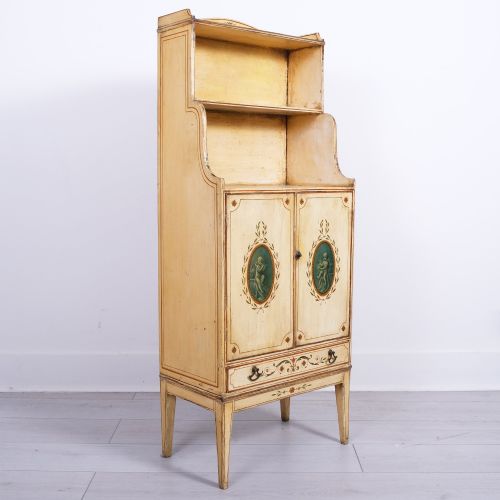
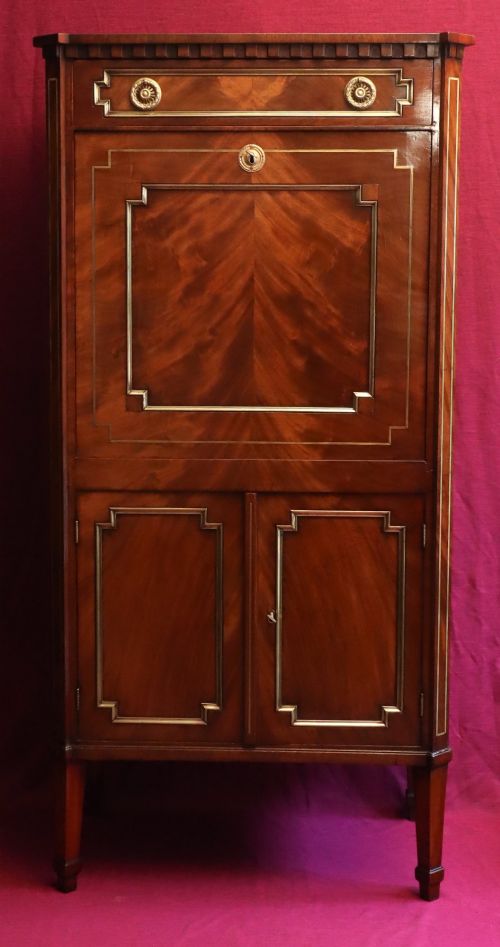
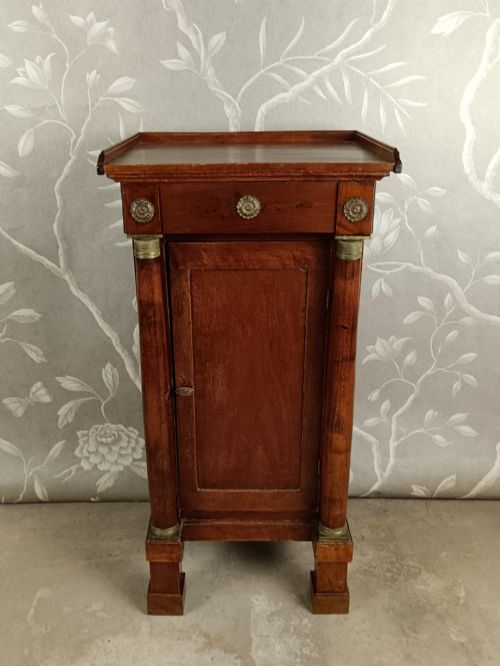
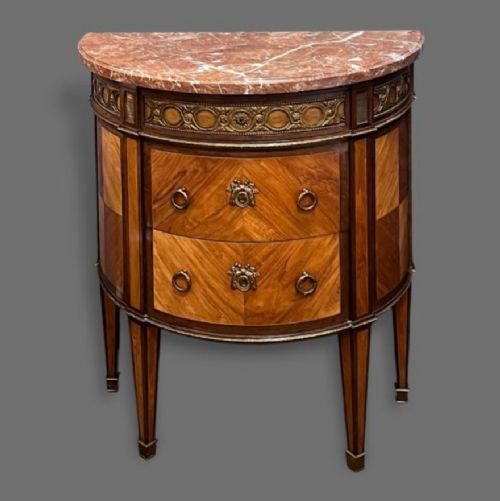
Neoclassical Style Cabinet
These neoclassical style cabinet pieces bring architectural symmetry and refined marquetry into a room, offering both display space and formal presence.
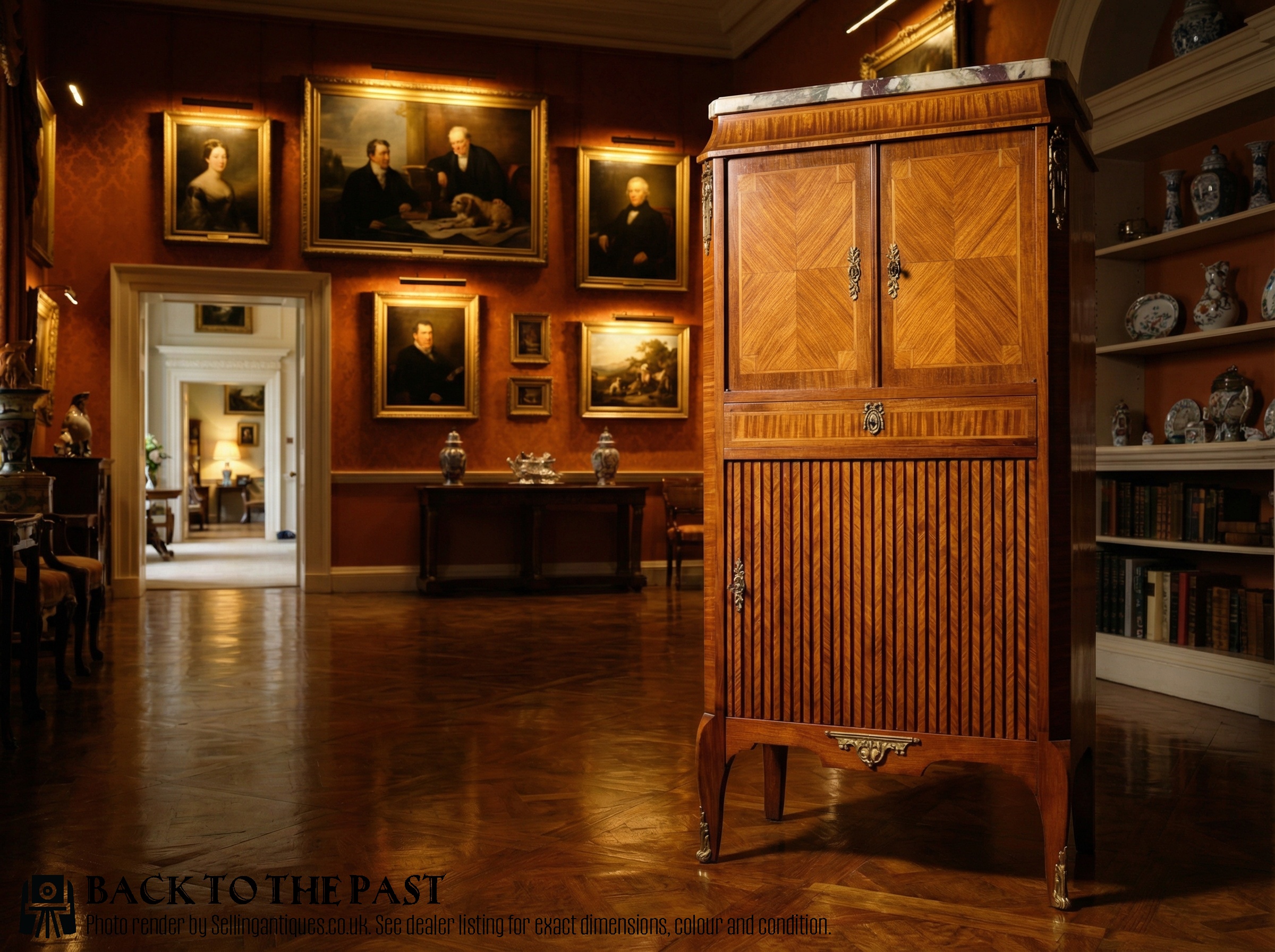
Neoclassical Style Cabinet
A neoclassical style cabinet embodies the balanced proportions, symmetry, and classical motifs derived from antiquity, spanning periods from the eighteenth century through the twentieth century.
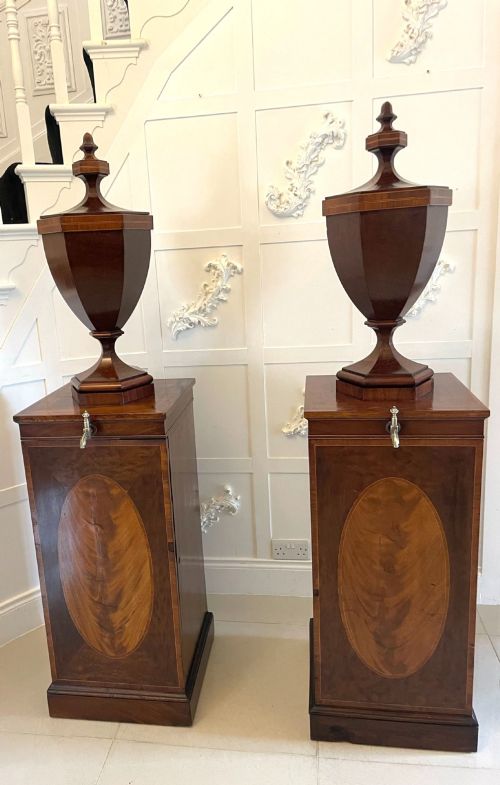
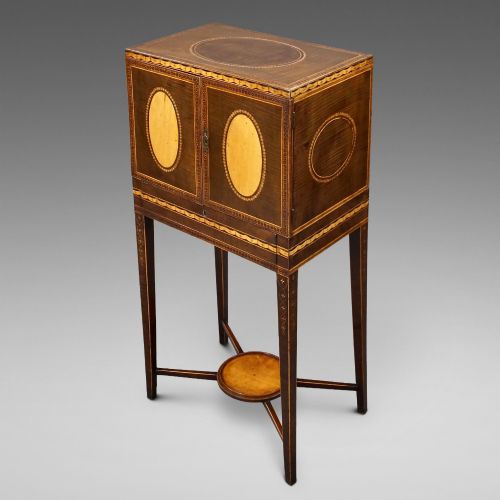
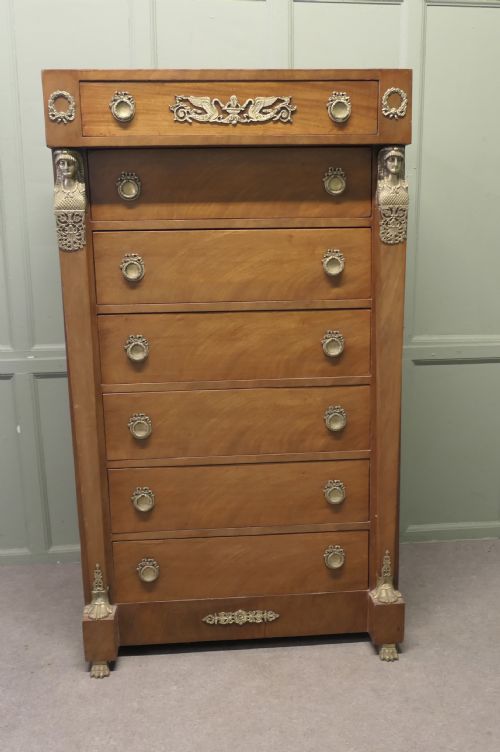
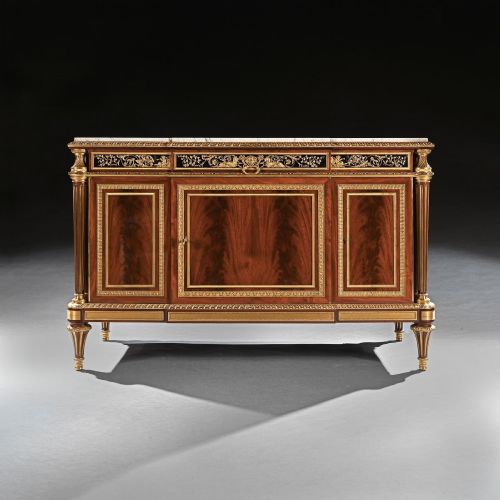
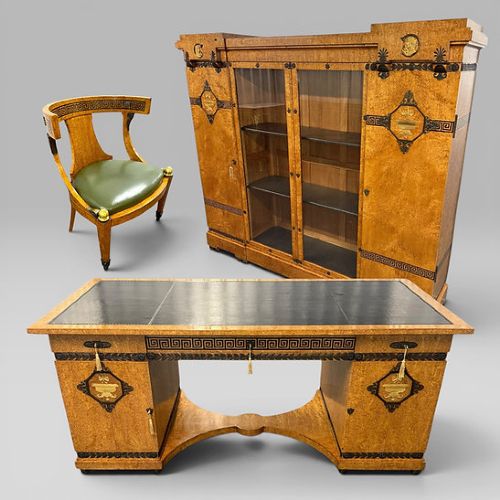
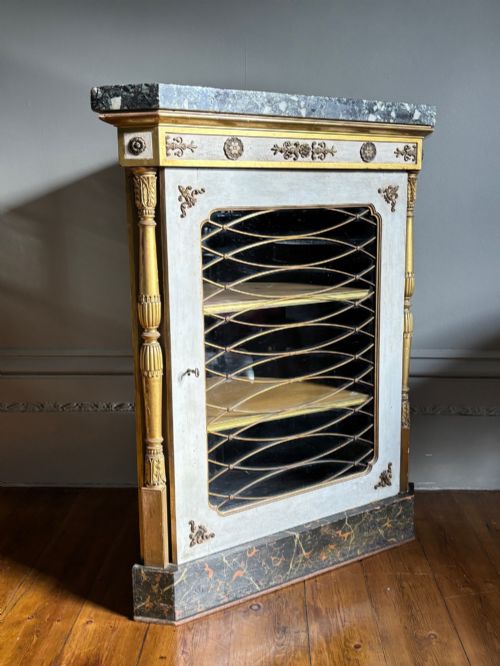
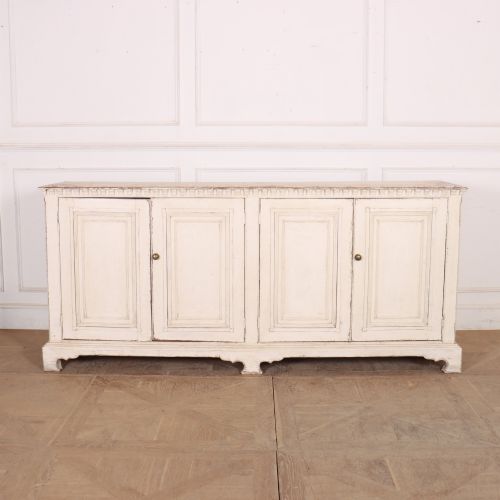
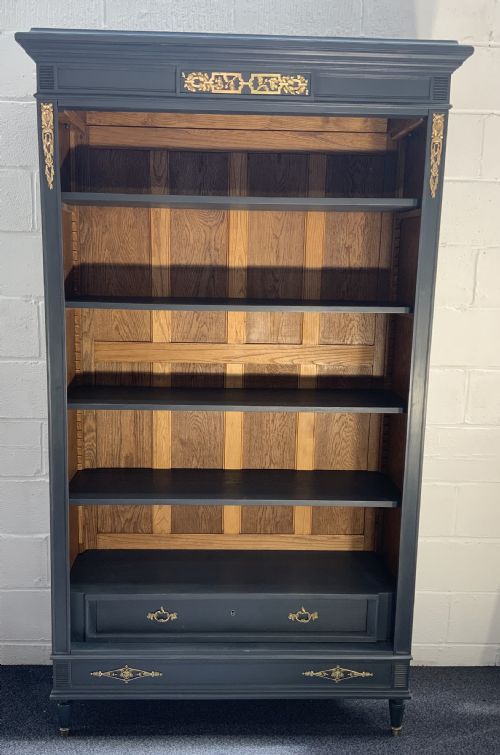
The forms on this page include side cabinets, display cabinets, bookcases, commodes, sideboards, and pedestals created within revival movements such as Sheraton, Adam, Louis XVI, and French Empire.
Makers and workshops construct these pieces using timbers like mahogany, satinwood, and walnut, frequently incorporating painted surfaces, marquetry, and architectural details.
Materials and Construction
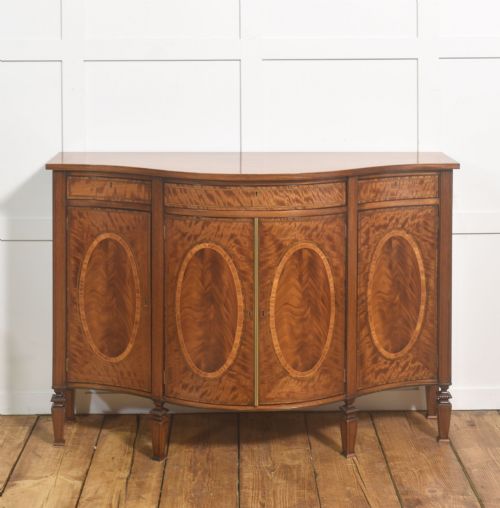
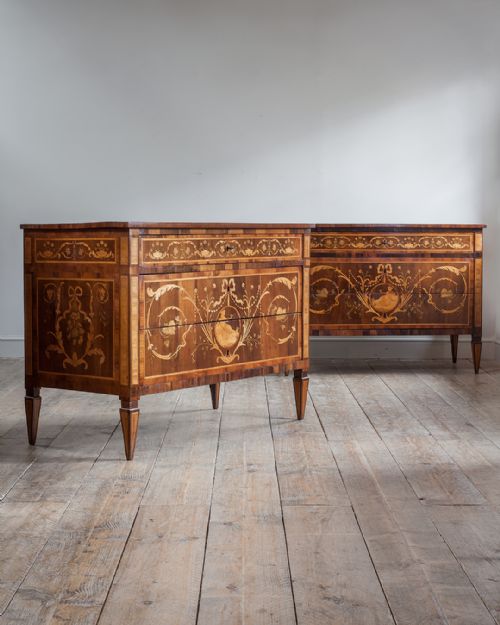
Cabinetmakers select fine primary timbers such as mahogany, satinwood, walnut, and harewood, frequently applying contrasting veneers and elaborate marquetry patterns to flat and curved surfaces.
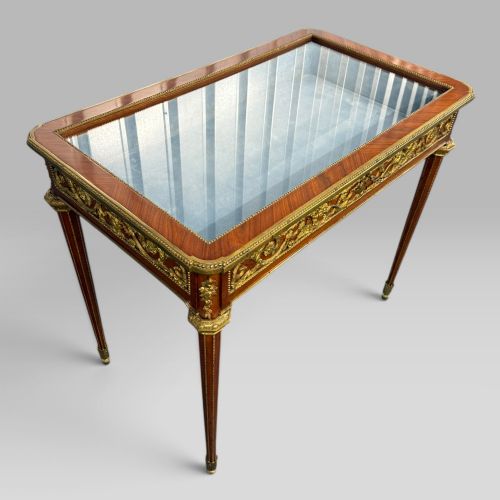
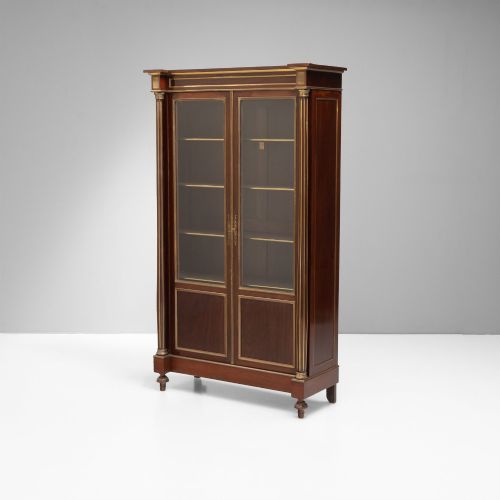
Many pieces incorporate cast ormolu mounts, brass embellishments, and marble tops that emphasise structural lines and provide textural contrast against the polished wood.
Workshops utilise traditional joinery methods to build carcases for side cabinets, bookcases, and commodes, ensuring structural stability for intricate bow-front and demi-lune forms.
The material selection across these listings spans mahogany, satinwood, walnut, marble, and ormolu.
Assessing Quality
The standard of a neoclassical style cabinet rests on the precision of its timber selection, the crispness of its marquetry or painted decoration, and the refinement of its cast ormolu mounts.
Pieces originating from recognised workshops and makers demonstrate superior hand-finishing, balanced proportions, and integrated architectural details that elevate them above standard commercial production.
François Linke·Henry Dasson·Mercier Frères·Jewell of Holborn·Maple and Co·Paul Sormani·Waring and Gillow·Pietro Ferrario
The Neoclassical Style Cabinet Glossary
- Ormolu
- Gilded bronze mounts applied to furniture. This technique adds decorative highlights and architectural definition to mahogany and walnut carcases.
- Marquetry
- Fitted wood veneers forming decorative patterns. Craftsmen use various tinted timbers to create intricate geometric designs or classical motifs.
- Commode
- A low decorative chest of drawers or cabinet. These pieces typically feature marble tops and detailed veneer work.
- Demi-lune
- Half-moon shape in furniture design. This curved profile appears frequently on side cabinets and console tables.
- Vitrine
- A glass-fronted display cabinet. It serves to exhibit porcelain, books, or decorative objects while protecting them from dust.
Neoclassical Style Cabinet: Frequently Asked Questions
What periods do these cabinets come from?
The pieces span from the eighteenth century through the nineteenth and twentieth centuries, including George III originals alongside later Sheraton, Adam, and Louis XVI revivals.
Craftsmen across these different eras maintained classical proportions while utilising period-specific timbers and decorative techniques.
How do I identify a neoclassical style cabinet?
Look for balanced symmetry, straight tapered legs, architectural cornices, and classical motifs such as urns, swags, and paterae.
Materials commonly involve mahogany, satinwood, and walnut, often paired with ormolu mounts or painted panels.
Where should I place a side cabinet?
These cabinets suit principal reception rooms, dining rooms, or hallways where their architectural lines and display surfaces function effectively.
Ensure the dimensions of bow-front or demi-lune forms complement the wall space and circulation routes of the room.